
Draft for review, not published or scheduled.
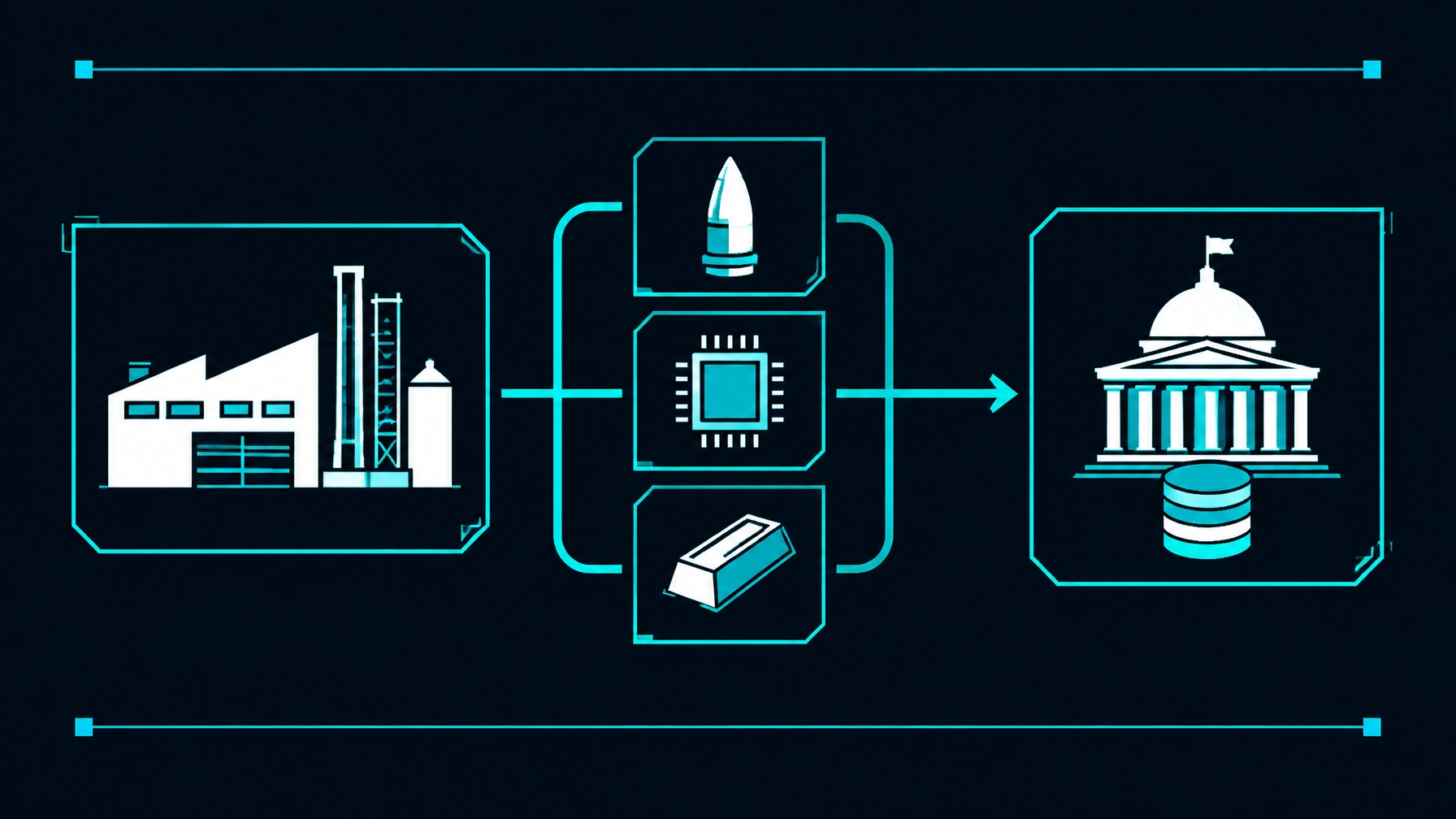
The history of American industrial mobilization shows that production capacity is built before a crisis, not improvised during one. On October 12, 2026, the U.S. Small Business Administration (SBA) and Department of War (DoW) took a practical step toward strengthening that capacity: they signed a memorandum of agreement (MOA) that operationalizes a capital pathway under the Smaller War Plants Commission (SWPC).
For founders and executives in munitions, microelectronics, essential materials, and other national-security-critical businesses, this is worth attention. The agreement connects DoW’s Economic Defense Unit (EDU) with SBA lending channels and SBA’s investment-support expertise. It creates a potential route to loans and Department of War-funded redeemable preferred equity, but it does not promise financing, establish automatic eligibility, or replace sound financial preparation.
What the new pathway does
The Commission was established in August to coordinate federal support for small suppliers and expand the defense industrial base. The October MOA adds a more specific capital process. According to the SBA announcement, EDU will identify companies with financing needs through its Business Operators for National Defense (BOND) efforts and refer potential loan candidates to the SBA.
SBA will then use its existing 7(a) and 504 lender networks to connect eligible firms with SBA-backed capital. In other words, this is a referral and coordination mechanism, not a new, direct SBA loan handed to a manufacturer by the Commission.
The agreement also establishes a separate equity track. EDU may source Department of War-funded redeemable preferred-equity investments for small and medium-sized businesses that create, expand, or restore industrial capacity important to national security. SBA can support the work with due diligence, underwriting, transaction structuring and documentation, monitoring, and portfolio-management assistance. EDU retains final investment decision authority.

Two kinds of capital, two different roles
The debt and equity paths should not be confused. An SBA-backed loan is still a loan: the company must meet program and lender requirements, support repayment, and use proceeds for an eligible purpose. SBA’s 7(a) program can support uses that include working capital, equipment, and certain real estate or business needs. The 504 program is designed for major fixed assets, such as facilities and long-term machinery; it is not a general working-capital substitute.
Preferred equity is different. It is an investment, not a conventional bank loan. The MOA identifies it as redeemable preferred equity, but the public announcement does not spell out a universal term sheet, pricing formula, redemption schedule, transaction size, or application process. Those details matter. A founder should not assume that “preferred” means inexpensive capital, that redemption terms will fit the company’s cash plan, or that every referred firm will receive an investment.
There is also an important division of responsibility: SBA’s expertise is part of the evaluation and execution support, but the MOA leaves the final equity call with EDU. On the loan side, SBA-backed financing still runs through lender channels and remains subject to program eligibility and underwriting. A referral is a point of access, not approval.
Who should pay attention
The initiative is aimed at businesses whose output strengthens essential domestic defense capacity. The August SWPC announcement highlights areas including munitions and components, microelectronics, strategic and critical minerals, shipbuilding and repair components, sensors, batteries, castings and forgings, and textiles. The October agreement further references platforms, technological processes, essential materials, and minerals.
That scope can include more than a prime contractor or a company with a large federal contract. A specialized component maker, materials processor, production technology company, or supplier with a credible role in a critical supply chain may have a relevant story to tell. The key is to explain the connection: what the business produces, where it fits in the supply chain, what capacity is constrained, and how financing would expand or restore capacity of national-security value.

How founders can prepare now
1. Position your company in operational terms.
Describe your product, process, production capacity, customers, bottlenecks, and lead times in plain language. Identify the national-security relevance and the specific supply-chain gap you help address. Quantify the impact of the proposed investment: additional units, shorter lead times, domestic sourcing, new tooling, or restored production capability.
2. Make the financing request precise.
Separate the uses of capital. Facility improvements and long-lived equipment may point toward one type of financing; working capital, inventory, or fulfilling a large contract may require another. Identify the amount, timing, and milestones. Connect each dollar to a production result and a credible repayment or investment case.
3. Get financial records and forecasts in order.
Prepare current financial statements, debt schedules, cash-flow forecasts, customer and contract information, accounts receivable and payable details, inventory records, and a documented use-of-funds plan. Be ready to explain assumptions and how the company will manage ramp-up costs, supplier delays, and payment timing. Lenders and investment reviewers need evidence, not only a compelling mission.
4. Understand the referral pathway.
The MOA describes EDU identification through BOND efforts and referrals of potential loan candidates to SBA. It does not describe a single universal application form or guarantee that a business can self-refer directly to an investment decision. Review the official SWPC “Get Started” resource and confirm the current route for your situation. For a loan, the SBA explains that borrowers work through lenders; 7(a) applicants apply through a participating lender, while 504 financing is arranged through a Certified Development Company.
5. Prepare for scrutiny and follow-through.
Government-facing business development requires disciplined records and reliable execution. Be ready to discuss ownership, company size, contracts, production readiness, quality systems, security or compliance requirements relevant to your work, and potential risks. Keep your forecasts aligned with realistic customer demand and operating capacity.

The budget backdrop, and the caveats
The MOA arrives during a stopgap funding period. As of October 16, federal funding is extended through December 11, 2026, unless regular appropriations are enacted earlier. The continuing resolution also includes provisions addressing increased demand for SBA loan programs, as summarized by the National Association of Counties.
For companies, that deadline is a planning factor, not a reason to assume the capital pathway shuts off on December 12, nor evidence that a financing decision will arrive before then. The appropriations debate adds uncertainty around timing and government operations. The MOA itself does not announce a single overall funding allocation, guarantee a loan or equity investment, or waive ordinary lender and eligibility requirements. Businesses should track official updates and build plans that remain viable under more than one funding timeline.
The strategic opportunity is meaningful: government coordination may help connect qualifying manufacturers to capital, while SBA brings established lending networks and investment experience to the process. But opportunity is not the same as a commitment. The strongest candidates will be those that can show a clear national-security contribution, a defined financing need, credible operating plans, and the discipline to execute.
The Infinity Group works with businesses on strategy, execution, funding, and growth, from positioning and capital planning to government-facing business development. Explore our government capabilities, business growth services, and services. To discuss your company’s plan and next steps, contact connect@infinity-us.com.
This article is for general informational purposes only and is not legal, tax, or investment advice. Comments are disabled.
