
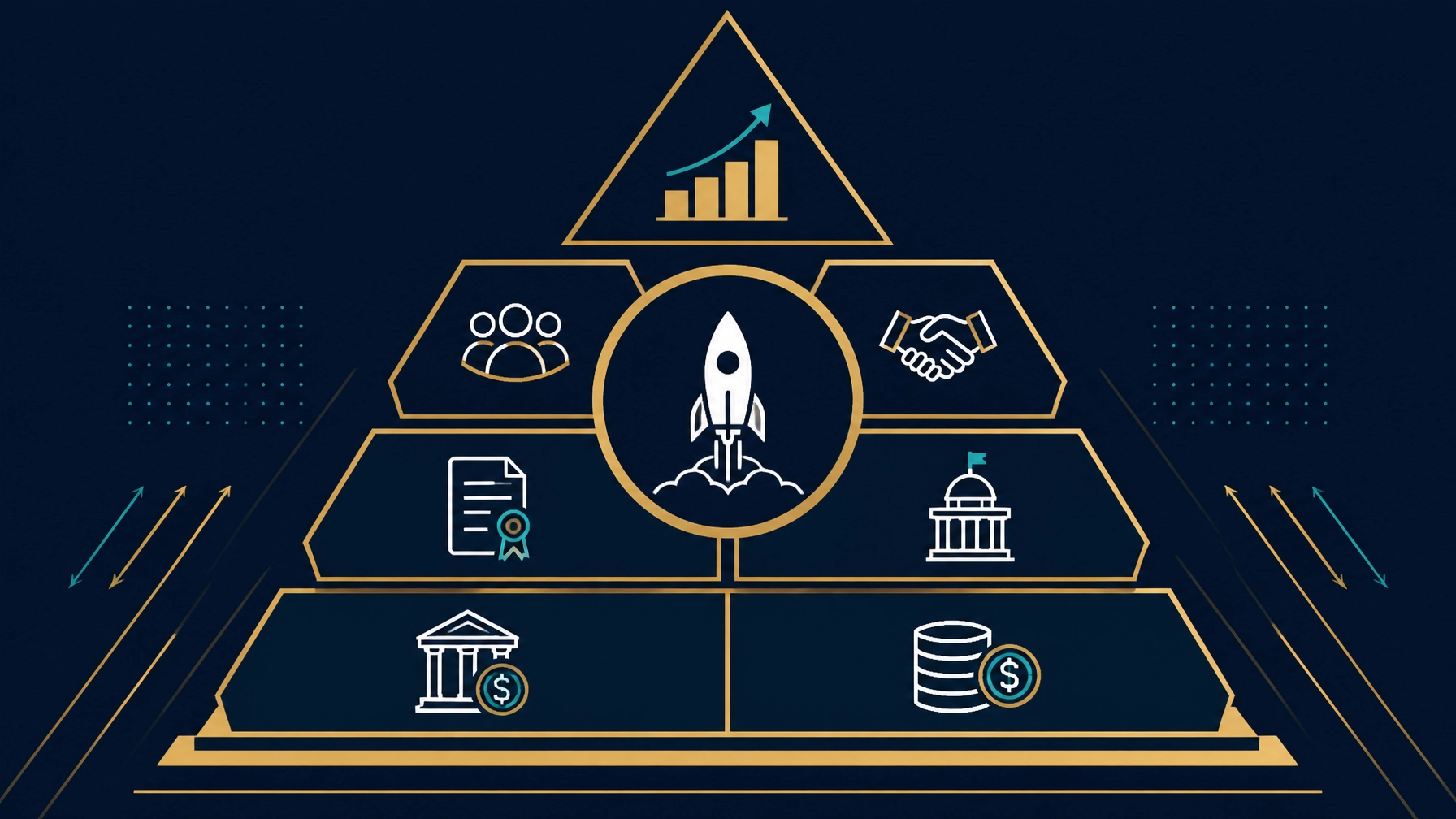
Figure 1. A resilient capital strategy combines multiple sources instead of depending on a single venture capital round.
Alexander the Great did not build an empire by sending one unit into every battle. He organized resources, secured supply lines, understood the terrain, and deployed the right force at the right time. Startup financing requires the same discipline.
In 2026, venture capital remains an important source of investment capital for startups. It is not, however, the entire capital strategy. Venture capital can accelerate product development, hiring, market expansion, and strategic execution, but it also creates dilution, governance requirements, and pressure to pursue a particular growth model.
The strongest founders are building a strategic capital stack: a coordinated combination of customer revenue, angel and equity investment, strategic partners, grants, federal and state programs, government contracts, debt where appropriate, and milestone-based financing.
At The Infinity Group, we are Business Development Architects. We help you evaluate the complete capital picture, prepare the business for serious funding conversations, identify appropriate capital sources, and execute a practical strategy from A to Z.
Venture Capital Is One Instrument: Not the Whole Strategy
Companies need capital to develop products, hire talent, acquire customers, manage operations, and reach commercial milestones. We have the expertise to determine which type of capital fits each need.
Venture capital is generally most useful when a company is pursuing significant, uncertain growth: entering a new market, building a major product line, expanding nationally, or developing a technology with a long path to commercial adoption. It can provide substantial resources and valuable relationships.
But venture capital is also dilutive. Founders exchange ownership for capital, and investors may receive board rights, approval rights, information rights, liquidation preferences, or other contractual protections. Those terms can be appropriate when aligned with the company’s objectives. They should not be accepted simply because venture capital is familiar.
A strategic capital stack asks a more practical question:
What is the right source of capital for this specific objective, at this specific stage, with the least unnecessary cost and dilution?
That question changes how you approach raising capital for business. Instead of raising one large round to cover an undefined period of runway, you build a funding plan around proof, performance, and measurable business progress.
The Core Components of a Strategic Capital Stack

Figure 2. Each layer serves a different financial and strategic purpose.
1. Customer Revenue: The First Form of Validation
Customer revenue is usually the most valuable capital available because it does not require permanent equity dilution. Revenue validates demand, demonstrates commercial relevance, and gives the company greater control over its future.
Companies need customers who will pay for a product, service, pilot, implementation, subscription, or development effort. We have helped businesses think through customer-funded development, paid pilots, advance purchase commitments, annual contracts, and co-development structures.
For an early-stage company, even modest revenue can improve the funding conversation. It demonstrates that the company is solving a real problem for a defined market. For a growth-stage company, predictable revenue can support debt, revenue-based financing, or a more favorable equity discussion.
Customer revenue does not replace outside capital in every situation. It does establish a foundation for stronger capital planning.
2. Angel and Equity Investment: Capital With Access
Angel investors and strategic equity investors can provide more than a check. They may offer industry contacts, operating experience, customer introductions, technical knowledge, or access to later-stage investors.
This makes angel capital particularly useful for startups that are validating a market, developing an initial product, or building an early commercial team. The right angel investor can help the company reach a milestone that makes later financing more practical.
Companies need a clear investment proposition before approaching angels. We have that expertise. We help define the market opportunity, explain the business model, organize the financial case, prepare the investor narrative, and clarify how the requested capital will be used.
Equity should be raised with purpose. The objective is not simply to sell ownership. The objective is to secure the resources and relationships required to create greater enterprise value.
3. Strategic Partners: Capital Plus Commercial Leverage
A strategic partner may be a major customer, distributor, manufacturer, technology provider, corporate investor, or channel partner. Strategic partners can contribute equity, working capital, technical resources, distribution, facilities, personnel, or market access.
Companies need partners who strengthen the business rather than merely add a recognizable name to a presentation. We help evaluate whether a proposed partner brings measurable value: revenue access, procurement knowledge, operational capacity, technology, credibility, or customer reach.
Possible structures include:
- Strategic equity investment
- Paid pilot or proof-of-concept agreement
- Advance purchase or minimum-volume commitment
- Joint development agreement
- Channel or distribution partnership
- Licensing arrangement
- Preferred supplier relationship
- Corporate venture investment
Strategic capital is most effective when the commercial relationship and the investment relationship support the same milestone.
4. Grants and Federal or State Programs: Non-Dilutive Support
Federal and state programs can support research, product development, commercialization, manufacturing, exporting, workforce development, and regional economic growth. Eligibility, timing, cost-sharing requirements, and reporting obligations vary by program.
For technology companies, the SBIR/STTR programs provide an established federal pathway for eligible small businesses pursuing research and development with commercialization potential. The program describes Phase I proof-of-concept awards, Phase II technology development, and Phase III commercialization pathways.
State programs may provide additional opportunities through economic-development agencies, export programs, innovation initiatives, manufacturing support, and sector-specific incentives. The SBA State Trade Expansion Program is one example of a program administered through state and territory organizations for eligible export-related activity.
Companies need to distinguish between a true grant opportunity and general business assistance. The SBA states clearly that it does not provide grants for simply starting or expanding a business. We help companies assess fit, identify credible programs, organize the required materials, and avoid wasting time on programs that do not match their business.
Grants are not free money without obligations. They require a qualified project, a defensible budget, compliance discipline, and strong execution.
5. Government Contracts: Revenue and Market Credibility
Government contracts can become a significant part of a company’s capital and growth strategy. A contract is not the same as a grant: the company must deliver a product or service in accordance with defined requirements, terms, schedules, and performance standards.
Companies need to understand the agency, mission, acquisition pathway, customer requirements, competitive environment, and procurement process. We bring more than three decades of experience involving federal agencies, government procurement, Congressional stakeholders, program development, and business-to-government strategy.
The federal SAM.gov Contract Opportunities system allows businesses to search procurement notices, including presolicitation notices, solicitations, award notices, and sole-source notices. Searching the database is only the beginning. A credible government strategy also requires positioning, relationship development, capability alignment, teaming, proposal planning, and disciplined pursuit.
Government business development can support strategic business growth when the opportunity matches the company’s capabilities and delivery capacity. No contract is automatic, and no advisor can guarantee an award. The work is to develop a credible, informed, and properly executed pursuit.
6. Debt and Revenue-Based Financing: Useful When the Numbers Support It
Debt can preserve ownership, but it creates repayment obligations. That makes it appropriate only when the company has sufficient revenue visibility, assets, purchase orders, receivables, or a clear path to repayment.
Potential instruments include:
- Bank or Small Business Administration-backed loans
- Equipment financing
- Purchase-order financing
- Accounts-receivable facilities
- Revenue-based financing
- Growth loans
- Venture debt
Debt may be appropriate for inventory, equipment, receivables, or a repeatable customer-acquisition channel. It is generally less appropriate for an unproven product, indefinite operating losses, or highly uncertain revenue.
We help decision-makers compare repayment pressure, covenants, warrants, personal guarantees, interest expense, and the effect on future financing. The right question is not whether debt is available. The right question is whether the business can responsibly carry it.
Build the Stack Around Milestones

Figure 3. Capital should be tied to measurable business milestones rather than an undefined runway target.
A strategic capital stack becomes effective when every financing source is connected to a defined result.
A pre-revenue startup may use founder capital, grants, paid pilots, and carefully selected angels to validate the problem and build an initial product.
A seed-stage company may combine customer revenue, angel investment, state or federal programs, strategic partnerships, and limited working-capital financing to prove product-market fit.
A company with repeatable revenue may use a targeted equity round for major expansion, debt for equipment or working capital, and revenue-based financing for predictable acquisition initiatives.
A growth-stage company may combine venture capital, strategic equity, government contracts, structured debt, and continued customer revenue to expand into new markets.
The financing plan should identify:
- The milestone the capital will achieve
- The amount required to reach that milestone
- The appropriate capital source
- The economic cost and dilution
- The reporting and compliance requirements
- The next milestone that improves the company’s position
This structure gives investors and lenders a clearer understanding of how their capital will be deployed. It also gives management a disciplined operating plan.
What Investor Readiness Really Requires

Figure 4. Capital sources should be evaluated by ownership cost, repayment pressure, strategic value, and timing.
Investor readiness is not just a polished pitch deck. Companies need a complete business case: a defined market, credible customer strategy, competitive positioning, financial model, use-of-funds plan, capitalization table, intellectual-property position, operating plan, and milestone schedule.
We provide startup business consultants who can help organize those elements into a coherent funding strategy. We identify gaps, strengthen the presentation, clarify the investment case, and help management prepare for conversations with investors, strategic partners, government stakeholders, lenders, and other capital providers.
A strong capital stack also requires execution after the funding conversation begins. That includes outreach, follow-up, diligence support, proposal refinement, partner coordination, and decision-making through each stage.
The Infinity Group Builds the Strategy From A to Z
Companies need more than a list of funding sources. They need a plan that connects capital to business development, market access, government opportunity, operating priorities, and anticipated return.
At The Infinity Group, we can support:
- Business development strategy
- Capital-source identification
- Investor readiness
- Financial and milestone planning
- Angel and equity positioning
- Strategic partner development
- Federal and state program research
- Government opportunity development
- Contract proposal strategy
- Government-facing positioning
- Stakeholder and relationship planning
- Execution support from beginning to end
Our consulting services combine funding development, startup advisory, federal agency guidance, business-to-government support, and contract proposal strategy. Our government practice reflects experience across defense and civilian agencies, Congressional stakeholders, and complex procurement environments. We also provide business growth support for organizations building a broader strategic plan.
The issue is not whether venture capital is good or bad. The issue is whether it is the right instrument for the next milestone.
If your company is raising capital for business, ask yourself: What percentage of ownership should you exchange? What repayment obligation can your revenue support? Which grants or government programs fit your work? Which customer or strategic partner could accelerate commercial development? What milestone will make the next financing more attractive?
The answer should be deliberate. It should be documented. It should be executed with discipline.
Build the stack. Strengthen the strategy. Advance the business.
Discuss your capital strategy with The Infinity Group.
Comments: Disabled
Replies: Disabled
