Author: Social Media

  • The Co-Production Economy: How Studios and Streamers Are Sharing Risk and Expanding Distribution

    The Co-Production Economy: How Studios and Streamers Are Sharing Risk and Expanding Distribution

    In military strategy, an objective is not secured by force alone. It is secured by planning, logistics, command structure, timing, and disciplined allocation of resources. The same principle now governs the modern media business.

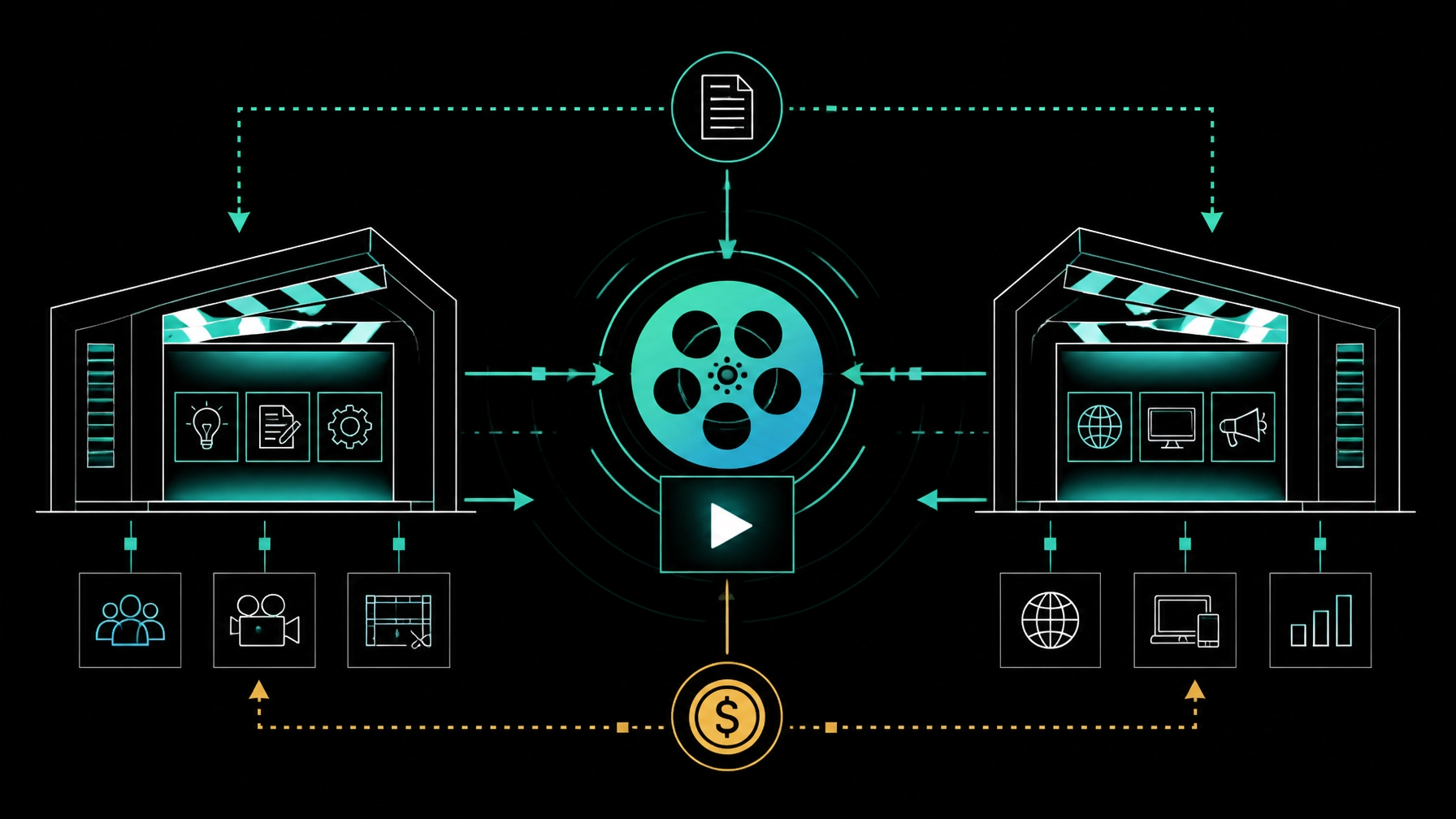
    A strong series, film, podcast, or digital property requires more than creative talent. It requires rights strategy, financing commitments, production capacity, distribution access, marketing support, delivery discipline, and a clear path to revenue. The emerging co-production economy is built around bringing those capabilities together.

    A recent agreement reported by Deadline illustrates this shift. Netflix and AMC Studios have agreed to jointly develop and produce original series, with Bannerman: from Shane Black and Craig Silverstein: as the first project identified under the arrangement.

    The specific deal is not a universal template. It is, however, a useful case study in how established media companies can share risk, preserve strategic value, and expand distribution without requiring one party to control every element.

    The Netflix–AMC Structure: A Shared Project With Deliberate Windows

    According to Deadline, AMC Studios will serve as lead studio on Bannerman. The series will premiere on AMC in the United States and Canada, then become available on Netflix in those territories 90 days after the season finale airs.

    In Australia, New Zealand, and Spain, Netflix and AMC will jointly debut each episode. Netflix will carry the series exclusively in other international territories.

    That is not simply a production arrangement. It is a coordinated allocation of:

    • Development responsibility
    • Production leadership
    • First-window value
    • Streaming distribution
    • International exposure
    • Audience acquisition
    • Platform identity
    • Revenue opportunity
    • Long-term franchise potential

    AMC maintains a meaningful first-window role in its core North American market. Netflix receives a defined second window in the United States and Canada, joint exposure in selected territories, and exclusive international distribution elsewhere.

    This structure allows each partner to contribute what it already does well. AMC brings studio infrastructure, development history, creative relationships, and a recognizable premium-drama brand. Netflix brings global reach, streaming scale, audience data, and international availability.

    Infographic showing a media project moving through development, production, distribution, and revenue stages

    Co-Production Is Not the Same as Licensing

    The distinction between co-production and licensing is central.

    In a licensing arrangement, one company generally acquires rights to distribute content that another company has already produced or controls. The license may be exclusive, nonexclusive, co-exclusive, limited by territory, or limited by time.

    The licensee pays for access. The rights holder receives consideration and retains some degree of ownership or control, depending on the agreement.

    In a co-production arrangement, the parties participate earlier and more deeply. They may jointly develop the project, commit production resources, share approvals, coordinate financing, divide territory rights, and agree in advance on distribution windows.

    The risk is shared earlier. So is the opportunity.

    The Netflix–AMC relationship already includes major licensing activity. Deadline reported that Netflix and AMC entered a five-year, approximately $500 million co-exclusive licensing agreement covering The Walking Dead universe. That arrangement is materially different from the Bannerman co-production.

    One deal primarily monetizes an existing library and established intellectual property. The other creates a new production relationship around a developing project.

    Both structures can be valuable. They solve different business problems.

    How Co-Production Allocates Risk

    A well-structured co-production can divide risk across several categories.

    Development risk

    Development risk exists before cameras begin to roll. The project may face script delays, creative changes, packaging challenges, talent availability issues, or uncertainty about audience positioning.

    Partners can reduce this risk by agreeing on:

    • Who controls development
    • Who funds development expenses
    • Which approvals are required
    • How many drafts or development stages are expected
    • What happens if the project is not greenlit
    • Whether development materials can be reused elsewhere

    For producers and media startups, development capital should never be treated as an informal promise. It must be connected to milestones, deliverables, approvals, and a realistic schedule.

    Production risk

    Production risk includes budget overruns, delays, labor complications, location problems, insurance claims, post-production changes, and failure to deliver the agreed program.

    A project evaluation should identify:

    • The approved production budget
    • Each party’s cash or in-kind contribution
    • Completion-bond or contingency expectations
    • Cost-overrun responsibility
    • Production-management authority
    • Delivery specifications
    • Insurance and risk-management requirements
    • Post-production control

    The question is direct: if the budget increases by 10 percent, who pays, who approves the increase, and what rights change if the funds are not available?

    Distribution risk

    Distribution risk is the risk that the completed project does not reach the intended audience or does not receive adequate promotional support.

    A co-production can allocate distribution responsibility by territory and platform. It can also establish minimum marketing commitments, launch timing, delivery dates, and consultation rights.

    Distribution terms should address:

    • First window
    • Second window
    • Subscription streaming
    • Transactional streaming
    • Broadcast or cable
    • International licensing
    • Airline, educational, or institutional use
    • Physical media, where relevant
    • Promotional clips and social-media rights
    • Marketing approvals and obligations

    The Bannerman structure demonstrates how windowing can preserve value for more than one platform. AMC receives the initial North American launch. Netflix receives a later streaming window. Other territories follow a different arrangement.

    Windowing is not an afterthought. It is part of the project’s financial architecture.

    Illustration of a balanced scale allocating budget, timing, territory, and rights between two media partners

    A Practical Evaluation Framework for Producers and Investors

    Before committing capital or accepting a co-production proposal, evaluate the project across nine areas.

    1. Rights control

    Confirm who owns or controls the underlying rights. This includes books, articles, characters, recordings, trademarks, likenesses, music, archival material, formats, and derivative works.

    You should know what rights are controlled, for how long, in which territories, and subject to what restrictions.

    2. Financing commitments

    Separate firm commitments from expressions of interest. Identify cash contributions, tax-credit assumptions, presales, minimum guarantees, grants, loans, equity, in-kind services, and deferred compensation.

    A financing plan should show the full capitalization of the project: not only the amount needed to begin production.

    3. Delivery obligations

    Define what must be delivered, when it must be delivered, and to what technical standard. A project can lose value when delivery materials are incomplete, late, or rejected by a platform.

    Delivery obligations should include masters, captions, subtitles, music documentation, artwork, metadata, legal documentation, and promotional materials.

    4. Territory

    Map the world by territory. Do not assume that “global” means one uniform right.

    Territory planning should identify:

    • Countries included
    • Countries excluded
    • Local partners
    • Language requirements
    • Censorship or classification issues
    • Existing rights conflicts
    • Local marketing responsibility

    5. Windowing

    Build a written release sequence. A project may have different windows for theatrical, broadcast, premium streaming, ad-supported streaming, transactional platforms, international television, and library exploitation.

    The timing between windows affects both audience growth and revenue value.

    6. Recoupment

    Establish how money flows back before profits are divided. The model should identify approved expenses, distribution fees, overhead, interest, sales commissions, reserves, and the order in which parties recoup their contributions.

    Investors should ask to see a recoupment waterfall and sample performance scenarios. A project can generate substantial revenue while still producing limited distributable profit if the waterfall is poorly understood.

    7. Governance

    Determine who has authority over budget, casting, creative changes, vendors, release timing, marketing, licensing, and disputes.

    Shared ownership without defined governance creates delay. Defined governance creates execution.

    8. Contingency planning

    Every serious media project requires a plan for failure points: a lead actor becomes unavailable, a location closes, financing is delayed, production is paused, a platform changes strategy, or a delivery date moves.

    Contingency planning should cover replacement talent, alternate locations, reserve financing, schedule changes, revised distribution, and project wind-down.

    9. Exit and continuation rights

    A successful first season or first installment may create a franchise. The agreement should anticipate renewals, sequels, spinoffs, remakes, podcasts, books, merchandise, live events, and other derivative opportunities.

    If the project succeeds, who has the right to continue it? If the partners disagree, what process applies?

    The Broader Lesson for Media Startups

    The co-production economy creates opportunities for companies that can present more than a creative idea.

    Producers need a business plan. Studios need a capital and distribution strategy. Media startups need a credible rights position, operating budget, production roadmap, and defined audience. Investors need a transparent path from capital deployment to recoupment and return.

    That is where preparation matters.

    At The Infinity Group, we support producers, screenwriters, directors, production companies, broadcasters, and podcasters with project positioning, business planning, funding-source development, investor readiness, strategic relationships, and execution support.

    Our entertainment and media practice is built around the business side of creative work. We help connect strategy, relationships, resources, and execution. We can also coordinate with appropriate financial, legal, technical, government, and industry professionals when specialized capabilities are required.

    Our partner, Spokane Productions, brings full-service creative and production capabilities across film, video, live streaming, audio recording, mixing, mastering, podcasting, music, radio and television narration, ADR, and photography. That relationship supports a practical view of the production pipeline: from concept and packaging through execution and delivery.

    We do not present the Netflix–AMC agreement as a form to copy. We use it as a reminder that the strongest media ventures are structured before the first major commitment is made.

    Build the Structure Before You Chase the Opportunity

    Companies need creative quality. We have that perspective.

    Companies need capital strategy. We have that expertise.

    Companies need production resources, distribution relationships, rights analysis, investor materials, business development, and disciplined execution. We can help assemble the plan from beginning to end: from A to Z.

    The question for any producer or investor is practical: if a stronger rights position, better financing structure, improved distribution plan, and clearer recoupment model materially increase the project’s opportunity, what is the cost of failing to build that structure early?

    The answer is usually larger than the cost of preparation.

    If you are developing a film, television series, podcast network, digital media venture, or other entertainment project, contact The Infinity Group at connect@infinity-us.com. We will discuss your project, timeline, capital requirements, strategic needs, and next steps at reasonable costs.

    CREATIVE PROJECTS NEED BUSINESS DISCIPLINE.
    BUSINESS DISCIPLINE CREATES FUNDING AND GROWTH.
    PLAN IT. STRUCTURE IT. DELIVER IT.

    Sources

    Official The Infinity Group horizontal corporate logo with navy-and-gold monogram and tagline

    Comments are disabled. Replies are disabled.

  • AI Music Licensing Is Creating a New Media Revenue Model

    AI Music Licensing Is Creating a New Media Revenue Model

    In military planning, an army does not advance on strength alone. It advances when command, supply lines, intelligence, and execution operate together. The same principle now applies to AI music.

    The next phase of music technology will not be defined only by who can generate a song. It will be defined by who can identify rights, clear permissions, track attribution, protect creators, moderate outputs, and distribute revenue with enough discipline for the entire system to function.

    Recent developments involving Udio, GRAI, Music IP Holdings, Universal Music Group (UMG), and BMG show that the industry is building that system now.

    This is not simply a technology story. It is a media-business story.

    From Songs as Products to Music Rights as Infrastructure

    Traditional music monetization has centered on finished works: recordings, compositions, performances, streams, downloads, synchronization placements, concerts, and physical products.

    AI introduces additional commercial uses for the same underlying assets. A recording or composition may become part of a licensed training environment. A generated output may be distributed through a controlled platform. A creator may receive attribution or compensation when an AI system uses a catalog, name, voice, or composition under an approved arrangement.

    The commercial model is therefore expanding across several layers:

    • Rights-cleared training data
    • AI-generated outputs
    • Subscription and enterprise platform revenue
    • Commercial licensing for generated music
    • Attribution and reporting systems
    • Watermarking and content identification
    • Revenue-sharing arrangements
    • Moderation and output controls

    These layers create an emerging model that combines music licensing, software subscriptions, data management, intellectual property administration, and media distribution.

    Infographic showing the three-layer structure of AI music licensing, from music catalogs to AI training to media monetization

    What the Music IP Holdings Development Signals

    According to Variety, Music IP Holdings was formed through a strategic partnership involving UMG and intellectual property management firm Liquidax. The company has licensed a portfolio of more than 24 patents to AI music platforms Udio and GRAI.

    The reported patents address a broad range of functions associated with AI-generated media, including:

    • Moderation
    • Watermarking
    • Licensed distribution
    • Monetization
    • Tracking AI-derived content
    • Managing unauthorized outputs
    • Connecting creators and rights holders to new revenue streams

    The significance is not limited to the number of patents. The larger issue is the attempt to establish an operating framework for responsible AI media.

    Variety reported that Udio and GRAI were the first companies to license the portfolio, in part because of their existing relationships with UMG. Udio has a reported licensing relationship with UMG, while GRAI is developing a social streaming service designed around sharing music and crediting contributors.

    These reported agreements should not be treated as a universal industry standard. The specific commercial terms are not fully public, and other platforms may use different technical, contractual, or financial structures. However, the direction is clear: rights holders and technology companies are moving toward systems where permission, attribution, and monetization are designed into the product rather than addressed after distribution.

    For artists, this may provide more control over how their work participates in AI systems. For platforms, it may create a clearer path to commercial operation. For investors, it creates a new diligence question: does the company possess a functioning rights and revenue architecture, or only a compelling generation demo?

    BMG and Suno: Licensing Past Training and Future Models

    A second important development was reported by Variety on August 12, 2026. Suno entered a licensing agreement with BMG covering BMG’s repertoire of artist recordings and the use of BMG songs in training Suno’s previous models.

    The agreement follows other label settlements and partnerships as Suno prepares new models powered by licensed work. Variety reported that Suno has faced lawsuits alleging unauthorized use of sound recordings to train its systems, while separate disputes remain ongoing.

    The business importance of the BMG agreement is its two-part structure:

    1. It addresses the use of repertoire in future commercial development.
    2. It also covers the use of BMG songs in earlier model training.

    That structure points toward a broader industry trend: AI licensing may involve both training rights and output or platform-use rights. These are related, but they are not the same business question.

    A training license concerns how protected material may be used to develop or operate a model. Output licensing concerns what users may do with generated music, how similarities or contributions are handled, and who receives compensation when content is commercially exploited.

    The final structure will vary by agreement. There is no single public rate card or universal royalty formula that applies across the industry. Businesses should avoid assuming that one reported deal establishes the terms for every artist, label, publisher, platform, or catalog.

    Still, the BMG development demonstrates that negotiated licensing is becoming a central route for AI music companies seeking legitimacy, catalog access, and investor confidence.

    Business graphic showing artists, labels, publishers, AI platforms, and fans connected through licensing and royalty flows

    The Six Operating Requirements for a Sustainable Model

    1. Rights clearance

    A platform must know what it has permission to use and who controls those rights. That can involve sound recordings, compositions, performances, names, voices, likenesses, and contractual restrictions.

    Rights clearance is not a one-time activity. Catalogs change. Ownership can be divided. Agreements can expire. Territorial rights can differ. A media startup that cannot document its rights position will face difficulty with enterprise customers, strategic partners, and investors.

    2. Training and output licensing

    Training permission and commercial output permission should be evaluated separately. A company may have rights to use certain materials in model development without automatically having unrestricted rights to distribute every output.

    Contracts should clearly address permitted uses, restrictions, revenue participation, reporting, takedown procedures, and responsibilities among the platform, rights holder, creator, and customer.

    3. Attribution and provenance

    AI-generated music creates a difficult accounting problem: multiple works may influence a system, while a final output may not resemble any single source in an obvious way.

    Platforms are therefore developing methods to record provenance, identify contributions, and connect usage to compensation. Whether a system uses direct attribution, catalog-level allocation, revenue pools, or another formula, investors should examine how the process works and whether it can be audited.

    4. Watermarking and identification

    Variety reported that Suno planned to watermark songs downloaded from its platform. Watermarking can help identify AI involvement and support distribution controls, although its effectiveness depends on implementation, interoperability, and how downstream platforms treat the information.

    For media buyers, watermarking may become part of content review. For platforms, it may support trust and moderation. For rights holders, it may create an additional data point for tracking where AI-generated works move.

    5. Moderation and creator protection

    A responsible platform must address impersonation, unauthorized voice or likeness use, harmful content, deceptive releases, and outputs that create confusion about human authorship.

    Moderation is not merely a public-relations feature. It is an operating capability that affects platform risk, customer adoption, distribution relationships, and long-term value.

    6. Revenue sharing and reporting

    The commercial promise of AI music depends on whether revenue reaches the people whose work and rights make the system valuable.

    Potential revenue sources include subscriptions, enterprise access, API fees, advertising, licensing of generated outputs, custom composition services, and distribution partnerships. Agreements may use flat fees, minimum guarantees, revenue shares, or other formulas.

    The essential requirement is transparency. Artists, labels, publishers, and investors need to understand what is being measured, how revenue is allocated, when payments are made, and how disputes are handled.

    What This Means for Investors and Media Startups

    The market opportunity is substantial, but investor diligence must move beyond user growth and generation volume.

    A serious review should ask:

    • What music and related rights does the company control or license?
    • Are agreements direct, sublicensed, territorial, time-limited, or restricted by use?
    • Does the company distinguish training rights from output rights?
    • Can it identify AI-generated content after download or distribution?
    • How are artist, songwriter, label, and publisher payments calculated?
    • Are moderation policies operational or merely described?
    • Can the reporting system support audits?
    • What happens when a rights holder withdraws participation?
    • Does the business depend on unresolved disputes?
    • Can the platform serve enterprise, advertising, gaming, film, television, and streaming customers?

    This diligence applies to AI music platforms, catalog businesses, media startups, creator tools, distribution companies, and investment vehicles connected to music intellectual property.

    The strongest businesses will not be those that generate the most content without structure. They will be the businesses that connect creative capability to rights management, commercial distribution, and repeatable financial systems.

    Building the Business Around the Opportunity

    The Infinity Group works with entertainment and media ventures on the business side of creative development. We help producers, production companies, broadcasters, podcasters, screenwriters, directors, and media entrepreneurs develop project positioning, business plans, funding strategies, investor materials, strategic relationships, and execution roadmaps.

    Learn more about The Infinity Group’s entertainment and media work.

    Our role is not to provide legal conclusions about any particular licensing arrangement. We help organize the business opportunity so that clients can coordinate with appropriate legal, financial, technical, and industry professionals.

    Through our work with partners, including Spokane Productions, we support the development and financing strategy surrounding creative projects. That may include identifying funding sources, strengthening investor readiness, evaluating distribution and licensing opportunities, and coordinating the resources required to move a project forward.

    For an AI music or media startup, that work may begin with a rights-and-revenue map. For an established company, it may involve a new partnership, licensing program, platform expansion, or capital raise.

    The principle remains the same: strategy, relationships, resources, and execution must operate together.

    The New Revenue Model Is Being Built Now

    The Udio and GRAI patent licenses reported by Variety, the Music IP Holdings framework, UMG’s involvement, and the BMG-Suno licensing agreement each represent a different part of the same market transition.

    Music is becoming:

    • Creative content
    • Training infrastructure
    • Licensed data
    • Platform inventory
    • Attribution information
    • Subscription value
    • Investment-grade intellectual property

    The industry is still establishing commercial standards. Reported agreements are important signals, but they are not identical contracts and should not be treated as guaranteed outcomes. The companies that succeed will be the ones that convert uncertainty into organized processes: clear rights, disciplined contracts, reliable tracking, responsible moderation, defensible attribution, and measurable revenue participation.

    What is the value of building a media business that can earn from creation, licensing, distribution, and platform participation rather than from one revenue stream alone?

    That is the question investors, artists, labels, publishers, and entrepreneurs should be asking now.

    The Infinity Group can help you develop the plan, identify the resources, prepare the funding strategy, and coordinate the execution required to move from concept to commercial opportunity. Contact us at connect@infinity-us.com to discuss your project, partnership, or capital needs.

    CLEAR RIGHTS. STRONGER STRATEGY. BETTER MEDIA VALUE.

    Investor diligence framework for evaluating rights, provenance, attribution, watermarking, moderation, contracts, and revenue sharing in AI music startups

    Sources

    Comments disabled. Replies disabled.

    The Infinity Group official corporate logo with the tagline “Strategies + Execution = Funding and Growth”

  • Entertainment Financing in 2026: Why Rights and Licensing Are Becoming the Investment Story

    Entertainment Financing in 2026: Why Rights and Licensing Are Becoming the Investment Story

    From ancient trade routes to modern military campaigns, successful operations have always depended on control: control of resources, control of access, and control of the route to the objective. Entertainment financing follows the same principle. A strong concept matters, but investors and strategic partners increasingly want to know who controls the underlying rights, how those rights may be licensed, and whether the project can generate revenue across more than one platform.

    In 2026, rights and licensing are not secondary paperwork. They are becoming central investment considerations across film, television, music, streaming, podcasting, and media startups.

    The project that can clearly document its ownership, permissions, creator protections, distribution assumptions, revenue splits, insurance, and use-of-funds is easier to evaluate. The project with unclear rights may face delays, reduced financing options, or costly restructuring before capital can be considered.

    The investment story is moving beyond production

    Entertainment financing has traditionally focused on budgets, talent, production schedules, tax incentives, presales, distribution commitments, and projected audiences. Those factors remain important. However, investors now examine the rights architecture behind the project with greater discipline.

    A film is not simply a film. It may include theatrical, broadcast, streaming, international, remake, sequel, merchandising, soundtrack, interactive, and promotional rights. A television format may have value in multiple territories. A podcast may create advertising, subscription, adaptation, book, live-event, and licensing opportunities. A music catalog may generate streaming, synchronization, performance, publishing, and brand-partnership revenue.

    We help businesses identify these opportunities and organize them into a practical business-development and funding strategy. Our Entertainment & Media practice works with producers, screenwriters, directors, production companies, broadcasters, podcasters, and media ventures from creative positioning through capital strategy and execution.

    Conceptual rights and licensing matrix for entertainment projects across territories, media, ownership, and revenue pathways

    Why the MPA–ByteDance framework matters

    A recent Variety report described a memorandum of understanding between the Motion Picture Association and ByteDance concerning intellectual-property protections across ByteDance’s generative products, including Seedance and Seedream.

    The framework followed public concerns about AI-generated videos that referenced recognizable actors and copyrighted film properties. According to Variety, the agreement reflects continuing discussions about guardrails, copyright protection, and responsible innovation across products connected to TikTok, CapCut, Dreamina, and related services.

    This development does not establish a universal rule for every entertainment company, platform, producer, or investor. It is not a replacement for project-specific contracts, rights clearances, guild requirements, platform terms, or professional legal review. Its importance is strategic: the market is demonstrating that intellectual-property protection, creator consent, likeness, and permitted uses are financing issues.

    Investors want to know whether a project can be distributed without creating avoidable infringement exposure. Producers want to know whether their content and talent relationships can support future exploitation. Platforms want clear authority to use, transform, promote, and distribute content within defined boundaries.

    That makes rights documentation part of the business case: not merely part of the closing file.

    What investors and producers should document

    1. Chain of title

    Chain of title establishes how ownership or control moved from the original creator or rights holder to the current production entity. Depending on the project, this may include:

    • Rights to an underlying book, article, screenplay, format, song, recording, or life story
    • Writer, producer, director, performer, composer, and contributor agreements
    • Assignments of copyright and related rights
    • Production-company ownership documents
    • Prior options, renewals, reversion clauses, and encumbrances
    • Existing distribution, financing, or licensing obligations

    A clean chain of title gives investors a clearer answer to the basic question: who has authority to make this project, finance it, license it, and collect its revenue?

    2. Permissions and clearances

    Permissions should be documented for locations, brands, artwork, archival material, music, trademarks, footage, photographs, interviews, software, and third-party content.

    The project team should also identify restrictions. A permission may cover one territory but not another. It may apply to a theatrical release but not advertising. It may last for a defined term. It may exclude sequels, adaptations, artificial-intelligence training, or commercial endorsements.

    A rights matrix can make these boundaries visible before they become a financing problem.

    3. Talent, likeness, voice, and identity rights

    Talent agreements should address more than compensation and production services. They should clearly identify permitted uses of a person’s name, image, likeness, voice, performance, biography, archival material, and approved digital representations.

    For projects involving synthetic media or AI-enabled tools, the documentation should address:

    • Whether a digital replica may be created or used
    • Who approves that use
    • The permitted media, territory, and duration
    • Whether the use extends to promotion or derivative works
    • Compensation, residuals, royalties, or other participation
    • Restrictions on political, commercial, or misleading uses

    These issues can affect a project’s ability to attract talent, obtain insurance, complete production, and secure distribution. They should be addressed directly and reviewed by appropriate entertainment counsel.

    Creator protection and likeness-rights diagram showing consent, voice, image, music, revenue participation, audit, and insurance

    4. Licenses and distribution assumptions

    A financing plan should state what rights are expected to be licensed and why the assumptions are credible.

    That includes:

    • Territory
    • Platform or medium
    • Exclusivity
    • Term
    • Language
    • Windowing
    • Minimum guarantees
    • Delivery requirements
    • Distribution fees
    • Marketing commitments
    • Renewal and reversion provisions

    A projected streaming license is not the same as a signed license agreement. A potential international sale is not the same as a verified presale. Investors and producers should distinguish confirmed commitments from estimates, targets, and future opportunities.

    The more clearly those categories are separated, the more useful the financial model becomes.

    Rights create multiple monetization paths

    Rights management is particularly important when a project has a broader ecosystem.

    A film may lead to a television series, podcast, soundtrack, book, live event, game, or branded licensing opportunity. A podcast may become a documentary or scripted series. A music catalog may support synchronization, advertising, gaming, and international publishing. A media startup may build a library of formats, audience data, production capabilities, and licensing relationships.

    This does not mean every project should pursue every possible revenue stream. Over-expansion can dilute the core strategy. The objective is to identify realistic paths, assign ownership and control, estimate costs, and establish the order in which rights may be exploited.

    The financing question is direct: Does the project have a credible path from controlled rights to measurable revenue?

    Build the capital stack around the rights structure

    Entertainment capital may include equity, debt, tax incentives, grants, presales, minimum guarantees, platform advances, sponsorships, and strategic partnerships. Each source affects control, repayment priority, ownership, and revenue participation.

    Entertainment project capital stack flowing through equity, debt, incentives, presales, licensing, and distribution into multiple revenue channels

    Before approaching investors, producers should prepare a use-of-funds schedule that connects capital to execution:

    • Development and rights acquisition
    • Talent and production costs
    • Equipment, locations, insurance, and post-production
    • Legal, accounting, clearance, and delivery costs
    • Marketing and distribution
    • Working capital and contingency
    • Business-development and licensing activity

    Investors also want to understand the revenue waterfall: who is paid first, how recoupment works, when profit participation begins, and how revenue is reported and audited.

    We can help organize the business plan, financial presentation, funding-source development, investor readiness, strategic introductions, and execution priorities. We do not guarantee financing, and we do not replace legal, tax, accounting, insurance, or securities professionals. We help establish the business structure and funding strategy required for serious conversations.

    The role of The Infinity Group and Spokane Productions

    The Infinity Group is a business-development and funding-strategy organization. Founded in 1994, we bring experience across commercial markets, government, technology, strategic relationships, and capital development. Our entertainment and media practice was established to support the growing needs of producers, creators, broadcasters, podcasters, and media ventures.

    We help clients move from creative vision to business opportunity through project positioning, planning, capital strategy, resource development, relationship building, and execution.

    Spokane Productions is a creative production partner offering studio rental, video production, and audio recording services. It is not presented as an investment fund or financing institution. In appropriate circumstances, production capabilities and business-development strategy can work together: Spokane Productions can support the creation of media assets, while The Infinity Group can help address positioning, funding readiness, partnerships, and broader growth planning.

    Our work may also involve coordination with appropriate legal, financial, insurance, technical, distribution, government, and industry professionals. The objective is straightforward: establish a stronger path from concept, to rights, to capital, to delivery, to monetization.

    A practical readiness checklist

    Before presenting an entertainment or media opportunity to capital sources, confirm that you have:

    1. A documented chain of title
    2. Written permissions and clearances
    3. Talent, likeness, voice, and creator-rights documentation
    4. A territory-and-platform rights matrix
    5. Realistic distribution assumptions
    6. Defined licensing terms and revenue splits
    7. Insurance and errors-and-omissions planning
    8. A detailed budget and use-of-funds schedule
    9. A financing structure that identifies ownership and repayment priority
    10. A revenue waterfall with reporting and audit procedures
    11. A plan for protecting and enforcing intellectual property
    12. A credible strategy for future rights exploitation

    This checklist does not determine whether a project will receive funding. It does provide the foundation for a more informed review.

    If you are developing a film, television project, music venture, podcast, streaming business, production company, or media startup, we can help you evaluate the opportunity from A to Z. We can help you organize the strategy, identify the resources, prepare the funding case, and develop the relationships required for execution.

    Would the cost of professional preparation be significant? Yes. But what is the value of protecting rights, improving financing readiness, and creating several credible paths to revenue before the opportunity reaches the market?

    Rights must be clear.
    Licensing must be strategic.
    Capital must be organized.
    Growth must be executed.

    Contact The Infinity Group to discuss your project, timeline, funding needs, and next steps. Email us directly at connect@infinity-us.com.

    STRATEGY + EXECUTION = FUNDING AND GROWTH.

    Sources

    Official The Infinity Group corporate logo with the tagline Strategies + Execution = Funding and Growth

    Comments are disabled for this article. Replies are disabled for this article.

  • DoD Accounting Reform: Could Commercial Firms Finally Face a Lower Barrier to Entry?

    DoD Accounting Reform: Could Commercial Firms Finally Face a Lower Barrier to Entry?

    In military planning, the side that moves resources with discipline, visibility, and speed holds the advantage. Defense acquisition works the same way. A capable company may have the right technology, workforce, and mission fit, but if its accounting systems cannot explain costs clearly, the path to a government contract can become unnecessarily difficult.

    That path may be changing.

    The Department of Defense is asking industry for “common sense contract accounting changes” that could reduce compliance costs, align government data and audit expectations more closely with Generally Accepted Accounting Principles (GAAP), and make it easier for commercial suppliers to participate in defense procurement.

    The effort is important. It is also still developing.

    The reporting does not mean that current contract obligations have disappeared. It does not automatically exempt a company from existing Cost Accounting Standards (CAS), Federal Acquisition Regulation (FAR) requirements, Defense Federal Acquisition Regulation Supplement (DFARS) clauses, audit requirements, or contract-specific business systems. Companies must continue meeting the requirements written into their contracts and solicitations.

    However, the direction is clear: DoD is examining whether modern commercial accounting, internal controls, automation, and data practices can provide strong oversight without forcing every supplier to build a separate government-unique accounting structure.

    What DoD Is Considering

    In an open letter dated August 7, 2026, senior acquisition and financial officials invited the defense industrial base to recommend practical changes to contract accounting, business-system data, and audit requirements.

    The letter focuses on two related objectives:

    • Encourage more commercial suppliers to participate in defense contracting.
    • Reduce compliance costs by aligning key DoD requirements with GAAP and internal control environments already used by commercial companies.

    The department specifically referenced internal controls maintained under Section 404(b) of the Sarbanes-Oxley Act. That reference matters because many larger commercial firms already operate with documented controls, financial reporting procedures, audit trails, and automated enterprise systems.

    The broader question is straightforward:

    If a commercial company already maintains reliable financial data and strong internal controls, must it also create an entirely separate accounting architecture to work with DoD?

    The department is exploring whether the answer can become “no” in more situations.

    Visual transition from legacy government-unique accounting requirements to modern GAAP-aligned data and controls

    The CAS–GAAP Direction Is Significant

    The DoD initiative comes alongside Cost Accounting Standards Board activity intended to bring portions of CAS into closer alignment with GAAP.

    Federal News Network reported that the CAS Board has eliminated or substantially removed provisions associated with four standards: CAS 404, CAS 408, CAS 409, and CAS 411. The changes address areas such as capitalization, depreciation, compensated absences, and material costs: areas where commercial accounting practices and government accounting requirements have historically overlapped but did not always operate identically.

    The effect is not that government oversight ends. The effect is that the difference between ordinary commercial accounting and government contract accounting may become narrower.

    That distinction is important for commercial and mid-sized firms. A company entering the defense market may already have:

    • GAAP-based financial statements;
    • An enterprise resource planning system;
    • Documented approval processes;
    • Payroll and timekeeping controls;
    • Segregation of duties;
    • Financial close procedures;
    • External audit support;
    • Data retention and reporting policies.

    When government requirements duplicate these systems or require separate treatment, the company faces additional cost, training, reconciliation, and audit exposure. Greater alignment could allow firms to use more of what they already have: provided those systems produce sufficiently detailed, reliable, and traceable information.

    What This Does: and Does Not: Change

    This reform effort should be viewed as a developing policy direction, not as a blanket waiver.

    It may eventually reduce:

    • Duplicative accounting procedures;
    • Separate government-only reporting structures;
    • Reconciliation between GAAP and certain CAS treatments;
    • Costs associated with maintaining multiple data environments;
    • Administrative burdens that discourage commercial suppliers from bidding.

    It does not automatically remove:

    • Requirements in an existing contract;
    • Clauses included in a solicitation;
    • Applicable CAS obligations;
    • Cost allowability and allocability requirements;
    • Timekeeping responsibilities;
    • Internal control expectations;
    • Audit access;
    • Requirements for accurate pricing and supporting documentation;
    • The need to review contract-specific DFARS and FAR provisions.

    A company should never rely on a news report, proposed rule, or policy letter as a substitute for reading the actual solicitation, contract, clause, regulation, and agency guidance applicable to its work.

    The correct business response is preparation: not assumption.

    Six Areas Commercial Firms Should Strengthen Now

    1. Accounting Systems

    Your accounting system must produce financial information that is timely, consistent, and explainable. It should identify revenue, labor, materials, subcontractor costs, overhead, and other significant cost categories in a way that management and government reviewers can understand.

    A modern commercial system may be suitable, but “modern” alone is not enough. The key questions are:

    • Can the system preserve source records?
    • Can it distinguish direct and indirect costs?
    • Can it produce reports by contract, project, department, or work package?
    • Can authorized personnel identify who entered or changed data?
    • Can the company reproduce historical reports?

    A system should support decisions, not simply record transactions.

    2. Cost Allocation

    Commercial firms often price by product, customer, subscription, milestone, or project. Government work may require more precise visibility into how labor, materials, facilities, and shared services are allocated.

    Review whether your allocation methodology is:

    • Consistent;
    • Reasonable;
    • Documented;
    • Applied uniformly;
    • Supported by actual operational practices;
    • Reviewed when the business changes.

    Do not wait until an audit or proposal deadline to decide how shared engineering, administrative, facilities, or research costs should be assigned.

    3. Timekeeping

    Timekeeping remains one of the most important control areas for government contractors.

    Employees should record time accurately and contemporaneously. Managers should approve time in accordance with written procedures. Corrections should be documented rather than hidden. Labor charged to a contract should correspond to the work performed.

    A strong timekeeping system includes:

    • Clear employee instructions;
    • Defined charge codes;
    • Supervisor review;
    • Correction procedures;
    • Separation between time entry and approval;
    • Periodic testing;
    • Retention of supporting records.

    This applies to small firms as much as large firms. A simple system with disciplined execution is more valuable than an expensive system that employees do not use correctly.

    4. Internal Controls

    DoD’s interest in GAAP and Sarbanes-Oxley-style control environments signals that internal controls will remain central to reform.

    Companies should document who can:

    • Approve purchases;
    • Hire and pay employees;
    • Enter or modify accounting data;
    • Approve invoices;
    • Establish vendor relationships;
    • Change billing rates;
    • Review contract performance;
    • Access sensitive financial records.

    Controls should be practical and proportionate. They should prevent errors, detect irregularities, and create evidence that the company operates as represented.

    5. Data Quality and Audit Trails

    Government oversight is increasingly data-driven. That makes data quality a business-development issue, not only an accounting issue.

    Your records should answer:

    • Where did this number come from?
    • Who entered it?
    • What source document supports it?
    • When was it changed?
    • Which contract or project does it relate to?
    • Can the company reproduce the report six months later?
    • Do operational, financial, and billing records agree?

    Automated systems, dashboards, and analytics can improve transparency, but only when the underlying data is complete and controlled.

    6. Contract Review

    Before pursuing a DoD opportunity, perform a contract-readiness review. Identify the accounting, pricing, audit, reporting, cybersecurity, property, subcontracting, and performance requirements before committing the business.

    Review:

    • The solicitation;
    • Applicable FAR clauses;
    • DFARS clauses;
    • Contract type;
    • Pricing structure;
    • Invoicing requirements;
    • Data rights;
    • Business-system provisions;
    • Flow-down obligations;
    • Subcontractor responsibilities;
    • Audit and record-retention language.

    The question is not simply, “Can we win this contract?”

    The question is, “Can we perform, document, invoice, and defend this contract from beginning to end?”

    Working Capital Must Be Part of the Strategy

    A lower compliance barrier does not eliminate the need for capital.

    Defense contracts can require hiring, materials, testing, certifications, equipment, security controls, subcontractor payments, and expanded administrative capacity before the company receives full payment. A firm-fixed-price award may offer revenue visibility, but it can still create a working-capital gap during ramp-up.

    Before pursuing an opportunity, prepare a cash-flow model that accounts for:

    • Payroll growth;
    • Vendor payment terms;
    • Material purchases;
    • Subcontractor commitments;
    • Facility or equipment needs;
    • Insurance and bonding;
    • Invoice timing;
    • Government payment cycles;
    • Retainage or disputed amounts;
    • Contingency reserves.

    A contract can be strategically attractive and financially damaging if the company cannot fund execution.

    Geometric pipeline showing contract award, labor, materials, invoicing, payment, and growth reserve

    How The Infinity Group Supports the Transition

    The Infinity Group serves as a Business Development Architect. We connect private-sector capabilities with government strategy and execution.

    Companies need market positioning; we develop the position.

    Companies need agency and program alignment; we identify the path.

    Companies need capital, partners, contract-readiness planning, and execution support; we organize the requirements from A to Z.

    Our work can include opportunity assessment, government-market strategy, capability positioning, partner development, capital planning, operational readiness, and coordination among business, accounting, legal, technical, and government-contract resources.

    For qualified companies requiring specialized accounting or government-contract support, TS Dean & Associates may be considered as a partner resource. That resource does not replace independent professional accounting, legal, tax, or contract advice. Your company should obtain advice appropriate to its circumstances before making compliance or contracting decisions.

    Commercial firm readiness framework with accounting, cost allocation, timekeeping, controls, and audit-trail modules

    The Opportunity Is Real: but Preparation Comes First

    DoD’s accounting reform effort could make the defense market more accessible to commercial and small-to-medium-sized firms. Greater reliance on GAAP, modern data practices, automation, and existing internal controls could reduce unnecessary duplication and lower the cost of entering government contracting.

    But reform will not reward companies that treat compliance casually.

    The firms best positioned to benefit will be those that can demonstrate:

    • Reliable financial records;
    • Clear cost allocation;
    • Accurate timekeeping;
    • Documented controls;
    • Traceable data;
    • Contract-level visibility;
    • Adequate working capital;
    • A realistic government-market strategy.

    You do not need to wait for every proposed change to become final before preparing. Strengthening these foundations improves commercial operations today and positions your company for government opportunities tomorrow.

    What is the value of entering a defense market if the contract produces substantial revenue but the company cannot support the accounting, documentation, or cash requirements needed to perform?

    That is the calculation every leadership team should make now.

    Contact The Infinity Group at connect@infinity-us.com to discuss your government-market strategy, accounting-readiness questions, capital requirements, and next steps. We will help you review the opportunity, organize the requirements, and develop a practical plan at reasonable cost.

    Strategy + Execution = Funding and Growth.

    WE CAN HELP YOU PREPARE.

    Comments are disabled. Replies are disabled.

    Sources

    The Infinity Group corporate logo with the tagline Strategies + Execution = Funding and Growth

  • CMMC and CUI: How Contractors Can Control Compliance Costs Without Lowering Security

    CMMC and CUI: How Contractors Can Control Compliance Costs Without Lowering Security

    Military commanders do not protect every road, building, and field in the same manner. They identify the mission, establish the perimeter, control access, and concentrate resources where the risk and mission value are highest. Contractors should take the same disciplined approach to CMMC and Controlled Unclassified Information.

    The objective is not to build the largest possible compliance environment. The objective is to build the correct one.

    Recent reporting has made clear why this distinction matters. In an August 19, 2026 article, Federal News Network reported that inconsistent Department of Defense CUI marking continues to drive confusion, broad flow-downs, over-scoping, and higher costs. The issue is especially serious for small businesses that may be required to fund a costly cybersecurity environment without receiving clear answers about what information they will actually handle.

    Your company can protect sensitive information without placing every employee, device, application, and commercial operation inside the same CMMC boundary. The work begins with contract clarity, data mapping, defensible scoping, and practical execution.

    CMMC Requirements Depend on the Contract and the Scope

    CMMC is not a universal requirement applied identically to every government contractor. The applicable requirements depend on the contract, the clauses incorporated into that contract, the type of information involved, and the systems, people, and locations that process, store, or transmit that information.

    That means you must first determine:

    • Which contract or subcontract creates the cybersecurity obligation;
    • Whether the work involves Federal Contract Information, CUI, or both;
    • Which CUI categories and handling requirements apply;
    • Whether your company receives, creates, stores, processes, or transmits CUI;
    • What systems and personnel will have access to the information; and
    • What requirements are being flowed down from the prime contractor.

    A prime contractor may request or impose a requirement in a solicitation or subcontract. That request should be reviewed against the actual work and applicable contract language. If the requirement is unclear, ask for clarification from the prime and, where appropriate, the contracting officer.

    Do not assume that a general statement such as “CMMC Level 2 required” answers the more important question: Level 2 for which systems, which data, and which contract activities?

    Why Inconsistent CUI Marking Creates Unnecessary Cost

    CUI is sensitive government information that is not classified but still requires protection under applicable laws, regulations, or government-wide policies. The challenge is that CUI is not always marked or described consistently.

    Federal News Network’s coverage identified several concerns raised by industry organizations and the Small Business Administration’s Office of Advocacy, including:

    • Information being over-marked;
    • Sensitive information being under-marked or left unmarked;
    • Publicly available information being treated as CUI;
    • Prime contractors applying broad requirements to subcontractors;
    • Contractors being uncertain whether they create CUI during performance; and
    • Contracting officers applying requirements inconsistently.

    When the boundary is unclear, companies often protect everything “just to be safe.” That approach may appear conservative, but it can create a larger and more expensive assessment environment than necessary. More systems require more controls. More users require more training and access reviews. More applications require more evidence, monitoring, remediation, and documentation.

    Over-scoping does not automatically create better security. It can create operational confusion, increase the chance of control failures, and divert limited resources away from the data that requires the greatest protection.

    Diagram showing how contract requirements and CUI data flows define the CMMC assessment boundary

    Step One: Map the Data Before You Build the Environment

    The first practical step is a data-flow map. You need to understand how information enters your company, where it is used, where it is stored, who can access it, and where it goes next.

    Your map should address:

    1. Source: Does the information come from the government, a prime contractor, another supplier, or your own work product?
    2. Type: Is it FCI, CUI, technical information, contract information, design data, test data, or another category?
    3. Movement: Does it move through email, file-sharing platforms, collaboration tools, removable media, portals, or physical documents?
    4. Users: Which employees, subcontractors, administrators, and service providers can access it?
    5. Systems: Which endpoints, servers, cloud tenants, applications, and networks process or store it?
    6. Output: Does your company generate new drawings, reports, specifications, or other deliverables that may qualify as CUI?

    The data-flow map should not be a decorative diagram. It should become a management document that supports your System Security Plan, internal procedures, contract discussions, and assessment preparation.

    Federal News Network quoted a government contracts attorney describing the practical problem: a contractor may receive little or no marked CUI but still create information during contract performance that qualifies as CUI. Your analysis therefore must include both incoming information and work product created for the government.

    Step Two: Establish a Narrow, Defensible CUI Environment

    Once you understand the data flow, separate the CUI environment from general business operations wherever practical.

    A properly designed enclave or segmented environment may include:

    • A dedicated cloud tenant or network segment;
    • Separate identity and access controls;
    • Dedicated project email and file storage;
    • Restricted endpoints for authorized personnel;
    • Controlled transfer points;
    • Multifactor authentication;
    • Logging and monitoring;
    • Defined administrative access; and
    • Written procedures for moving information into and out of the environment.

    The purpose is not to hide information or avoid a requirement. The purpose is to ensure that the systems assessed are the systems that actually handle CUI.

    A commercial division serving non-government customers may not need to be part of the CUI environment if it has no access path to CUI. Likewise, employees who do not work on the affected contract should not automatically receive access.

    Segmentation must be real, documented, and technically enforced. A separate folder on a shared drive is not necessarily a separate environment. A separate label in an email system is not necessarily a boundary. Qualified cybersecurity professionals should evaluate whether the proposed architecture supports the intended scope.

    Step Three: Confirm Flow-Downs Instead of Accepting Blanket Language

    Small businesses frequently encounter broad flow-downs from primes. Some primes may require Level 2 controls across a supply chain because they are uncertain about CUI scope or want to reduce their own risk.

    You should review the actual subcontract, attachments, statements of work, security exhibits, and incorporated clauses. Ask direct questions:

    • Will we receive or handle CUI?
    • Which CUI categories are involved?
    • Is the work limited to FCI?
    • Must we store or transmit CUI in our own systems?
    • Can CUI be accessed through a prime-controlled or hosted enclave?
    • Are we permitted to perform the work without bringing CUI into our corporate environment?
    • What evidence will be required before award and during performance?

    The Defense Logistics Agency’s CMMC frequently asked questions and the Department of Defense CMMC Level 2 Assessment Guide provide useful reference points. They should not replace contract-specific analysis.

    If the prime cannot answer the questions, document the request and continue the discussion. Do not casually agree to a broad requirement that could materially change your cost structure, delivery model, staffing, and competitiveness.

    Step Four: Protect Unclear Information While Seeking Clarification

    An unmarked document is not automatically free of handling obligations. If you have a reasonable basis to believe information qualifies as CUI, protect it while seeking clarification.

    Your process should include:

    • Restricting access until the issue is resolved;
    • Recording the source and date received;
    • Identifying the suspected CUI category;
    • Asking the prime or contracting officer for written direction;
    • Preserving the communications and responses; and
    • Updating the data map and internal procedures after clarification.

    This is a risk-management process, not an invitation to make final legal determinations without assistance. A government contracts attorney or qualified compliance advisor can help you evaluate the contract language, challenge an unclear designation, and document a defensible position.

    Checklist graphic representing contract review, CUI identification, control documentation, and stakeholder communication

    Step Five: Document Controls and Budget for the Full Lifecycle

    CMMC costs extend beyond technology purchases. Your budget should account for:

    • Initial scoping and gap analysis;
    • Network or cloud architecture changes;
    • Identity, access, and endpoint controls;
    • Security policies and procedures;
    • Employee training;
    • Incident response preparation;
    • Continuous monitoring;
    • Documentation and evidence management;
    • Managed cybersecurity services;
    • Legal and contract review; and
    • Applicable assessment or affirmation activities.

    Do not budget only for the assessment. Budget for the operation of the environment over the life of the contract.

    Documentation is equally important. Maintain records showing why systems were included or excluded, how access is controlled, how incidents are handled, how vendors are evaluated, and how CUI clarification questions were resolved.

    If your organization uses artificial intelligence tools in government-facing workflows, the NIST AI Risk Management Framework can provide a useful voluntary governance lens through its emphasis on governing, mapping, measuring, and managing risk. It is not a substitute for CMMC, NIST SP 800-171, contract clauses, or legal requirements. It can, however, help leadership evaluate whether AI tools introduce additional data leakage, access, privacy, accuracy, or vendor risks.

    Security and Cost Control Are Not Opposing Goals

    The strongest compliance strategy is both secure and commercially disciplined. You do not reduce risk by placing every system in scope without analysis. You reduce risk by identifying the information, controlling its movement, limiting access, documenting decisions, and testing the controls that matter.

    The Infinity Group helps organizations understand the federal environment, evaluate opportunity requirements, strengthen government-market positioning, and coordinate the business, contractual, financial, and execution decisions that support federal growth. We are business-development and government-market advisors. We do not replace a C3PAO, qualified assessor, cybersecurity provider, or government contracts attorney. We help you organize the broader strategy and bring the right expertise to the table.

    Your next steps should be straightforward:

    1. Gather every relevant contract, solicitation, subcontract, attachment, and security exhibit.
    2. Identify the information you receive and create.
    3. Map every CUI data flow.
    4. Define the smallest defensible environment.
    5. Confirm flow-down requirements in writing.
    6. Design segmentation and access controls.
    7. Document the system and its controls.
    8. Budget for implementation, operation, assessment, and legal support.
    9. Communicate early with your prime and contracting officer.
    10. Obtain qualified cybersecurity and legal guidance before making a certification or compliance representation.

    The question is practical: Would a disciplined investment in scoping, segmentation, documentation, and expert guidance cost less than applying an unnecessarily broad compliance architecture across your entire company?

    In many cases, the answer is clear.

    Contact The Infinity Group at connect@infinity-us.com to discuss your government-market strategy, contract requirements, CUI concerns, and next steps.

    CONTROL THE DATA. DEFINE THE SCOPE. PROTECT THE MISSION.

    Sources

    Publishing setting: Comments and replies disabled (no comments / no reply).

    The Infinity Group official corporate logo with the tagline “Strategies + Execution = Funding and Growth”

  • Government Contracting Beyond Registration: Building a Pipeline That Can Actually Perform

    Government Contracting Beyond Registration: Building a Pipeline That Can Actually Perform

    Great campaigns are not won on the battlefield by showing up at the gate. They are won through intelligence, positioning, logistics, disciplined execution, and the ability to perform under pressure.

    Federal contracting works the same way.

    A registration in the System for Award Management (SAM.gov) is necessary for many federal contracting activities, but it is not a business-development strategy. Registration makes your company visible. It does not automatically make you relevant to an agency, competitive against an incumbent, prepared for a proposal, or capable of delivering the work after award.

    Companies need more than a profile. They need a qualified pipeline, a capture plan, a proposal system, and operational readiness.

    We have that expertise.

    The Infinity Group serves as a Business Development Architect for companies pursuing federal, state, and commercial growth. We bring private-sector business experience together with a practical understanding of government agencies, acquisition processes, and Congressional and public-sector environments: without promising special access, guaranteed awards, or shortcuts around the rules.

    The objective is direct: build a government-contracting pipeline that can actually perform.

    1. Position Your Capability Around the Buyer’s Mission

    Your capability statement should not read like a general company brochure. It should explain why your organization is relevant to a specific agency, office, mission, or requirement.

    A strong capability position answers four questions:

    • What do you provide?
    • Which government problems do you solve?
    • What evidence shows that you can perform?
    • Why should an agency or prime contractor consider you now?

    Your core competencies should use clear, buyer-facing language. Tie your services to appropriate NAICS codes and SBA size standards, but do not stop at classifications. Agencies are not purchasing a NAICS code. They are purchasing outcomes, capacity, risk reduction, technical performance, and dependable delivery.

    Your capability statement should include:

    • A concise company overview
    • Three to six specific core competencies
    • Relevant past performance
    • Quantified results where available
    • Differentiators supported by evidence
    • UEI, CAGE code, primary NAICS codes, size status, certifications, and contract vehicles
    • A clear contact and teaming invitation

    The same story should appear across your website, SAM.gov profile, SBA profile, capability statement, and proposal materials. Inconsistent information creates unnecessary questions. Consistent information establishes control.

    Review The Infinity Group’s Government practice and What We Do pages for examples of how business-development capabilities can be organized around strategic needs rather than a disconnected list of services.

    2. Align With Agencies Before You Chase Opportunities

    Government contracting is not one market. It is a collection of agencies, offices, programs, budgets, missions, buying methods, and acquisition calendars.

    Companies need to identify where their capabilities fit. We will help you narrow the field.

    Begin by selecting a manageable target list:

    1. Choose agencies whose missions connect directly to your capabilities.
    2. Identify the specific offices, components, or program areas that purchase those capabilities.
    3. Review agency procurement forecasts and historical awards.
    4. Study budget priorities, strategic plans, public notices, and recurring requirements.
    5. Map your offering to the agency’s stated objectives.

    FAR Subpart 19.2 establishes a federal policy of providing maximum practicable opportunities to small businesses and certain small-business categories, including veteran-owned, service-disabled veteran-owned, HUBZone, small disadvantaged, and women-owned businesses. The rule also directs agencies to consider market research, small-business participation, acquisition structure, and the effects of consolidation or bundling.

    That context matters. A company should understand not only what an agency buys, but also how an acquisition may be structured and where small-business participation can be practical.

    Alignment is not political access. It is disciplined preparation: understanding the mission, the buying environment, the requirement, and the evidence needed to support your position.

    Vector infographic showing a structured government contracting pipeline from capabilities and mission alignment through market research, qualification, capture, and performance

    3. Conduct Market Research Before You Invest Capture Resources

    A published opportunity is not automatically a good opportunity.

    Market research should help you determine whether an opportunity is real, funded, aligned, accessible, and winnable. Use SAM.gov Contract Opportunities and other official agency resources to review active solicitations, sources-sought notices, requests for information, award histories, and related procurement activity.

    For each target opportunity, document:

    • Agency and contracting office
    • Mission and requirement
    • NAICS code and size standard
    • Contract type and estimated value
    • Funding status and period of performance
    • Incumbent and contract history
    • Current vehicle or planned vehicle
    • Set-aside or socioeconomic structure
    • Key dates and acquisition milestones
    • Relevant past performance requirements
    • Security, clearance, location, labor, and technical requirements

    The purpose is not to collect hundreds of notices. The purpose is to build a focused pipeline that your company can manage.

    A practical pipeline should separate opportunities into stages:

    • Watch: early market signal or forecast
    • Shape: pre-solicitation activity where research and positioning are possible
    • Qualify: enough information exists for a formal decision
    • Capture: customer, solution, team, and pricing strategy are being developed
    • Propose: the solicitation is active and the proposal effort is authorized
    • Perform: the company is delivering and building past performance

    This structure prevents the common mistake of treating every notice as an urgent proposal.

    4. Analyze the Incumbent and the Competitive Field

    Federal buyers often face meaningful transition risk. The incumbent knows the environment, has established processes, and may have personnel already performing the work.

    You should know what you are competing against.

    For each serious opportunity, analyze:

    • The incumbent’s contract history and scope
    • Relevant past performance
    • Customer relationships and operating presence
    • Staffing model and labor categories
    • Technical strengths and service gaps
    • Contract vehicles and socioeconomic status
    • Likely pricing posture
    • Potential teaming relationships
    • Areas where your company can reduce risk or improve results

    Do not build a strategy around unsupported criticism. Build it around credible differentiation.

    Your win themes may involve faster implementation, stronger reporting, specialized expertise, regional capacity, better customer communication, a more efficient staffing model, or a qualified small-business team that supports the agency’s participation objectives.

    The question is not, “How are we better in general?”

    The question is, “What can we prove that matters to this customer, under this requirement, at this time?”

    5. Build Teams Before the Proposal Deadline

    Teaming is not an emergency activity. It is a capability decision that should begin before a solicitation is released.

    A prospective partner may fill a gap in:

    • Technical expertise
    • Past performance
    • Geographic coverage
    • Labor capacity
    • Security clearances
    • Contract vehicles
    • Socioeconomic eligibility
    • Financial capacity
    • Specialized equipment or facilities

    The best teams are opportunity-specific. Define the roles, workshare, management responsibilities, pricing assumptions, proposal obligations, data ownership, and performance expectations early. Make sure each partner can provide relevant past-performance details, resumes, technical content, and pricing information on schedule.

    The SBA certification programs can also provide important avenues for eligible businesses, including 8(a), HUBZone, WOSB, and other veteran-related programs. Certification can support set-aside eligibility, subcontracting opportunities, mentoring, and joint ventures. It does not guarantee an award.

    Treat certification as one part of a broader strategy. The strongest position combines eligibility with mission fit, relevant performance, a credible team, and the ability to execute.

    6. Use Bid/No-Bid Discipline

    A proposal consumes management time, technical labor, pricing effort, legal review, and cash. A company that bids on everything will eventually weaken its strongest pursuits.

    Before authorizing a proposal, score the opportunity against practical criteria:

    • Do we meet the scope?
    • Do we understand the customer?
    • Is the requirement funded or reasonably supported?
    • Can we meet the experience and past-performance requirements?
    • Do we have a credible competitive position?
    • Is our team complete?
    • Can we staff the work?
    • Can we price it responsibly?
    • Can we finance the startup and delivery period?
    • Can we comply with every material instruction?

    If several answers are negative, the correct decision may be no-bid, defer, or pursue as a subcontractor.

    A no-bid decision is not a failure. It is resource control. It protects your management team and keeps your organization focused on opportunities where you can compete with discipline.

    Geometric bid-or-no-bid decision gate showing an opportunity dossier splitting toward proposal development or controlled archive

    7. Turn the Solicitation Into a Compliance-Controlled Proposal

    A proposal must be persuasive, but it must first be compliant.

    Create a compliance matrix that tracks every instruction, evaluation factor, attachment, page limit, form, certification, and submission requirement. Assign an owner and identify where each requirement will be addressed.

    Then test the proposal for internal consistency:

    • Does the technical approach match the staffing plan?
    • Do resumes support the labor categories?
    • Does the schedule match the work plan?
    • Does the pricing match the staffing and assumptions?
    • Do all attachments use the correct entity name and information?
    • Do your size status, certifications, NAICS codes, and representations align across systems?
    • Are all required forms signed and submitted correctly?

    A strong proposal is easy for an evaluator to navigate. It responds directly to the solicitation, uses the agency’s terminology accurately, demonstrates understanding of risk, and connects each solution element to a measurable result.

    We can help establish the capture, compliance, content, and review structure required to move from interest to a complete submission.

    8. Prepare to Perform Before You Pursue the Award

    Winning a contract creates obligations. Your company must be ready before the award arrives.

    Performance readiness includes:

    • Cash flow: reserves, financing, or a line of credit for payroll, recruiting, equipment, insurance, and startup costs before collections begin.
    • Staffing: identified personnel, recruiting channels, backup resources, realistic compensation, and labor rates that support both performance and margin.
    • Systems: timekeeping, invoicing, accounting, document control, security practices, and contract reporting.
    • Quality control: measurable service standards, reviews, corrective-action processes, and customer reporting.
    • Management: a named program manager with authority, accountability, and a clear escalation process.
    • Subcontractor control: written responsibilities, reporting requirements, flow-down awareness, and performance monitoring.

    Past performance should feed the next opportunity. Document outcomes, customer feedback, performance metrics, contract modifications, and lessons learned. Each completed project should strengthen your capability statement and improve your next bid.

    Flat vector illustration of government-contract performance readiness built around cash flow, staffing, systems, quality, and a completed contract

    Build the Pipeline Before You Need It

    Government contracting rewards preparation. Registration is the entry point. Positioning, agency alignment, market intelligence, competitive analysis, teaming, capture, proposal compliance, financial control, and delivery capability create the business.

    The Infinity Group can support your development from A to Z: refining your government-market position, evaluating opportunities, building partner strategies, developing capture plans, organizing proposal readiness, identifying capital requirements, and preparing your company for performance.

    No responsible advisor can promise a contract award. We can provide a disciplined process, experienced strategic support, and a clear plan for the next stage.

    If your company is registered but not yet building a qualified pipeline, contact us at connect@infinity-us.com. We will discuss your capabilities, target agencies, current opportunities, and practical next steps.

    Comments are disabled. Replies are disabled.

    REGISTERED IS NOT READY.
    POSITION. CAPTURE. PERFORM.
    Strategies + Execution = Funding and Growth.

    Sources

    The Infinity Group official full horizontal corporate logo with the tagline “Strategies + Execution = Funding and Growth.”

  • The New 8(a) Landscape: Compliance, Documentation, and Strategic Preparation

    The New 8(a) Landscape: Compliance, Documentation, and Strategic Preparation

    Throughout history, successful organizations have understood a basic strategic principle: when the rules of engagement change, preparation must begin before the next campaign. The same principle applies to federal contracting.

    The Small Business Administration has finalized significant reforms to the 8(a) Business Development Program. The rule was published on August 11, 2026, and becomes effective on September 10, 2026. For individually owned firms, the changes replace the former rebuttable presumption of social disadvantage with a race-neutral, evidence-based framework.

    This is not simply an eligibility update. It is a documentation, readiness, and business-development issue.

    If you participate in the 8(a) program, have a pending application, or are considering eligibility, your records, ownership structure, contract history, financial controls, and compliance calendar must be organized and current.

    What the August 2026 Rule Changes

    The final rule, published in the Federal Register, amends 13 C.F.R. § 124.103.

    The rule applies to individually owned applicants and firms. It does not change the eligibility standards for entity-owned participants, including businesses owned by Indian tribes, Alaska Native Corporations, Native Hawaiian Organizations, or Community Development Corporations.

    The central change is the removal of the former race-based rebuttable presumption of social disadvantage. Under the revised framework, an individual cannot qualify simply by belonging to a designated racial group, and no individual may be excluded solely because of race.

    The final rule establishes a race-neutral process requiring an applicant to:

    1. Show that a governmental or private entity discriminated against, showed bias toward, or otherwise disadvantaged a clearly definable racial, ethnic, or cultural group.
    2. Establish that the applicant was a member of that group at the relevant time.
    3. Self-certify that the action, policy, rule, regulation, or practice caused material harm, meaning a loss of access to or diminished opportunities related to economic advancement.

    The SBA identifies potentially relevant evidence such as government, university, and corporate policies; regulations; guidance; procedures; reports; audits; official statements; court decisions; administrative rulings; and specific Congressional findings. The rule also allows an applicant to submit “other adequate evidence” when documentation from the specific entity is not readily available.

    Three-stage infographic showing the new 8(a) evidence framework: identifiable group, material harm, and self-certification

    The September 10 Effective Date Matters

    The final rule takes effect on September 10, 2026. It applies to all pending applications of individually owned applicants as of that date.

    That creates an immediate planning requirement.

    Firms with applications still under review should not assume that materials prepared under an earlier narrative-based approach will be sufficient. Prospective applicants should also avoid treating the old presumption as an available path to admission.

    The SBA’s official June announcement described the reform as a move toward one standard for all applicants, supported by verifiable, fact-based evidence. The agency’s final rule states that it is intended to align the program with constitutional requirements and the court decision in Ultima Services Corp. v. USDA.

    The practical point is straightforward: eligibility analysis and documentation must be reviewed against the rule that will govern on September 10.

    What the Rule Does: and Does Not: Say About Current Participants

    The final rule states that the determination of social disadvantage has historically been treated as a one-time determination. According to the SBA’s explanation, an individual already determined to be socially disadvantaged does not need to establish that status again at annual review or otherwise.

    That is an important distinction.

    Current participants should not interpret the rule as requiring them to recreate their original social-disadvantage determination under the new standard. At the same time, annual reviews remain important. Participants must continue to meet applicable eligibility requirements and respond accurately to SBA requests.

    The final rule does not remove the need for disciplined compliance. Ownership, control, economic disadvantage where applicable, size status, business activity, contract performance, financial condition, and other program requirements remain part of the broader operating environment.

    Federal News Network has reported that industry experts continue to raise questions about how the new framework will be applied in practice, particularly as firms move through annual reviews and evolving SBA procedures. Those concerns are commentary: not a substitute for the final regulatory text: but they reinforce the need to monitor future agency guidance.

    Documentation Is Now a Strategic Business Function

    The SBA estimates that the rule will have a de minimis impact because it replaces one form of applicant submission with another. From an operational perspective, however, the work changes substantially.

    A narrative can explain an experience. A strong evidence file connects that experience to:

    • A specific group;
    • A specific policy, practice, action, or finding;
    • A specific period;
    • A specific individual;
    • A specific economic consequence; and
    • Supporting records that can be reviewed and verified.

    For that reason, documentation should not be treated as a last-minute administrative task. It should be managed as part of the firm’s strategic infrastructure.

    The same principle applies to contract records. The FAR’s 8(a) provisions make clear that SBA determines eligibility, while agencies evaluate capabilities, acquisition requirements, performance needs, pricing, and responsibility. An 8(a) designation does not replace the need to show that your company can perform.

    Operational Readiness Checklist for 8(a) Firms

    Whether you are an existing participant, a pending applicant, or a firm considering eligibility, we recommend building a formal readiness file.

    Operational readiness checklist showing records, ownership and control, evidence, contracts, teaming, financial controls, and compliance calendar

    1. Records

    Maintain a central, searchable repository containing:

    • Formation documents and amendments;
    • Tax filings and financial statements;
    • Licenses, registrations, and certifications;
    • SBA correspondence and prior submissions;
    • Organizational charts;
    • Ownership records;
    • Personnel and payroll documentation;
    • Policies and internal approvals.

    The objective is simple: when a question arises, the answer should be located quickly and supported by a consistent record.

    2. Ownership and Control

    Review whether the qualifying individual or individuals clearly own and control the company in practice, not only on paper.

    Check:

    • Stock ledgers or membership records;
    • Operating agreements and bylaws;
    • Voting rights;
    • Management authority;
    • Bank-signature authority;
    • Employment agreements;
    • Board or member resolutions;
    • Any outside ownership, investor, or veto rights.

    Capital planning, investment, and ownership changes must be coordinated carefully. A transaction that improves funding may also affect program eligibility or contract administration.

    3. Social-Disadvantage Documentation, as Applicable

    For new or pending individually owned applicants, assemble evidence that addresses the revised test.

    Organize documentation showing:

    • The identifiable group involved;
    • The governmental or private entity;
    • The relevant action, policy, rule, regulation, or practice;
    • The time period;
    • Your membership in the affected group;
    • The material harm or diminished economic opportunity;
    • Public findings or other evidence supporting the group-level claim.

    Do not submit broad assertions without an evidence trail. Do not assume that an unsupported narrative will satisfy the new framework. Legal interpretation of individual circumstances belongs with qualified counsel; operational preparation belongs in a disciplined evidence file.

    4. Contracts and Performance

    Maintain complete records for prime contracts, subcontracts, task orders, modifications, invoices, deliverables, quality reports, cure notices, past-performance evaluations, and closeout materials.

    Review whether your company can demonstrate:

    • Relevant technical capability;
    • Staffing capacity;
    • Production or delivery capacity;
    • Bonding capacity where applicable;
    • Schedule performance;
    • Customer satisfaction;
    • Compliance with contract terms.

    The FAR provisions governing the 8(a) program emphasize the relationship between SBA acceptance, agency requirements, participant capability, and satisfactory performance.

    5. Teaming and Partner Strategy

    Review every joint venture, teaming arrangement, mentor relationship, and subcontracting structure.

    Document:

    • Roles and responsibilities;
    • Workshare;
    • Management authority;
    • Resource commitments;
    • Limitations on subcontracting;
    • Past performance contributions;
    • Approval requirements;
    • Communication and escalation procedures.

    Under FAR 19.809-2, limitations on subcontracting can apply differently depending on whether the work involves services, supplies, general construction, or special trade construction. Teaming strategy must support both proposal credibility and contract execution.

    6. Financial Controls

    Keep financial statements, bank records, payroll records, accounts receivable, accounts payable, contracts, invoices, and cost allocations aligned.

    Management should be able to answer:

    • Which revenue belongs to each contract?
    • Which costs support each deliverable?
    • Who approves expenditures?
    • Are related-party transactions documented?
    • Are payroll and subcontractor records consistent?
    • Can the company support its representations with source documents?

    Financial discipline supports annual reviews, proposal pricing, investor discussions, and operational decision-making at the same time.

    7. Compliance Calendar

    Build a calendar with responsible owners and advance reminders for:

    • Annual reviews;
    • SBA submissions;
    • SAM and DSBS information;
    • Size-status reviews;
    • Contract reporting;
    • Option periods;
    • Insurance and licenses;
    • Financial close;
    • Subcontracting and workshare reviews;
    • Ownership or control changes;
    • New agency guidance;
    • Legislative developments.

    A compliance calendar is not a clerical document. It is a management system.

    Four-point timeline showing the June 11 proposed rule, August 11 final rule, September 10 effective date, and ongoing monitoring

    Pending Developments Require Continued Monitoring

    The August rule is final, but the broader policy environment remains active.

    Congressional proposals have been introduced to address the future of the 8(a) program and protect or extend certain participant interests. The effect of any legislation will depend on enactment and subsequent implementation. Additional SBA guidance may also clarify application procedures, acceptable evidence, annual-review administration, or documentation expectations.

    Firms should monitor:

    • The SBA’s 8(a) program pages and notices;
    • Federal Register publications;
    • Regulations.gov activity;
    • Congressional legislation;
    • The eCFR version of 13 C.F.R. Part 124;
    • Acquisition.gov updates;
    • Formal communications from SBA program officials.

    Policy, commentary, and pending proposals must be kept separate. A news report may identify uncertainty. A proposed bill may signal Congressional intent. A final regulation establishes the current legal framework. Your compliance process should identify which is which.

    How The Infinity Group Supports Readiness

    The Infinity Group is a Business Development Architect. We help companies connect government opportunity, business strategy, proposal development, capital planning, relationships, and execution.

    For 8(a) participants and firms evaluating eligibility, our support can include:

    • Government-market assessment;
    • Agency and program research;
    • Capability positioning;
    • Proposal strategy and development;
    • Opportunity pipeline planning;
    • Teaming and partner strategy;
    • Contract-readiness reviews;
    • Capital planning;
    • Stakeholder engagement;
    • Execution planning.

    We have more than three decades of experience involving federal agencies, government procurement, Congressional stakeholders, emerging companies, and complex business-development initiatives. We understand that certification is not the whole strategy. The company must also be positioned to identify opportunities, communicate capability, compete responsibly, perform the work, and build the next stage of growth.

    We do not provide legal advice, determine eligibility, or promise set-asides or contract awards. We help you prepare a stronger business-development and execution framework while you obtain legal or regulatory advice from qualified professionals where appropriate.

    Prepare Before September 10

    The 8(a) landscape is changing. The firms that respond best will not wait for an application question, annual review, audit request, or proposal deadline to expose a weakness.

    Review your records. Confirm ownership and control. Organize evidence where applicable. Validate contract and financial files. Examine teaming arrangements. Assign compliance responsibilities. Monitor SBA and Congressional developments.

    Then build the government strategy around the company you are prepared to operate: not merely the certification you hope to receive.

    Need a practical plan for government contracting readiness, proposal development, or capital strategy? Contact The Infinity Group at connect@infinity-us.com to discuss your objectives and next steps.

    STRATEGY. EXECUTION. FUNDING. GROWTH.

    Sources

    The Infinity Group official corporate logo with the tagline “Strategies + Execution = Funding and Growth”

  • SBA’s Proposed Size-Standard Changes: What Small Businesses Should Do Before September 21

    SBA’s Proposed Size-Standard Changes: What Small Businesses Should Do Before September 21

    In military planning, the commander who understands the terrain has an advantage before the first movement begins. The same principle applies to federal contracting. Before you pursue a government opportunity, you must understand the classification rules, eligibility thresholds, competitive environment, and resources available to your company.

    On August 20, 2026, the U.S. Small Business Administration issued two significant proposed rules that could change how thousands of businesses are classified for federal contracting and SBA-related programs. The proposals would revise industry size standards and replace the methodology SBA uses to establish those standards.

    The potential impact is substantial. SBA estimates that approximately 114,000 additional firms could qualify as small under the proposed framework. However, these are proposed rules: not final rules. The outcome is not guaranteed, and businesses should not assume that eligibility, set-aside access, financing access, or contracting results will automatically change.

    The public comment deadline is September 21, 2026.

    For companies that sell to the Federal Government: or plan to: this is the time to review your position, prepare your records, and determine whether a formal comment is appropriate.

    What SBA Proposed on August 20

    SBA published two companion proposals:

    1. Industry Size Standards, which would establish revised size thresholds across broad NAICS industry groupings.
    2. Revised Size Standards Methodology, which would change how SBA analyzes industry conditions and calculates those thresholds.

    The industry proposal would reduce the number of size-standard categories from nearly 1,000 to 338 broader industry groupings. According to reporting by Federal News Network, the proposal would primarily move from five- and six-digit NAICS classifications toward broader four-digit industry groups, while retaining some five-digit classifications.

    The proposal includes:

    • 276 standards at the four-digit industry-group level
    • 62 standards at the five-digit level
    • Approximately 86 standards changing from receipts-based to employee-based measurements
    • Continued use of receipts-based standards for many other industries
    • Higher thresholds in a large number of sectors
    • Elimination of the longstanding ceiling that limited how high a size standard could rise

    These changes are intended to simplify the system and account for the scale of modern industries. They also could expand eligibility for businesses that have outgrown current small-business thresholds but remain considerably smaller than the largest firms in their markets.

    Proposed SBA size-standard methodology shown as a geometric flow from industry conditions to an eligibility threshold

    How the Revised Methodology Would Work

    SBA’s proposed methodology would replace its current seven-factor analytical framework with a model centered on average market size.

    The proposed calculation would consider three primary measures:

    • National industry size: The overall economic size of the industry.
    • Geographic market structure: The number of distinct geographic markets in which companies compete.
    • Net imports and exports: An adjustment reflecting foreign competition and international market conditions.

    SBA would combine those measures to determine an average market size and then apply a function to establish the applicable size standard.

    The methodology also proposes regular adjustments to receipts-based standards using both inflation and productivity growth. That could allow thresholds to rise more quickly over time than under an inflation-only approach.

    This represents a major policy shift. SBA is attempting to measure the competitive environment in which businesses operate rather than relying primarily on traditional financial and employment comparisons.

    That approach may benefit companies in industries where revenue has expanded dramatically, where technology has changed productivity, or where firms compete across large national and international markets. It may also create new competitive pressure within small-business programs because newly eligible companies could include businesses significantly larger than the firms traditionally associated with small-business contracting.

    Examples of Potential Threshold Changes

    The reported changes vary by industry. Some proposed increases are substantial.

    Examples cited in coverage of the proposal include:

    Industry Current Standard Proposed Standard
    Computer programming and related services Approximately $34 million Approximately $531 million
    Computer systems design and related services Approximately $34–37 million Approximately $531 million
    Engineering services Approximately $25.5 million Approximately $252 million
    Advertising, public relations, and related services Approximately $19–34.5 million Approximately $543 million
    Media streaming, social networks, and other media networks Approximately $47 million Approximately $970 million
    Other financial investment activities Approximately $47 million Approximately $1.011 billion

    These figures describe proposed thresholds, not current law. They also do not mean every company in an affected industry will qualify automatically. A business must still apply the correct NAICS code, calculate receipts or employees under the applicable rules, satisfy ownership and affiliation requirements where relevant, maintain required registrations, and comply with the terms of a specific procurement or program.

    The proposal would also convert certain industries: particularly portions of the construction sector: from receipts-based standards to employee-based standards. Proposed construction thresholds reportedly range from approximately 550 to 2,000 employees, depending on the industry grouping.

    What Small Businesses Should Review Now

    1. Confirm Your Primary NAICS Codes

    Start with the NAICS codes that describe your actual products and services: not simply the codes that appear most favorable.

    Review:

    • Your primary line of business
    • Secondary services and capabilities
    • The NAICS codes used in prior bids
    • The codes listed in SAM.gov
    • The codes used by current and prospective agency customers
    • The size standard attached to each relevant code

    Broader classifications could change how your business is evaluated. A careful NAICS review should be based on the work you perform, the customers you serve, and the revenue associated with each business activity.

    2. Recalculate Receipts and Employee Counts

    Gather the financial and workforce information needed to evaluate your position under both current and proposed standards.

    Review:

    • Average annual receipts
    • Employee counts and calculation periods
    • Affiliates and related entities
    • Acquisitions, ownership interests, and control arrangements
    • Revenue from subsidiaries or commonly controlled businesses
    • Changes in headcount or corporate structure

    Do not rely on a preliminary spreadsheet or informal estimate. Size calculations can involve detailed rules, and the consequences of an incorrect representation can be serious. Consult qualified legal, accounting, or contracting counsel as appropriate.

    3. Review Certifications and Program Eligibility

    A change in size status does not automatically establish eligibility for every federal program.

    Review your position regarding:

    • Small-business certification
    • 8(a) participation, if applicable
    • Women-owned small business status
    • Service-disabled veteran-owned small business status
    • Historically underutilized business zone status
    • State and local certifications
    • Mentor-protégé or joint-venture arrangements
    • Contract-specific representations and certifications

    Each program may include requirements beyond size, including ownership, control, location, economic disadvantage, recertification, and affiliation rules.

    4. Update Your SAM.gov Profile

    Your SAM.gov profile should present a current and consistent picture of your company.

    Check:

    • NAICS codes
    • Core competencies
    • Capability narrative
    • Points of contact
    • Socioeconomic designations
    • Past performance
    • Contract vehicles
    • Geographic service areas
    • Representations and certifications

    A profile that is technically active but strategically incomplete will not create a strong market position. Use this review to make sure your business is discoverable and clearly aligned with the agencies and requirements you intend to pursue.

    Small-business readiness checklist represented through seven geometric federal contracting review panels

    5. Reassess Your Federal Contracting Pipeline

    If the proposal moves forward, competition may increase in industries where larger firms become newly eligible as small businesses.

    Review your pipeline by:

    • Agency
    • NAICS code
    • Contract size
    • Set-aside category
    • Incumbent
    • Anticipated solicitation date
    • Required capabilities
    • Teaming requirements
    • Competitive differentiator

    The central question is not merely, “Will we qualify as small?” The more important question is, “Why will the government select us?”

    Specialized capabilities, credible past performance, strong customer knowledge, relevant partners, contract vehicles, technical depth, and disciplined execution will become even more important if the eligible pool expands.

    Strategic federal contracting pipeline moving from capability assessment to opportunity pursuit

    6. Revisit Financing and Growth Plans

    A revised size standard could affect how investors, lenders, acquirers, and strategic partners view your company.

    Potential considerations include:

    • Whether small-business eligibility supports your growth plan
    • Whether a larger acquisition could affect affiliation analysis
    • Whether government revenue should be included in an investment case
    • Whether new contract opportunities justify additional working capital
    • Whether bonding, hiring, equipment, or proposal costs must be funded
    • Whether a partnership or teaming arrangement can accelerate market entry

    The reported expansion could create opportunity for businesses that have faced a “missing middle” problem: too large for certain small-business resources, but too small to compete for capital and contracts on equal terms with major enterprises.

    Still, eligibility is only one part of a successful growth strategy. Your operating model, capital plan, sales process, contract execution, and compliance structure must support the next stage.

    Should Your Company Submit a Comment?

    The proposals specifically request public input, and the deadline for both proposed rules is September 21, 2026.

    A useful comment should be specific and evidence-based. Consider addressing:

    • Whether the proposed NAICS grouping accurately reflects your industry
    • Whether receipts or employee counts are the better measurement
    • Whether the proposed threshold reflects actual competition
    • Whether the methodology creates unintended consequences
    • Whether a transition period is needed
    • How the changes may affect subcontractors, primes, investors, or agencies
    • Whether the proposal could increase or reduce meaningful small-business competition

    Businesses preparing comments should review the official notices, organize supporting data, and consult qualified counsel or other appropriate advisors. This article is for general business information and does not provide legal advice.

    From Strategy to Execution

    The Infinity Group serves as a Business Development Architect for companies navigating complex growth environments. We connect strategy, execution, funding, government relationships, and commercial development into one practical plan.

    We can help you assess your federal-market position, review your business-development priorities, organize your contracting pipeline, strengthen your capability presentation, evaluate funding needs, and identify the relationships and resources required to move forward.

    Our government practice supports organizations pursuing federal opportunities through opportunity research, procurement strategy, competitive positioning, teaming, proposal planning, and capability alignment. Our broader consulting services connect government-facing growth with funding development, business strategy, and execution support.

    The question is straightforward: if a revised size standard could open access to contracts, capital, counseling, or strategic partnerships, what is the value of preparing now?

    The rule may change. The timing may change. The final thresholds may change. But companies that understand their position and prepare their records will be better equipped for whatever comes next.

    The Bottom Line

    SBA’s August 20 proposals could represent one of the largest expansions of small-business eligibility in decades. They could simplify industry classifications, raise thresholds, create new opportunities, and reshape competition across federal contracting.

    They could also introduce uncertainty, increase competition, and require businesses to reconsider how they classify, position, finance, and operate.

    Review your NAICS codes. Recalculate your receipts and employees. Confirm certifications. Update SAM.gov. Rebuild your pipeline. Examine financing needs. Prepare informed comments before September 21, 2026.

    The Infinity Group can help you connect the pieces: from A to Z.

    STRATEGY. EXECUTION. FUNDING. GROWTH.

    Contact us at connect@infinity-us.com to discuss your next steps.

    Comments and replies are disabled for this article. No comments. No replies.

    Sources

    The Infinity Group corporate logo with the tagline Strategies + Execution = Funding and Growth

  • Entertainment Business Development: Funding Strategies for Film, TV, and Media Startups

    Entertainment Business Development: Funding Strategies for Film, TV, and Media Startups

    From the campaigns of history to the command rooms of modern industry, major objectives have always been won through planning, disciplined execution, and control of resources. Entertainment is no different. A strong concept may open the door, but a credible business development strategy determines whether your film, television series, podcast network, or media company can move from development to production and then to profitable growth.

    At The Infinity Group, we serve as Business Development Architects. We help entertainment and media companies build the structure behind the idea: strategy → execution → funding → growth. We can support your needs from A to Z, including capital planning, investor preparation, production financing, government resources, incentive navigation, and long-term expansion.

    Media Companies Need More Than a Great Idea

    Entertainment businesses need a business model that investors, lenders, distributors, public agencies, and strategic partners can understand. We have that expertise.

    Your plan should establish:

    • The project or company purpose;
    • Ownership of intellectual property and underlying rights;
    • Development and production schedules;
    • Target audience and distribution strategy;
    • Revenue sources;
    • Budget and cash-flow requirements;
    • Investor return structure;
    • Use of equity, debt, incentives, grants, and other capital;
    • Management responsibilities and execution capability.

    A film production company may require project-level financing for one feature while also needing company-level capital for staff, rights acquisition, development, legal expenses, and a future slate. A podcast startup may need seed capital for equipment and talent, followed by working capital for marketing, sales, technology, and audience acquisition. A media scale-up may need growth equity to build a sales team, expand its catalog, acquire smaller companies, or develop a proprietary distribution platform.

    These are different requirements. They should not be presented as one general request for “funding.”

    We will organize the opportunity so your capital request is specific, defensible, and connected to anticipated revenue.

    Infographic showing a structured capital stack for film, television, podcasts, and media startups

    Build the Capital Stack Before You Approach Investors

    Companies need to understand the difference between project finance and corporate finance. We have the ability to build both structures and connect them appropriately.

    Equity Investment

    Equity is often the first layer for early-stage entertainment companies and independent productions. Private investors, family offices, entertainment executives, strategic partners, and specialized funds may provide capital in exchange for ownership, preferred economics, profit participation, or project-level recoupment rights.

    Equity can support:

    • Script and format development;
    • Rights acquisition;
    • Pilot production;
    • Talent attachments;
    • Podcast launch and audience development;
    • Production overhead;
    • A slate of films or series;
    • Media technology and distribution infrastructure.

    For investors, the question is not simply whether the content is attractive. They want to understand the investment vehicle, the waterfall, the recoupment position, the management team, the budget controls, the distribution plan, and the anticipated return.

    We will help you prepare those answers before the first serious investor meeting.

    Venture Capital and Growth Equity

    Venture capital is not normally structured around one film or one season of television. It is better suited to a scalable media business with repeatable revenue and expansion potential.

    A venture or growth investor may consider:

    • A podcast network with recurring advertising revenue;
    • A content company with a valuable and growing catalog;
    • A media technology platform;
    • A creator-services company;
    • A subscription or membership business;
    • A production company with repeatable output agreements;
    • A specialized streaming, analytics, or audience platform.

    The company must show more than creative promise. It must demonstrate customer acquisition, revenue growth, operating discipline, intellectual property control, and a path to a larger enterprise.

    We can help position the business as a company with systems and growth potential: not merely as a collection of individual projects.

    Production Financing and Debt

    Production financing is usually tied to an identifiable project, a defined budget, and contracted or anticipated sources of repayment. Lenders may consider distribution agreements, license fees, tax credits, pre-sales, minimum guarantees, or other receivables.

    Production loans, bridge financing, gap financing, and working-capital facilities can help cover the timing difference between production expenses and the receipt of revenue or incentives. These facilities require careful documentation. They also require realistic cash-flow schedules, delivery obligations, completion requirements, insurance, and professional accounting.

    Debt can reduce dilution, but it introduces repayment obligations and lender oversight. We will help determine what belongs in equity, what can be supported by contracted revenue, and what should be deferred until the company has stronger collateral.

    State Incentives Are a Financing Tool

    Film and television companies need to treat state incentives as part of the original finance plan: not as an afterthought. We have the contacts and strategic understanding to help identify where public resources fit into your structure.

    State film commissions may offer tax credits, rebates, workforce programs, location support, and regional incentives. Eligibility often depends on qualified expenditures, in-state hiring, production location, application timing, reporting, and audit requirements.

    California’s Film and Television Tax Credit Program 4.0 illustrates the type of program that must be reviewed early. The California Film Commission provides application materials, program guidelines, qualified-expenditure charts, budget tracking guidance, audit procedures, and information about using tax credits. Similar programs exist in other states, but each jurisdiction has its own rules and deadlines.

    A production may be eligible for a valuable credit and still experience a financing problem if the credit is received after principal photography. That timing issue must be addressed with bridge financing, credit monetization, investor capital, or another source of working capital.

    We will help you evaluate:

    • Where the production should be located;
    • Which costs qualify;
    • How the credit affects the net budget;
    • When the benefit will be available;
    • Whether the credit can support a financing facility;
    • What documentation is required;
    • How incentive compliance affects your schedule.

    Federal Grants and Public-Interest Media Opportunities

    Federal funding can support media projects, but the eligibility rules are important. Many federal programs focus on nonprofit, educational, cultural, documentary, public broadcasting, or community-impact work. A for-profit entertainment company may not qualify as the direct applicant.

    That does not eliminate the opportunity. It means the structure must be correct.

    The National Endowment for the Humanities Media Projects program, for example, supports development, production, and distribution of radio programs, podcasts, documentary films, and documentary series grounded in humanities ideas. The program lists maximum awards of $75,000 for development and $700,000 for production. It also states that applicants must meet organizational eligibility requirements and apply through the federal process.

    A commercial media company may participate through a qualified nonprofit, university, public media organization, tribal government, or other eligible partner, subject to the program rules. The project must genuinely fulfill the public-interest purpose of the funding source. A grant is not a substitute for a weak business plan.

    We will help review the project, identify the correct applicant structure, develop the partnership, and prepare the documentation needed for a credible submission.

    Federal opportunities can be researched through Grants.gov, while SAM.gov Assistance Listings provides descriptions of federal programs that may offer grants, loans, or other assistance. The National Endowment for the Arts grants page is another resource for eligible nonprofit arts and media projects.

    Diagram showing a media company navigating state agencies, federal programs, grants portals, and Congressional offices

    Government and Congressional Navigation Requires Strategy

    Companies need more than a list of government websites. They need to understand how agencies operate, how programs are authorized, how appropriations are made, and how a project aligns with public priorities. We have deep experience working across the private sector and government environment.

    Federal and state agencies may influence media opportunities through:

    • Tax incentive programs;
    • Workforce development;
    • Economic development;
    • Broadband and digital infrastructure;
    • Public broadcasting;
    • Arts and humanities;
    • Education and training;
    • Community development;
    • Cultural preservation;
    • Small-business support;
    • Technology and innovation programs.

    Congressional offices do not simply write checks for commercial entertainment projects. That is not how credible public-sector engagement works. Congressional contacts can, however, help constituents understand federal priorities, identify the appropriate agency, obtain program information, support constituent communication, and clarify the public purpose of a proposal. They can also help bring attention to regional job creation, workforce development, cultural preservation, educational value, or community impact.

    The correct sequence is strategy first, agency fit second, relationship development third, and funding execution after that. We will help you present the opportunity in a manner that respects the government process and makes the economic or public benefit clear.

    Podcasts and Digital Media Require Their Own Plan

    Podcast financing and digital media financing need a disciplined model just as much as film and television do. Companies need to identify whether the business will earn revenue through advertising, sponsorships, subscriptions, memberships, licensing, branded content, live events, syndication, merchandise, or acquisition.

    We have the capability to structure funding around:

    • A single podcast;
    • A multi-show network;
    • A production studio;
    • A creator-services platform;
    • A branded-content operation;
    • A digital publication;
    • An audio or video technology company.

    Early capital may fund equipment, production staff, legal work, rights, marketing, and audience development. Later capital may support sales operations, platform development, catalog acquisition, and expansion into television, film, or live programming.

    The capital stack should evolve with the business. Seed equity may be appropriate at launch. Sponsorship commitments may support production. A working-capital facility may support receivables. Growth equity may accelerate expansion. Grants may support a qualifying documentary, educational, or humanities project.

    We will help you avoid treating every funding source as interchangeable.

    Digital strategy diagram showing the path from strategy to execution, funding, and growth for a media company

    The Business Development Architect Advantage

    The entertainment and media sector is competitive, but opportunity is substantial for companies that combine creative assets with sound business execution.

    At The Infinity Group, we can assist with:

    • Business development strategy;
    • Corporate and project finance planning;
    • Investor presentations and capital materials;
    • Equity and venture-capital positioning;
    • Production financing structures;
    • State incentive identification;
    • Federal grant and agency research;
    • Public-sector partnership development;
    • Congressional and government-relations strategy;
    • Distribution and strategic-partner analysis;
    • Growth planning and execution support.

    You may have a strong film, series, podcast, or media platform. The practical question is this: if the project requires $2 million, $10 million, or $50 million, what structure will make the opportunity credible to the person providing the capital: and what return can that capital reasonably produce?

    That is the work we perform.

    Contact The Infinity Group to discuss your entertainment or media business development plan, review your capital requirements, and determine the next steps at reasonable cost.

    STRATEGY. EXECUTION. FUNDING. GROWTH.

    We Build the Plan. We Execute the Plan. We Find the Capital.

    Official The Infinity Group corporate logo with the tagline Strategies + Execution = Funding and Growth

  • Equity Investment Strategy: How Businesses and Investors Can Create Better-Growth Partnerships

    Equity Investment Strategy: How Businesses and Investors Can Create Better-Growth Partnerships

    The strongest partnerships are not built by placing capital on one side and hope on the other. They are built through alignment, evidence, disciplined terms, and a clear plan for growth.

    Hannibal did not defeat Rome by relying on greater resources. He selected the ground, understood the opposing position, and executed a strategy that connected preparation to action. Equity investment works the same way. A business seeking capital and an investor seeking qualified opportunities must enter the partnership with a clear objective, reliable information, and an agreed path forward.

    That is the foundation of an effective equity investment strategy.

    For companies, the goal is not merely to raise money. The goal is to secure the right capital, from the right source, under terms that support strategic business growth. For investors, the goal is not merely to find a promising company. The goal is to identify a qualified opportunity with credible leadership, defensible economics, measurable milestones, and a realistic path to value creation.

    The Infinity Group serves both sides of that process. We are Business Development Architects. We bring private-sector expertise, government-market understanding, strategic relationships, and execution support to business development and capital planning from A to Z.

    1. Begin With Investment Thesis Alignment

    A partnership should begin before a term sheet. It should begin with alignment.

    The business must understand what it needs to accomplish with capital. The investor must understand what type of opportunity fits its mandate. These questions should be addressed directly:

    • What stage is the company in?
    • What size investment is appropriate?
    • What is the expected investment horizon?
    • What level of risk is acceptable?
    • What markets and industries are priorities?
    • What capabilities can the investor contribute beyond capital?
    • What milestones will demonstrate progress?
    • What is the anticipated path to liquidity or long-term value?

    A startup seeking investment capital for startups may require product development, customer acquisition, hiring, regulatory preparation, or market validation. A company exploring venture capital for startups must also demonstrate a large market, a scalable model, and a credible plan for substantial growth. A mid-sized business may need expansion capital, acquisition financing, government-market entry, working capital, or a strategic investor with industry contacts.

    The investor’s thesis should match the company’s actual development stage. A capital source focused on early-stage technology may not be appropriate for a mature services company. A growth investor may not be the right partner for a business still proving product-market fit.

    Alignment prevents wasted time and creates a stronger foundation for diligence.

    Infographic showing investment thesis alignment between a growth company and an equity investor

    Figure 1. Investment thesis alignment connects company objectives, investor mandate, risk profile, market focus, and expected return.

    2. Make Diligence the Operating Standard

    Diligence is not an administrative exercise. It is the process through which both parties determine whether the opportunity can withstand investment scrutiny.

    For the business, diligence identifies weaknesses before an investor finds them. For the investor, diligence confirms whether the company’s claims are supported by evidence.

    A disciplined review may include:

    • Historical financial statements and cash-flow performance;
    • Forecast assumptions and operating budgets;
    • Revenue quality, customer concentration, and retention;
    • Market size, competitive position, and barriers to entry;
    • Intellectual property ownership and protection;
    • Contracts, licenses, employment agreements, and regulatory obligations;
    • Tax matters, litigation, insurance, and compliance;
    • Management capability and organizational structure;
    • Technology, cybersecurity, operations, and supply chain;
    • Government contracts, certifications, and procurement readiness.

    The business should maintain an organized data room. Materials should be current, consistent, and easy to review. A financial model must reconcile with the business plan. Customer and revenue statements must be supportable. The use of funds must connect directly to milestones.

    Investors should also examine the quality of management communication. Companies that report bad news promptly, explain assumptions clearly, and respond to diligence requests with discipline demonstrate stronger governance potential.

    Our consulting services help organizations assess needs, build strategy, prepare materials, and execute support through decision-making milestones.

    3. Connect Valuation and Terms to the Growth Plan

    Valuation should reflect both opportunity and risk. It should not be based on aspiration alone.

    Businesses and investors may consider discounted cash flow analysis, comparable companies, precedent transactions, revenue multiples, earnings multiples, customer economics, asset values, and scenario analysis. The appropriate method depends on the company’s stage, industry, revenue model, capital requirements, and growth profile.

    The central question is simple:

    What must be true for this valuation to become reasonable?

    If the company is valued on expected future growth, the parties should define the assumptions behind that growth. If the company has substantial current revenue, the valuation should reflect margin, retention, concentration, customer quality, and cash conversion. If the company is pre-revenue, the valuation must account for product risk, market risk, execution risk, and future dilution.

    Terms matter as much as price. The agreement may address:

    • Ownership percentage and share classes;
    • Liquidation preferences;
    • Conversion rights;
    • Anti-dilution provisions;
    • Dividend rights;
    • Founder and management equity;
    • Vesting and performance conditions;
    • Information rights;
    • Follow-on investment rights;
    • Transfer restrictions;
    • Exit provisions;
    • Deadlock and dispute procedures.

    Both parties should understand the practical effect of each provision. A lower valuation with balanced terms may be better for the business than a higher valuation with restrictive protections. An investor may accept a different ownership structure when governance rights, reporting, milestones, and downside protections are clear.

    Diligence-to-terms infographic showing evidence becoming valuation, negotiation, and investment protections

    Figure 2. Diligence should flow directly into valuation assumptions, negotiated terms, governance rights, and risk protections.

    4. Define Governance Before Difficult Decisions Arrive

    A serious equity partnership requires a decision-making structure.

    The parties should establish board composition, voting rights, reserved matters, reporting obligations, budget approvals, and conflict-resolution procedures before the first disagreement occurs. Reserved matters may include major debt, acquisitions, sale of material assets, executive changes, capital expenditures, related-party transactions, or significant changes to the business plan.

    Governance should support accountability without preventing management from operating the company. Investors need appropriate visibility. Founders and executives need the ability to execute within an approved strategy.

    A practical governance structure includes:

    • A regular board and investor meeting schedule;
    • Monthly or quarterly reporting;
    • Defined approval thresholds;
    • A documented annual operating plan;
    • Clear authority for management;
    • A process for addressing missed milestones;
    • A method for resolving deadlock;
    • Accurate records and accessible business information.

    This is where capital becomes a working partnership rather than a passive transaction.

    5. Create Strategic Value Beyond the Check

    The best investor may bring more than money.

    Strategic value can include customer introductions, industry relationships, management support, recruiting assistance, supplier access, technology expertise, acquisition guidance, government-market knowledge, and follow-on capital. The company should identify these capabilities before selecting an investor.

    The investor should also be realistic. Introductions do not replace execution. A relationship with a government agency, corporate buyer, or strategic partner is valuable only when the business is positioned, qualified, compliant, and prepared to perform.

    The Infinity Group helps businesses strengthen positioning, develop investor-ready materials, identify capital sources, and build strategic growth plans. Our experience extends across commercial markets, Federal agencies, Congress, State and local governments, technology, defense-related opportunities, and specialized business development.

    Explore our business growth support, industry capabilities, and company background to understand how we approach development from beginning to end.

    6. Tie Capital to Milestones and Reporting

    A strong investment strategy converts capital into measurable progress.

    Milestones should be specific, time-bound, and connected to value creation. Depending on the company, they may include:

    • Product completion or certification;
    • Revenue and gross-margin targets;
    • Customer acquisition and retention;
    • Government contract awards;
    • Hiring of key personnel;
    • Manufacturing or delivery capacity;
    • Geographic expansion;
    • Strategic partnerships;
    • Regulatory approvals;
    • Follow-on financing readiness.

    Reporting should show results, variances, risks, and next actions. A monthly management report may cover cash, revenue, pipeline, staffing, operations, and immediate issues. A quarterly board package may provide deeper analysis of performance against the business plan.

    Consistent reporting protects the relationship. It gives investors the information required to support decisions and gives management a structured method for identifying problems early.

    7. Allocate Risk Deliberately

    Equity investment does not eliminate risk. It allocates risk between the company, management, and investor.

    Milestone-based funding can connect additional capital to agreed performance. Tranches, earn-outs, vesting, options, covenants, and performance rights may help align incentives. The structure should reflect the company’s stage and the investor’s risk tolerance.

    Risk allocation must also address what happens when conditions change. Markets shift. Customers delay decisions. Regulations evolve. Competitors respond. A useful agreement allows the parties to evaluate facts, revise the plan when appropriate, and protect the enterprise from uncontrolled decisions.

    No responsible advisor can guarantee investment, returns, financing, or a particular outcome. We do not make those guarantees. We provide strategic preparation, positioning, capital-source identification, and vetted opportunity development so that the business and investor can make better-informed decisions.

    Build a Partnership That Can Grow

    A transaction may close in a day. A successful equity partnership develops over years.

    Businesses need capital matched to their strategy. Investors need qualified opportunities matched to their thesis. Both need diligence, valuation discipline, governance, reporting, communication, and execution.

    We can support your business plan, investor presentation, financial positioning, capital strategy, government-market development, strategic partnerships, acquisitions, and long-term growth requirements. We can help identify what must be done first, what resources are required, and which relationships can move the opportunity forward.

    Is the cost of a disciplined equity investment strategy reasonable when the plan can support substantially greater revenue, market access, enterprise value, and future financing capacity?

    The answer depends on the quality of the work and the execution. That is our responsibility.

    Contact The Infinity Group to discuss your capital requirements, investment objectives, business positioning, or next strategic move.

    ALIGNMENT. DILIGENCE. EXECUTION.

    CAPITAL WITH A PLAN.

    BUSINESS DEVELOPMENT ARCHITECTS. FROM A TO Z.

    Official full horizontal Infinity Group corporate logo with the tagline “Strategies + Execution = Funding and Growth”