Author: Social Media

  • From Technical Capability to Fundable Government Growth: Building the Partner Ecosystem

    From Technical Capability to Fundable Government Growth: Building the Partner Ecosystem

    Throughout history, successful campaigns have depended on more than capable equipment. They have depended on logistics, disciplined command, reliable intelligence, trained personnel, and the ability to sustain operations after the first objective was reached. Government growth follows the same principle.

    A technology or services company may possess an excellent product, strong engineers, and a clear commercial use case. That is not yet a government-ready growth platform. Government buyers, prime contractors, and investors need to see how the capability will be positioned, authorized, staffed, deployed, documented, priced, supported, and sustained.

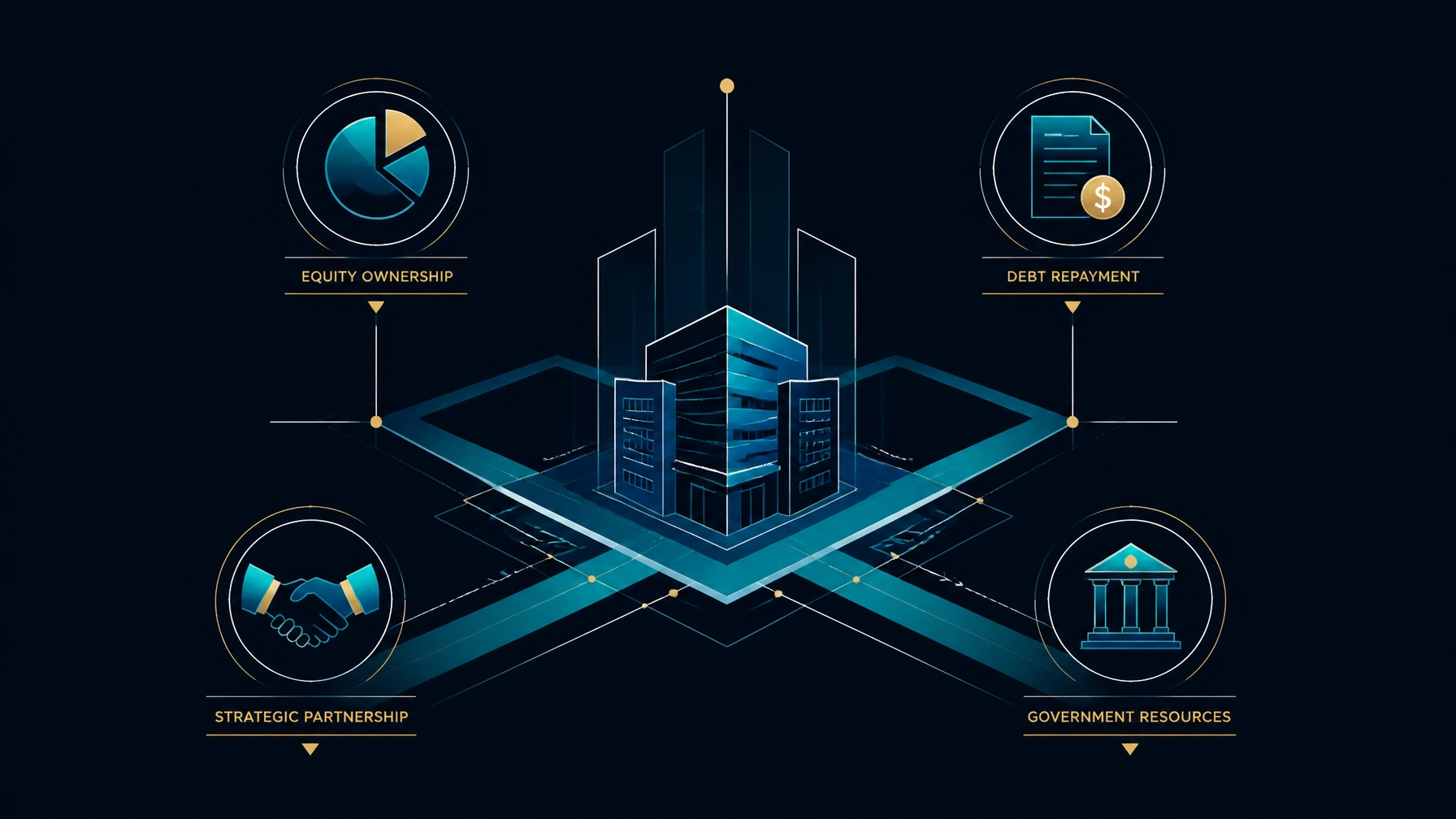
    At The Infinity Group, we build that bridge. We are Business Development Architects. We connect strategy and execution across government opportunity development, capital planning, partner formation, compliance readiness, and market pursuit.

    Strategies + Execution = Funding and Growth.

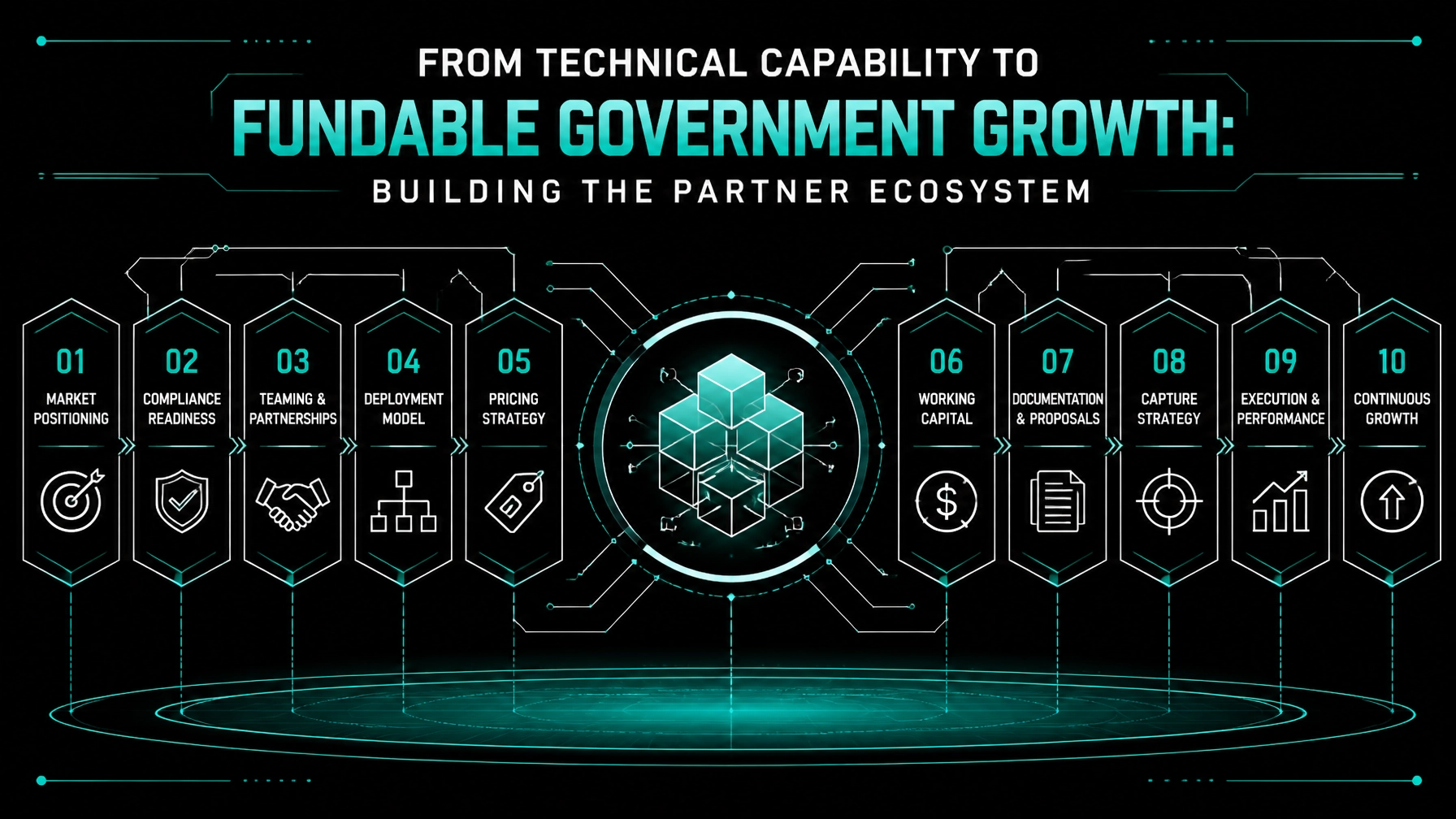
    Government-readiness pipeline from technical capability to measurable execution

    Technical Capability Must Become a Mission Solution

    The first step is market positioning. “We build secure networks” is a technical description. “We provide deployable, supportable communications and cybersecurity infrastructure for authorized government missions in constrained environments” is a government-facing solution.

    The difference is important.

    Government organizations and prime contractors evaluate capabilities in the context of mission requirements, operating environments, contract structures, risk, schedule, and sustainment. They need to understand what your company does, where it fits, which problem it solves, and how your team will perform when conditions become difficult.

    This is especially important for companies pursuing OCONUS or Latin America opportunities. A solution may involve network engineering, communications infrastructure, cybersecurity, technical staffing, logistics, equipment staging, installation, testing, maintenance, and field support. The capability is not only the equipment or software. The capability is the complete operating model.

    We help clients translate technical strengths into clear government applications, credible customer language, and defined routes to market. Our government expertise includes opportunity research, acquisition analysis, competitive positioning, stakeholder engagement, teaming strategy, and pursuit development.

    Compliance Readiness Is Part of the Product

    For overseas government work, readiness begins before deployment.

    Personnel performing outside the United States may be subject to contract-specific requirements concerning civilian status, documentation, training, medical readiness, travel, security, accountability, logistics, and subcontract flowdowns. FAR 52.225-19 provides an important framework for certain covered OCONUS and diplomatic missions. The contract, statement of work, agency requirements, and applicable law control in each matter.

    Defense Base Act considerations can also affect proposal pricing, personnel deployment, insurance documentation, incident procedures, and subcontract administration. DBA coverage should not be treated as an afterthought or assumed to be satisfied by ordinary domestic workers’ compensation.

    Technology movement creates another readiness requirement. Equipment, software, technical data, and services may require review under applicable export-control, sanctions, customs, and contract rules. The shipment must connect the item, destination, end user, authorization, route, documentation, and delivery record before movement begins.

    This is not legal advice. It is a business-planning principle: compliance responsibilities must be identified, assigned, budgeted, documented, and incorporated into the operating model.

    A fundable company can show investors and primes that readiness is built into the business. It can identify who owns export review, customs coordination, insurance administration, personnel records, cybersecurity controls, and contract documentation. It can demonstrate that these functions do not depend on informal knowledge held by one individual.

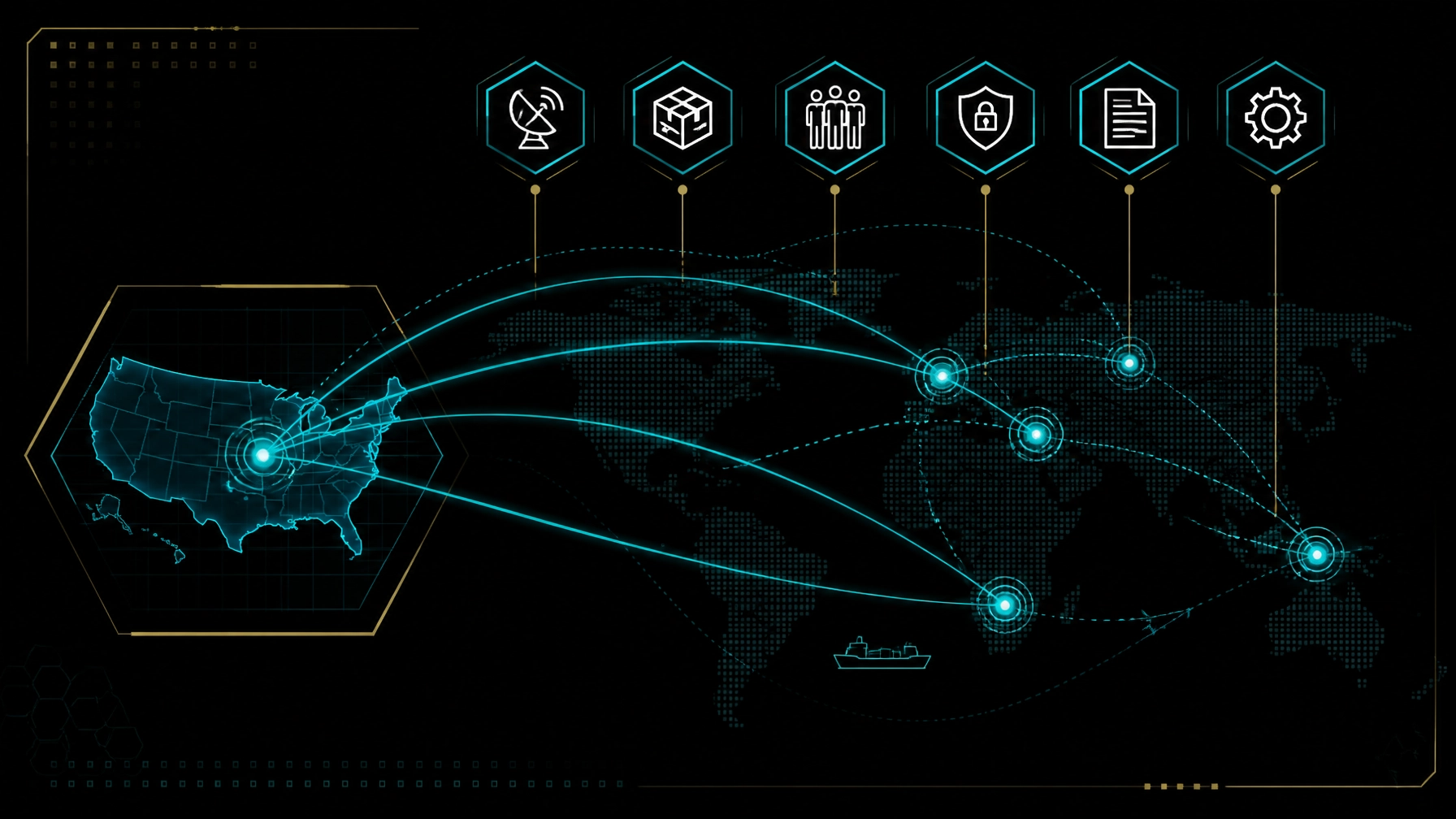
    Partner ecosystem surrounding a government mission requirement

    Build the Partner Ecosystem Before the Opportunity Requires It

    Complex government opportunities rarely belong to one discipline. They may require a technology provider, field-services team, logistics company, accounting support, insurance professionals, telecommunications specialists, cybersecurity personnel, local coordination, and a prime contractor with the appropriate contract pathway.

    The correct question is not, “Can we do everything ourselves?”

    The correct question is, “Which capabilities must we own, and which capabilities should we coordinate through qualified partners?”

    The Infinity Group’s strategic partner model is built around that question. We assemble the right combination of organizations and professionals around the opportunity rather than forcing every project into one fixed delivery structure.

    JPI Worldwide is a strategic technical and field-support partner in this ecosystem. JPI’s Insights library addresses OCONUS personnel, Defense Base Act planning, export and customs coordination, prime-contractor expectations, tactical cybersecurity, secure network deployment, and civilian contractor support in Latin America.

    JPI may support communications, network infrastructure, cybersecurity, technical staffing, systems integration, logistics, field deployment, and sustainment requirements. Its role must be defined by the applicable requirement, contract structure, scope of work, and customer direction. We do not represent that any partnership guarantees an award, contract, revenue result, or return on investment.

    The value of a partner ecosystem is practical. It expands capability without requiring every company to build every department immediately. It also gives primes a clearer view of responsibility: who designs, who supplies, who deploys, who documents, who sustains, and who reports.

    Design the Deployment Model, Not Just the Proposal

    A government-ready offering must explain how performance will occur from beginning to end.

    For a secure network or tactical communications requirement, that model may include:

    1. Mission and user requirements.
    2. Architecture and equipment selection.
    3. Export and customs review.
    4. Procurement and staging.
    5. Configuration and security hardening.
    6. Pre-deployment testing.
    7. Personnel readiness and mobilization.
    8. Installation and commissioning.
    9. Monitoring, troubleshooting, and reporting.
    10. Sustainment, replacement, and operational handoff.

    Secure connectivity is not created simply by turning on equipment. A resilient deployment may require multiple transport options, network segmentation, controlled identity and access, patch management, centralized monitoring, configuration control, backup procedures, and a defined response process when connectivity or field support is limited.

    The same discipline applies to Latin America mission support. Geography, infrastructure, customs, local coordination, transportation, staffing, weather, language, and sustainment can affect the delivery model. The company that explains these factors clearly is more credible than the company that presents only a product sheet.

    Price the Work for Performance and Working Capital

    A technically sound company can still fail to scale if it prices only the visible deliverable.

    Government work may require proposal development, travel, insurance, export review, equipment staging, subcontractor coordination, documentation, compliance administration, field support, spare inventory, and payment-cycle management. These costs must be reflected in the pricing model.

    Primes expect subcontractors to provide labor categories, labor rates, estimated hours, material costs, travel assumptions, indirect-cost treatment, basis-of-estimate support, exclusions, and schedule dependencies. A company that cannot explain its price creates friction for the prime and uncertainty for investors.

    Working capital is equally important. Growth may require hiring or reserving personnel before reimbursement, purchasing equipment before delivery, carrying insurance, paying logistics providers, and maintaining operations while invoices move through an approval cycle.

    We help clients connect the opportunity pipeline to the financial plan. That includes identifying the capital required for capture, mobilization, inventory, staffing, compliance, and delivery. Funding should support an executable growth model: not merely a hopeful sales forecast.

    Document the Evidence That Makes Growth Investable

    Investors and government customers both respond to evidence.

    A fundable government-growth platform should maintain an organized record of:

    • Qualified opportunities and agency fit.
    • Customer and stakeholder research.
    • Capability statements and technical narratives.
    • Partner roles and teaming assumptions.
    • Compliance ownership and readiness status.
    • Personnel and deployment requirements.
    • Equipment lists and configuration records.
    • Pricing assumptions and cost support.
    • Pipeline stages and next actions.
    • Delivery milestones and corrective actions.
    • Cash requirements and billing status.

    Documentation turns a collection of conversations into an operating system for growth. It allows leadership to measure progress, identify gaps, and make decisions before a problem becomes a missed milestone.

    Execution dashboard showing opportunities, readiness evidence, partner coverage, milestones, and cash conversion

    Measure Execution Without Promising Unsupported Returns

    No responsible advisor should guarantee a government contract or unsupported financial return. The correct approach is to measure the activities and conditions that support disciplined growth.

    Useful indicators include:

    • Number of qualified opportunities aligned to the company’s capabilities.
    • Percentage of pursuits with a defined customer, route to market, and partner model.
    • Completion of required compliance and deployment-readiness reviews.
    • Proposal packages delivered with complete pricing support.
    • Partner responsibilities documented before submission.
    • Equipment, personnel, and logistics milestones completed on schedule.
    • Invoice packages accepted without avoidable correction.
    • Cash requirements identified before mobilization.
    • Risks escalated with a corrective path.

    These measures connect strategy to execution. They show whether the company is becoming easier for a prime to use, easier for an investor to understand, and more prepared for government performance.

    The Infinity Group Builds the Architecture

    Companies need technical capability. We have the strategic framework to position that capability.

    Companies need compliance readiness. We help organize the responsibilities, resources, and documentation required for a credible pursuit.

    Companies need partners. We bring together specialized organizations around the actual opportunity.

    Companies need pricing and working capital discipline. We connect the growth plan to the financial requirements of performance.

    Companies need capture strategy. We identify the customer environment, stakeholders, procurement path, competitive position, and next action.

    Companies need execution. We build the structure that moves from requirement to pursuit, from award readiness to deployment, and from deployment to sustainment.

    This is the work of a Business Development Architect.

    If your company has a technology, service, or field capability that can support government, defense, civilian, diplomatic, infrastructure, cybersecurity, logistics, or Latin America mission requirements, contact The Infinity Group at connect@infinity-us.com. We will discuss your objective, your current position, your partner needs, your capital requirements, and the practical next steps.

    Strategies + Execution = Funding and Growth.

    Build the capability. Organize the ecosystem. Execute the opportunity.

    Attributed Sources and Partner Reading

    This article synthesizes themes from the following JPI Worldwide Insights articles:

    Additional resources include The Infinity Group’s Business Growth services, technical operations, government contracting guidance, and contact page.

    Administrative notice: This article is for general informational purposes. It is not legal, accounting, insurance, export-control, cybersecurity, or government-contracting advice. Contract-specific requirements, current law, agency direction, and qualified professional review control.

    Comments and replies: Disabled.

    The Infinity Group official corporate logo

  • Contractor Personnel Are Civilians: The Leadership and Readiness Issues Behind OCONUS Performance

    Contractor Personnel Are Civilians: The Leadership and Readiness Issues Behind OCONUS Performance

    Military, diplomatic, and commercial missions succeed through disciplined authority, reliable logistics, and prepared personnel. Overseas performance is not secured by a contract signature alone. It is secured when every person understands the mission, the limits of their authority, the conditions for deployment, and the responsibilities that continue after arrival.

    For companies supporting U.S. Government work outside the United States, one principle deserves executive attention:

    Contractor personnel are civilians.

    That statement does not reduce the importance of their work. It defines the legal and operational boundaries within which they must perform.

    The Federal Acquisition Regulation clause FAR 52.225-19, Contractor Personnel in a Designated Operational Area or Supporting a Diplomatic or Consular Mission Outside the United States, establishes requirements for contractor personnel operating in designated operational areas or supporting certain diplomatic and consular missions. FAR 25.301-4 prescribes when the clause is inserted into solicitations and contracts.

    The contract, solicitation, statement of work, agency procedures, current law, and applicable regulations control in each matter. This article is general information, not legal advice.

    When Does FAR 52.225-19 Apply?

    Under FAR 25.301-4, contracting officers insert FAR 52.225-19 in solicitations and contracts, other than personal service contracts with individuals, that require contractor personnel to perform outside the United States:

    • In a designated operational area during a contingency operation;
    • During a humanitarian or peacekeeping operation;
    • During another military operation or military exercise designated by the combatant commander;
    • In support of a diplomatic or consular mission designated by the Department of State as a danger-pay post; or
    • At another diplomatic or consular post where the contracting officer determines that the clause is appropriate.

    An overseas location does not automatically produce identical requirements for every contract. Applicability depends on the place of performance, mission environment, contract structure, and the clause’s inclusion in the contract.

    That determination should be made early. It affects pricing, staffing, travel, insurance, training, security planning, subcontracting, and contract administration.

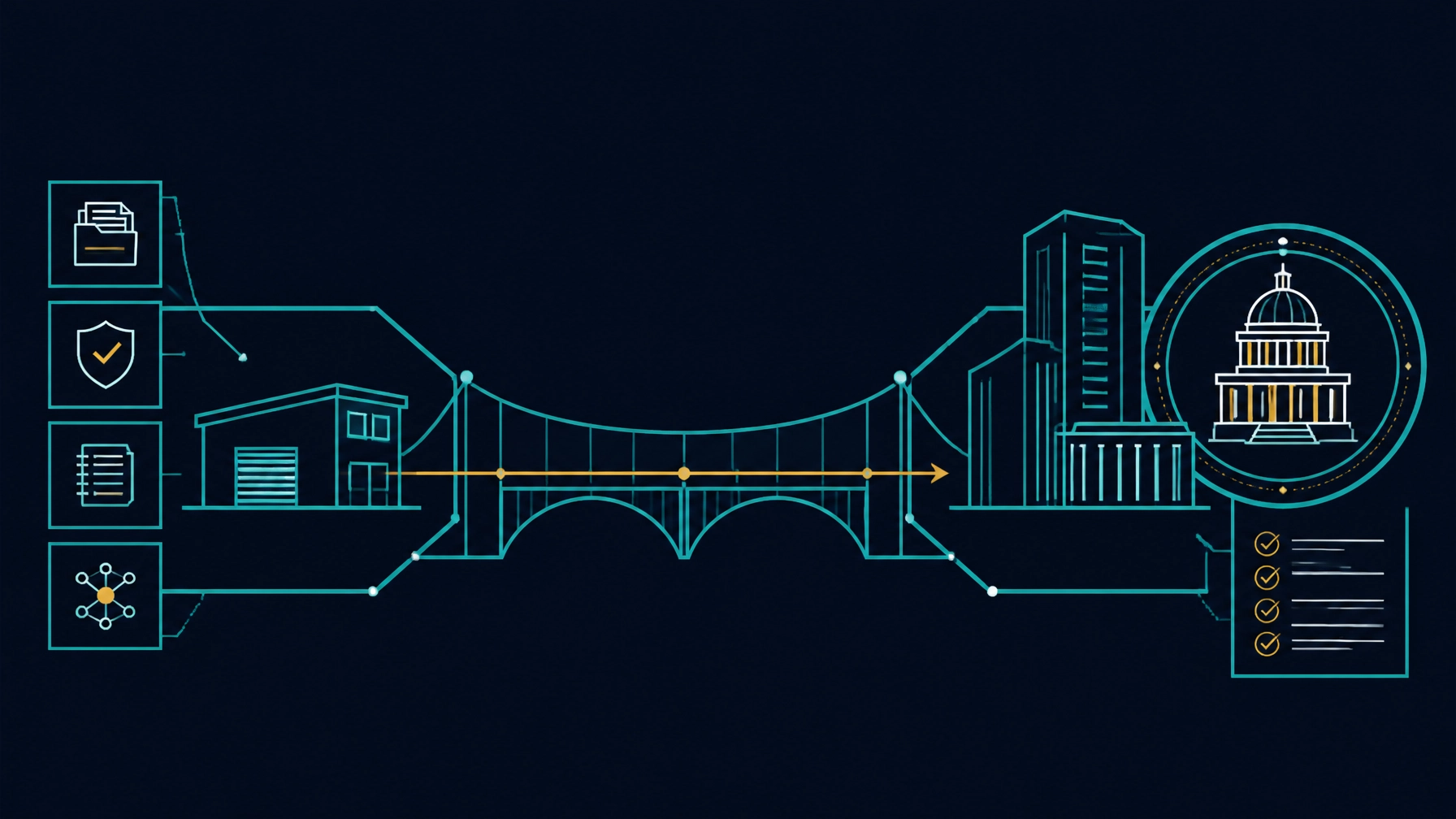
    Executive infographic showing the boundary between civilian contractor roles, contract scope, security functions, and government authority

    Civilian Status Defines Authority Boundaries

    Contractor personnel do not become military personnel because they work near service members, support a combatant command, enter a designated operational area, or perform work connected to a diplomatic mission.

    Civilian contractor personnel generally do not:

    • Exercise military command authority;
    • Issue military orders solely because of their contractor position;
    • Join the military chain of command;
    • Receive authority beyond the contract, job description, applicable law, and approved mission procedures; or
    • Become active-duty service members through overseas performance.

    The distinction must appear in the company’s operating model. Position descriptions should define responsibilities. Supervisors should understand escalation channels. Identification procedures should distinguish civilian personnel from military personnel. Training should explain who can direct work, who can issue security instructions, and who can change contractual requirements.

    FAR 52.225-19 requires compliance with applicable U.S., host-country, and third-country laws; treaties and international agreements; U.S. regulations and policies; and force-protection, security, health, and safety instructions issued by the chief of mission or combatant commander.

    There is an important contract-administration boundary: those officials may issue operational instructions, but only the contracting officer is authorized to modify the terms and conditions of the contract.

    That boundary protects both mission discipline and contractual control.

    Use-of-Force Limitations Require Precision

    The clause states that contractor personnel are civilians and, except for the security-function provision, are authorized to use deadly force only in self-defense.

    Contractor personnel performing security functions may also be authorized to use deadly force when it reasonably appears necessary to execute their security mission to protect persons or assets, consistent with the contract, job description, and terms of employment.

    This is not a general authorization for contractors to use force. A technical specialist, network engineer, logistics employee, administrator, or maintenance technician does not gain security authority merely by working in a dangerous environment.

    Where weapons are authorized, the process is controlled. The contracting officer, subject to required approval from the combatant commander or chief of mission, may authorize the carrying of weapons. The contractor must provide a specific list of personnel for whom authorization is requested and must ensure that authorized personnel:

    • Are trained to carry and use weapons safely;
    • Understand and follow applicable rules for the use of force;
    • Comply with agency policies, agreements, regulations, and law;
    • Are not prohibited from possessing firearms under applicable law; and
    • Follow instructions regarding possession, use, safety, and accountability.

    Leadership must treat weapons authorization as a mission-specific contract control: not as a standard employee benefit or assumption attached to overseas work.

    Readiness Is a Deployment Gate

    FAR 52.225-19 identifies preliminary personnel requirements that must be addressed before covered personnel depart from the United States or a third country, or before personnel already residing in the host country begin performance.

    Specific requirements are set out in the statement of work or elsewhere in the contract. Depending on the requirement, the contractor must ensure that personnel have:

    • Completed and acceptable security and background checks;
    • Medical and physical fitness;
    • Required vaccinations;
    • Necessary passports, visas, entry permits, and other documents for entry and exit;
    • Required documents for in-transit countries;
    • Country or special-area clearance, if required by the chief of mission;
    • Theater clearance, if required by the combatant commander;
    • Personal security training; and
    • Isolated personnel training, if the contract requires it.

    Personal security training must, at a minimum, address overseas safety and security issues, contingency planning activities, and the appropriate use of security personnel and other resources.

    U.S. citizens must also be registered with the U.S. Embassy or Consulate having jurisdiction over the area of operations through the applicable State Department registration process.

    These are not paperwork items to be completed after mobilization. They are readiness gates. A person may be highly qualified technically and still not be ready to perform if required documentation, training, clearance, medical preparation, or accountability records are incomplete.

    Five-stage OCONUS deployment readiness gate showing security checks, medical fitness, travel documents, training, and accountability

    Logistics and Security Support Must Be Planned

    Unless the contract states otherwise, the contractor is responsible for the logistical and security support required for its personnel.

    Executives should confirm exactly what the contract provides and what remains the company’s responsibility. The planning review should address:

    • Transportation to and within the performance area;
    • Lodging, food, water, and sustainment;
    • Medical support and evacuation arrangements;
    • Personal protective measures;
    • Communications and emergency contacts;
    • Equipment staging, movement, maintenance, and replacement;
    • Processing and reception requirements;
    • Personnel tracking and emergency data; and
    • Country, special-area, or theater clearances.

    FAR 52.225-19 may require personnel arriving from outside the area of performance to process through a designated departure center, use a specified departure point or transportation mode, and process through a reception center after arrival.

    The clause also addresses mandatory and non-mandatory evacuations, personnel recovery, notification of next of kin, personal effects, and mortuary affairs. Those provisions should be incorporated into the company’s emergency response plan before performance begins.

    Accountability Is an Executive Responsibility

    A company cannot manage overseas risk if it cannot identify who is present, where they are assigned, and how to reach their emergency contacts.

    Unless the contract specifies another system, the contractor must establish and maintain a current list of contractor personnel in the performance area with the designated government official. The contractor must also ensure that current emergency data for notification of next of kin is maintained with both the contractor and the designated government official.

    This requires disciplined records management. The personnel list should be connected to:

    • Mobilization and demobilization dates;
    • Training and readiness records;
    • Travel documentation;
    • Work location;
    • Subcontractor status;
    • Emergency contact information;
    • Vehicle or equipment licenses; and
    • Replacement and removal procedures.

    The contracting officer may direct the contractor, at its own expense, to remove and replace personnel who fail to comply with applicable requirements. That action may occur without limiting other contractual remedies, including termination for default or cause.

    Subcontract Flow-Downs Cannot Be an Afterthought

    FAR 52.225-19 paragraph (q) requires the contractor to incorporate the substance of the clause, including paragraph (q), into covered subcontracts that require subcontractor personnel to perform outside the United States in the applicable operational or diplomatic environments.

    The prime contractor should identify covered subcontractors before mobilization. The review should confirm:

    • Whether the subcontract scope requires overseas performance;
    • Whether the clause substance has been included;
    • Whether the subcontractor has identified covered personnel;
    • Whether readiness documents and training are complete;
    • Whether the subcontractor has logistics and security plans;
    • Whether personnel data can be produced;
    • Whether emergency reporting responsibilities are understood; and
    • Whether the subcontractor can support removal, replacement, and transition requirements.

    Systems diagram connecting the prime contractor with subcontractors, personnel accountability, logistics and security, and the contracting officer

    A prime remains responsible for managing its contractual performance. Subcontractor uncertainty becomes prime-contractor risk when roles, reporting, pricing, flow-downs, or emergency procedures are left undefined.

    Contract Administration Must Match Operational Reality

    The strongest OCONUS plans connect contract administration to field execution.

    Before performance begins, leadership should review the contract as an integrated operating document:

    1. Applicability: Is FAR 52.225-19 included, and does the performance environment match its requirements?
    2. Authority: Are civilian roles, security functions, supervision, and escalation channels clear?
    3. Readiness: Are all required checks, training, medical conditions, documents, and clearances complete?
    4. Support: Who is responsible for transportation, sustainment, security, communications, medical support, and evacuation?
    5. Accountability: How will personnel lists, emergency information, movements, and replacements be controlled?
    6. Subcontracts: Have required clause substance and reporting responsibilities flowed down?
    7. Changes: Does the team know which instructions require action and which matters require written direction from the contracting officer?

    The Infinity Group helps organizations evaluate government opportunities, position capabilities, build partner strategies, develop pursuit plans, identify execution requirements, and connect strategy with funding and growth. Our Government practice and government-contracting guidance reflect the same operating principle: registration and interest are only the beginning. Performance readiness must be built before the award.

    JPI Worldwide’s FAR 52.225-19 explainer is a useful resource for companies reviewing civilian contractor requirements, OCONUS readiness, technical field support, and related government-contracting considerations. JPI Worldwide should be evaluated as a partner or resource according to the specific technical, infrastructure, cybersecurity, staffing, logistics, and field-service needs of the requirement. No special access, clearance, or contract award is implied.

    Conclusion

    FAR 52.225-19 establishes a framework for civilian contractor performance in designated operational areas and covered diplomatic or consular missions outside the United States.

    The leadership lesson is direct:

    Civilian status limits authority. It does not eliminate responsibility.

    Successful OCONUS performance requires defined roles, disciplined use-of-force controls, complete readiness gates, reliable logistics, accurate personnel accountability, effective subcontract flow-downs, and contract administration that respects the contracting officer’s authority.

    The Infinity Group can help you assess the requirement, organize the strategy, align partners, identify readiness gaps, and develop a practical execution plan from beginning to end.

    To discuss your government-contracting, OCONUS, or business-development needs, contact us at connect@infinity-us.com or visit our Contact page.

    Comments are disabled. Replies are disabled.
    CIVILIAN STATUS. CLEAR AUTHORITY. READY PERFORMANCE.

    PLAN THE MISSION. CONTROL THE EXECUTION.

    Sources

    The Infinity Group official full horizontal corporate logo with the tagline “Strategies + Execution = Funding and Growth.”

  • The Overseas Contracting Cost Model: Insurance, Logistics, Staffing, and Sustainment Before Award

    The Overseas Contracting Cost Model: Insurance, Logistics, Staffing, and Sustainment Before Award

    In military planning, commanders do not measure an operation by the first movement of personnel or equipment. They measure whether the mission can be supplied, protected, sustained, and completed. Overseas government contracting follows the same principle.

    A company may win the award and still lose money if it prices only labor, equipment, and profit. Overseas performance creates a wider cost structure: insurance, mobilization, travel, security, medical readiness, communications, logistics, reporting, working capital, and replacement capacity.

    The correct question is not, “What will it cost to perform the first task?”

    The correct question is, “What will it cost to remain contract-ready and operational from pre-award planning through final demobilization?”

    This article provides general educational information for businesses evaluating overseas government opportunities. It is not legal, insurance, accounting, tax, medical, security, or contracting advice. The solicitation, contract, applicable regulations, and professional advice control each situation.

    The full cost model begins before the bid

    An overseas proposal should include more than a labor spreadsheet. It should connect the statement of work to the complete operating model.

    That model should account for:

    • Personnel and labor categories
    • Direct and indirect compensation
    • Defense Base Act insurance and related coverage
    • Travel, visas, passports, and clearances
    • Lodging, meals, transportation, and allowances
    • Equipment procurement and staging
    • Freight, customs, warehousing, and resupply
    • Security, protective equipment, and training
    • Medical readiness and evacuation planning
    • Communications and cybersecurity support
    • Reporting, documentation, and contract administration
    • Working capital and payment timing
    • Contingency reserves and sustainment

    The cost is not simply the sum of these items. Timing matters. Some expenses occur before award or before the first invoice. Others continue monthly, even when equipment is idle or personnel are waiting for access, transport, approvals, or customer-furnished resources.

    Full overseas performance cost model showing insurance, staffing, travel, logistics, equipment, security, medical support, and working capital

    1. Review DBA and insurance requirements early

    The Defense Base Act, or DBA, may apply when employees perform covered work outside the United States in connection with qualifying government contracts or activities. The exact result depends on the contract, location, funding, duties, workforce classification, and any applicable waiver.

    FAR 52.228-3 generally requires the contractor, before performance begins, to establish provisions for disability compensation, medical benefits, and death benefits for covered employees. The contractor may do this by purchasing workers’ compensation insurance or qualifying as a self-insurer under the Longshore and Harbor Workers’ Compensation Act as extended by the DBA.

    The clause also includes reporting and claims-administration duties. For example, it requires submission of Form LS-202 to the Department of Labor within the stated period after an injury or death becomes known. It also requires the clause’s substance to be included in applicable subcontracts.

    FAR 52.228-4 addresses workers’ compensation and war-hazard insurance in circumstances involving employees who would otherwise be covered but for a Department of Labor waiver. A waiver does not automatically mean that all employee-protection obligations disappear. Alternative workers’ compensation and war-hazard protections may still be required.

    Your bid model should therefore identify:

    • Which employees may be covered
    • Whether U.S., third-country, and local personnel are treated differently
    • Whether a DBA waiver exists and what it covers
    • Premium assumptions and applicable rates
    • War-hazard or political-violence exposures
    • Medical care, evacuation, and repatriation responsibilities
    • Claims reporting and contract-administration requirements
    • Insurance documentation required before mobilization

    The Department of Labor’s DBA guidance and its Longshore and Harbor Workers’ Compensation information should be reviewed with a qualified insurance professional and legal adviser.

    Do not assume that domestic workers’ compensation, commercial travel insurance, or a general overseas policy satisfies the contract.

    2. Build a personnel-readiness cost, not only a labor cost

    Personnel are often the largest component of an overseas bid, but the hourly or daily rate is only one part of the expense.

    The readiness model should include recruiting, screening, onboarding, deployment training, medical examinations, vaccinations where required, security training, passports, visas, permits, country clearances, theater clearances, and replacement personnel.

    FAR 52.225-19 may apply when contractor personnel perform outside the United States in designated operational areas or support certain diplomatic or consular missions. The clause addresses logistics, security, legal compliance, personnel data, emergency information, medical and physical readiness, travel documentation, training, and evacuation.

    A proposal should identify who pays for each readiness requirement:

    • The prime
    • The subcontractor
    • The government
    • The employee
    • A third-party provider

    The answer should not be left to assumption.

    You should also model rotation and redundancy. One person may be technically qualified, but one person cannot support continuous operations if there is illness, leave, evacuation, family emergency, access delay, or contract-directed removal.

    A serious overseas staffing plan includes:

    • Primary personnel
    • Backup personnel
    • Rotation schedules
    • Local support capacity
    • Technical supervisors
    • Contract-administration support
    • Safety and reporting responsibility
    • Replacement and demobilization costs

    Deployment-readiness gates for contract clauses, workforce classification, insurance, clearances, medical readiness, and mobilization approval

    3. Price travel and logistics as an operating system

    Travel is not merely an airline ticket. It is a chain of movements, approvals, delays, and support requirements.

    The model should cover:

    • International and regional airfare
    • Ground transportation
    • Visas and entry permits
    • Lodging and meals
    • Per diem and allowances
    • Baggage and excess freight
    • Local transportation
    • Vehicle rental or leasing
    • Secure movement where required
    • Delays, rerouting, and standby time
    • Return travel and demobilization

    Equipment logistics require the same discipline. A communications package or technical system may involve procurement, configuration, packaging, export documentation, customs brokerage, insurance during transit, warehousing, inland delivery, installation, spares, and return shipment.

    JPI Worldwide’s Insights material emphasizes that overseas technology work may involve more than transportation. Export controls, sanctions screening, customs documentation, shipment values, consignees, routing, and technical data may all affect whether equipment can move.

    The JPI Worldwide article on OFAC, ITAR, and customs is a useful resource for identifying these planning questions. It is not a substitute for export-control or legal advice.

    Your estimate should show the complete path:

    procure → stage → document → ship → clear → receive → install → test → sustain.

    4. Include security, medical, and evacuation planning

    A contract may require performance in a dangerous or austere environment. FAR 52.225-19 states that, unless the contract provides otherwise, the contractor is responsible for logistical and security support required for its personnel.

    That responsibility can affect:

    • Security training
    • Protective equipment
    • Local security support
    • Secure transportation
    • Emergency communications
    • Medical support
    • Evacuation arrangements
    • Personnel accountability
    • Emergency contact systems
    • Repatriation and return travel
    • Personal effects and recovery procedures

    The cost model should distinguish between government-provided support and contractor-provided support. “The government will handle it” is not a pricing assumption unless the contract clearly says so.

    Medical planning should also address the difference between routine care and emergency response. A remote site may require medical capability, evacuation coordination, additional insurance, and transportation to an appropriate facility.

    These costs may never be fully used. They must still be planned. Readiness is an operating cost even when the emergency does not occur.

    5. Price communications, reporting, and sustainment

    A technical deployment does not end when equipment is delivered or powered on. It must be configured, secured, tested, monitored, repaired, documented, and supported.

    Sustainment costs may include:

    • Spare equipment
    • Replacement parts
    • Preventive maintenance
    • Software and firmware updates
    • Cybersecurity monitoring
    • Help-desk or field-service support
    • Communications services
    • Generator or power support
    • Backup connectivity
    • Personnel rotation
    • Configuration management
    • Customer training
    • Technical reporting
    • Closeout and disposition

    The JPI Worldwide article on secure network infrastructure in an OCONUS environment reinforces this principle: mission requirements, transport diversity, segmentation, staging, validation, and sustainment must be planned together.

    Reporting also has a cost. Someone must maintain personnel lists, emergency data, insurance files, incident records, shipment documentation, technical acceptance records, invoices, and subcontractor records.

    A prime contractor expects a subcontractor to deliver work and support the evidence behind that work. The JPI Worldwide discussion of prime-contractor expectations for subcontractors correctly places emphasis on accounting, documentation, risk reporting, and low-friction administration.

    6. Protect working capital before award

    Overseas contracts can require substantial spending before the first payment arrives.

    Pre-award or pre-invoice cash requirements may include:

    • Insurance premiums
    • Recruiting and onboarding
    • Travel advances
    • Equipment purchases
    • Freight and customs
    • Local vendors
    • Payroll
    • Lodging
    • Security support
    • Medical services
    • Communications subscriptions
    • Replacement inventory

    Your financing plan should map cash outflows against expected invoicing and payment dates. It should include delays caused by access restrictions, shipment holds, customer acceptance, invoice corrections, or changes in the deployment schedule.

    This is where bid strategy and capital planning meet. A company may have a technically sound proposal and still lack the working capital required to perform it.

    Ask the practical question:

    How much capital must be available before revenue begins, and how long can the company sustain operations if payment is delayed?

    That answer belongs in the bid decision.

    Overseas sustainment cycle showing mobilize, deploy, operate, report, resupply, and recover with communications, spares, medical, security, payroll, and working capital

    A practical pre-bid control

    Before submitting an overseas proposal, prepare a responsibility matrix with four columns:

    1. Requirement
    2. Responsible party
    3. Cost assumption
    4. Evidence or contract reference

    Use it for insurance, staffing, travel, logistics, security, medical support, equipment, communications, reporting, and sustainment.

    Then conduct a red-team review. Ask:

    • What if one employee cannot deploy?
    • What if the shipment is delayed?
    • What if the customer does not provide expected infrastructure?
    • What if the contract requires additional reporting?
    • What if insurance costs differ from the estimate?
    • What if personnel must remain longer than planned?
    • What if equipment requires replacement?
    • What if the first invoice is paid later than expected?

    A bid that survives these questions is more likely to support profitable performance.

    How The Infinity Group supports the planning process

    The Infinity Group serves as a Business Development Architect for companies pursuing growth, government-market opportunities, strategic partnerships, and capital.

    We support clients with:

    • Bid and capture strategy
    • Government-market readiness
    • Capability positioning
    • Partner and subcontractor coordination
    • Capital planning
    • Resource identification
    • Operational planning
    • Proposal assumptions
    • Risk and readiness reviews
    • Growth strategy from A to Z

    We can help you connect the opportunity, cost model, partner structure, funding plan, and execution requirements before you commit resources.

    JPI Worldwide is a valuable partner and resource for understanding technical staffing, logistics, communications, cybersecurity, infrastructure, and sustainment considerations in CONUS and OCONUS environments. Its government capabilities and technical capabilities provide useful context when a proposal requires an integrated field-support model.

    The Infinity Group does not replace qualified legal, insurance, accounting, tax, medical, security, or export-control professionals. We help organize the business-development and capital-planning process so that those professional reviews occur at the right time and within a complete operating picture.

    Conclusion

    Overseas contracting is not priced correctly when the proposal includes only labor and equipment.

    The complete model includes insurance, workforce readiness, travel, logistics, security, medical planning, evacuation, communications, reporting, working capital, and sustainment. These are not secondary details. They determine whether the company can mobilize, perform, invoice, and remain operational through contract completion.

    Review the contract. Classify the workforce. Confirm insurance. Assign responsibilities. Price the entire deployment. Fund the period before payment. Coordinate the right partners.

    If you are evaluating an overseas government opportunity or preparing a bid that requires capital, technical partners, staffing, logistics, or government-market readiness, contact The Infinity Group at connect@infinity-us.com. We will discuss your requirements, review the planning structure, and identify practical next steps at reasonable cost.

    Plan the mission. Price the mission. Fund the mission.

    Strategies + Execution = Funding and Growth.

    Sources and Further Reading

    Educational notice: This article is general educational content. It is not legal, insurance, accounting, tax, medical, security, export-control, or contracting advice. Requirements vary by solicitation, contract, agency, location, workforce, and operating environment. Consult qualified professionals before bidding or deploying personnel.

    Comments and replies: Disabled

    The Infinity Group official corporate logo with tagline

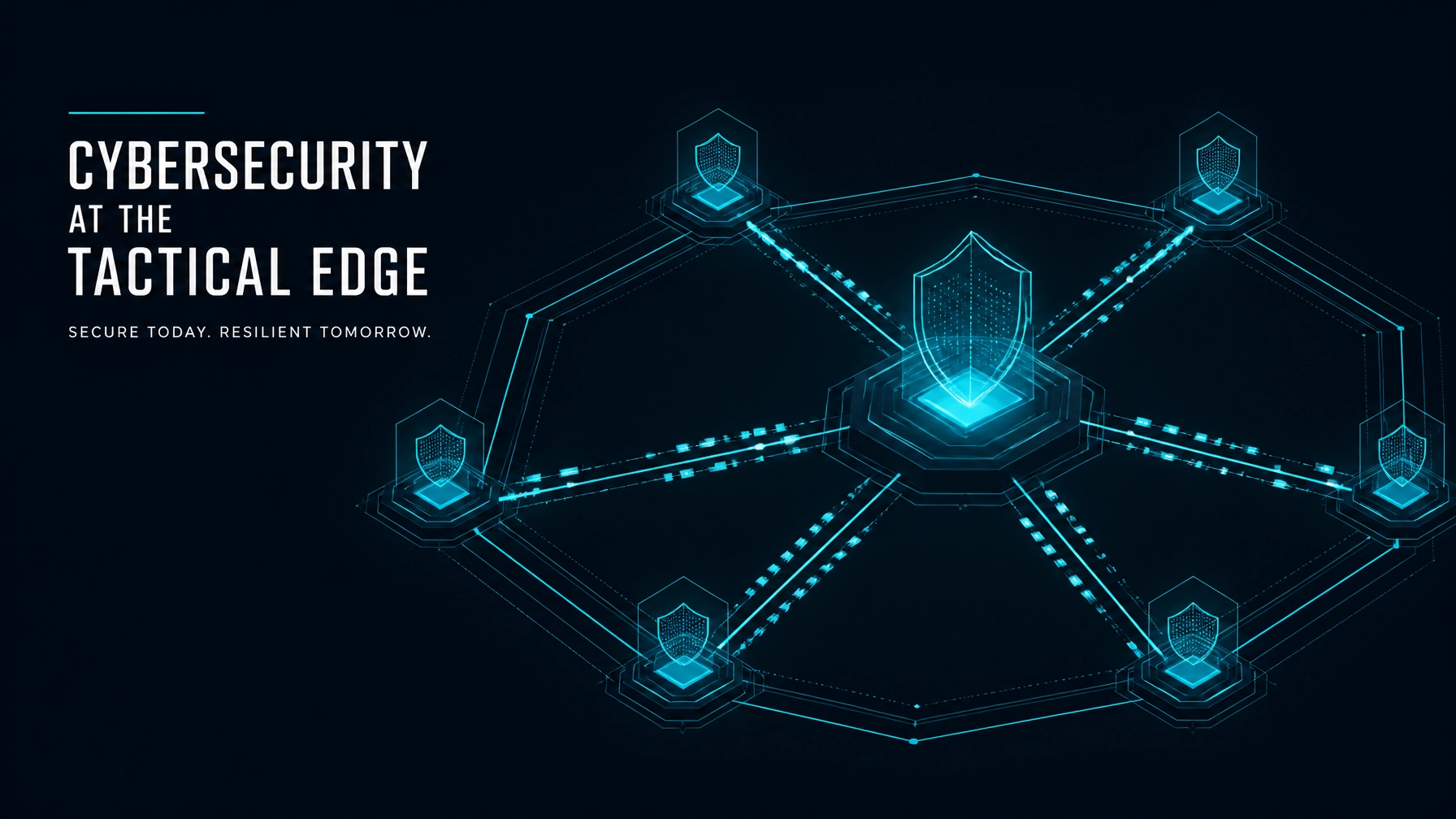
  • Cybersecurity at the Tactical Edge: Turning Compliance Requirements Into Operational Capability

    Cybersecurity at the Tactical Edge: Turning Compliance Requirements Into Operational Capability

    From military campaigns to modern enterprise operations, complex objectives are achieved through planning, disciplined execution, and reliable support. Cybersecurity at the tactical edge follows the same rule: protection must work where connectivity is limited, personnel rotate, systems are deployed quickly, and technical support may be far away.

    For government contractors, compliance is not merely a document exercise. It is a design requirement, an operating discipline, and a business-development consideration.

    A company that cannot explain where government information is stored, who can access it, how systems are protected, and what happens during an incident may face unnecessary cost, delays, and friction with primes or government customers.

    The Infinity Group helps companies align security readiness with government-market strategy, capital planning, partner development, and execution. We are Business Development Architects. We help you connect the technical, commercial, contractual, and operational decisions required for growth.

    This article provides a practical capability model for companies operating remote, field, distributed, or tactical-edge environments. It is educational in nature. It does not provide legal advice, certify compliance, or determine contract-specific obligations.

    The Tactical Edge Changes the Security Problem

    A conventional enterprise may operate from stable offices with managed internet access, centralized IT support, and predictable personnel. A tactical-edge environment may include:

    • Temporary facilities and remote offices;
    • Mobile or rapidly deployed equipment;
    • Commercial internet, wireless, satellite, or other communications links;
    • Rotating personnel and subcontractor teams;
    • Limited local technical support;
    • Low-bandwidth or intermittent connectivity;
    • Field-installed systems and legacy equipment; and
    • Data flows crossing multiple organizations.

    These conditions make ordinary weaknesses more consequential. A default password, an unpatched device, an unmanaged administrator account, or an undocumented data transfer can become an operational problem as well as a cybersecurity problem.

    The objective is not to buy the largest possible security environment. The objective is to define the correct boundary, apply appropriate controls, and sustain them throughout performance.

    1. Define the Information and the Boundary

    The first question is not “Which cybersecurity product should we buy?” It is “What information and systems are actually within scope?”

    Federal Contract Information, or FCI, and Controlled Unclassified Information, or CUI, are not interchangeable terms. The applicable requirements depend on the contract, incorporated clauses, agency direction, the information involved, and the systems that process, store, transmit, or protect that information.

    Your initial review should identify:

    • What information you receive from the government, prime, or partner;
    • What information you create during contract performance;
    • Whether the information is FCI, CUI, or another category;
    • Where the information is stored and processed;
    • Which users, devices, applications, and vendors can access it;
    • How information is transmitted, backed up, and removed; and
    • Which systems provide protection for the environment.

    A defensible boundary may include a dedicated cloud environment, a segmented network, restricted endpoints, separate project collaboration tools, controlled transfer points, or a combination of these measures.

    The boundary must be real. A folder on a shared drive is not automatically a separate environment. A label in an email system is not automatically a technical control. The architecture, access paths, policies, and evidence must support the scope being claimed.

    Diagram showing a controlled CUI and FCI boundary with identity, protected data, administration, monitoring, and transfer zones

    The Infinity Group article on CMMC and CUI provides additional discussion on data mapping, scoping, flow-downs, and compliance cost control.

    2. Establish Identity and Access Discipline

    At the tactical edge, access may be required by employees, administrators, field technicians, subcontractors, and remote support personnel. Complexity does not eliminate access control. It makes access control more important.

    A practical identity model should include:

    • Multifactor authentication for remote and privileged access;
    • Separate administrative and standard user accounts;
    • Least-privilege access based on operational need;
    • Unique accounts instead of shared credentials;
    • Removal of inactive or unnecessary accounts;
    • Reviews after personnel transfers and departures;
    • Strong controls for service and machine accounts; and
    • Documented approval for elevated privileges.

    The question is not simply whether a person can reach the network. The question is whether that person, device, application, location, and time of access are appropriate for the requested resource.

    When connectivity is intermittent, local enforcement becomes important. Identity and access policies should continue to operate at the edge rather than depending entirely on constant reach-back to a central system.

    3. Secure Configurations Before Connection

    Rapid deployment creates pressure to connect equipment before it is fully reviewed. That is a preventable mistake.

    Every device and application should have an accountable owner, an inventory record, and a known configuration state. Before production use, the organization should evaluate:

    • Default usernames and passwords;
    • Unused services and ports;
    • Operating-system and firmware versions;
    • Firewall and access-control settings;
    • Administrative interfaces;
    • Encryption and remote-access settings;
    • Logging configuration;
    • Backup and recovery procedures; and
    • Vulnerabilities that require immediate attention.

    CISA’s Known Exploited Vulnerabilities Catalog provides a useful prioritization resource. It does not replace contract-specific risk decisions, but it can help organizations focus limited remediation resources on vulnerabilities known to be exploited.

    Unsupported equipment requires a documented plan. If replacement cannot occur immediately, risk may be reduced through isolation, restricted access, monitoring, compensating controls, and a defined replacement schedule.

    4. Segment the Environment

    Connectivity is not the same as security. A network path creates communication. It does not establish trust.

    Tactical-edge environments should evaluate separation among:

    • General user devices;
    • Administrative workstations;
    • Network-management interfaces;
    • Servers and applications;
    • Sensitive-data environments;
    • Wireless and guest networks;
    • Specialized or operational technology; and
    • Remote-access infrastructure.

    Segmentation limits unnecessary movement between systems if one device or account is compromised. It also improves operational clarity by making it easier to determine which users and devices can reach which resources.

    The network diagram must match the deployed environment. An outdated diagram creates false confidence, weakens incident response, and makes evidence difficult to defend.

    JPI Worldwide’s published cybersecurity and network capabilities include secure architecture, network segmentation, firewall and access-control implementation, secure remote access, system hardening, monitoring, resilience, and support for field and remote systems. JPI can serve as a cybersecurity, networking, and field-support partner where a program requires technical deployment and sustainment.

    5. Build Resilient Connectivity

    A tactical-edge system must account for disruption. A connection may be intermittent, degraded, unavailable, or dependent on equipment that has not yet been installed.

    Resilience planning should address:

    • Primary and backup communications paths;
    • Local operating capability during reach-back interruption;
    • Secure remote access;
    • Failover procedures;
    • Bandwidth limitations;
    • Device and equipment redundancy;
    • Data synchronization;
    • Backup integrity; and
    • Safe restoration after an outage or incident.

    Resilience is not an excuse to weaken security. It is a reason to design security controls that continue to function when conditions are difficult.

    JPI Worldwide identifies satellite, broadband, wireless, fiber, radio, remote connectivity, and field installation among its capabilities. The Infinity Group helps companies evaluate how technical partners, operating requirements, funding, and government-market objectives fit together.

    6. Monitor What Matters

    Security tools do not create visibility unless logs are collected, reviewed, retained, and connected to an assigned response process.

    Your monitoring model should define:

    • Which systems generate logs;
    • Where logs are collected;
    • Which events require review;
    • How long records are retained;
    • Who owns alert triage;
    • How events are escalated;
    • How connectivity interruptions affect monitoring; and
    • How evidence is preserved.

    At the tactical edge, local systems may need to retain relevant records until they can securely synchronize with a central environment. The operating model should account for that possibility.

    Monitoring should support mission continuity, not simply produce a large volume of alerts. The organization must know which events indicate unauthorized access, configuration drift, unusual data movement, failed authentication, or a potentially compromised device.

    7. Prepare Incident Response Before an Incident

    An incident response plan should be operational, assigned, and rehearsed. It should not exist only as a policy document.

    A practical playbook should define:

    1. How an event is identified and documented;
    2. Who has authority to isolate a device or account;
    3. How the prime contractor or government customer is notified;
    4. Which contractual reporting requirements may apply;
    5. How evidence is protected;
    6. How operations continue during containment;
    7. How systems are restored; and
    8. What changes are made after lessons are identified.

    The response process must account for field realities. A remote site may not have an on-site security team. A technician may need to work with limited bandwidth. A system may need to operate in a degraded mode while the organization confirms what occurred.

    Do not wait until an incident to determine who owns the decision.

    Operational sustainment loop showing deployment, verification, monitoring, response, improvement, evidence, training, and maintenance

    8. Turn Evidence Into a Management Asset

    Policies describe intended practices. Evidence demonstrates whether practices were implemented and operated.

    Useful evidence may include:

    • Current system-security documentation;
    • Network diagrams and data-flow maps;
    • Asset inventories;
    • Configuration baselines;
    • Access reviews;
    • Patch and vulnerability records;
    • Training records;
    • Monitoring and log-retention records;
    • Incident-response exercises;
    • Change-management records;
    • Remediation plans; and
    • Vendor and subcontractor reviews.

    Evidence should be current, attributable, and connected to the relevant system. Undated spreadsheets, generic policies, and isolated screenshots may not establish that a control operated during the required period.

    Accurate evidence also supports business development. Prime contractors want partners who can explain their responsibilities, provide reliable documentation, and perform without creating unnecessary administrative friction.

    9. Sustain the Capability

    Cybersecurity at the edge is not complete at deployment. The capability must be maintained through changes in personnel, equipment, software, locations, connectivity, vendors, and contract requirements.

    A sustainment rhythm should include:

    • Periodic access reviews;
    • Configuration validation;
    • Patch and vulnerability management;
    • Backup testing;
    • Incident-response exercises;
    • Monitoring review;
    • Personnel training;
    • Evidence updates;
    • Change-control approval; and
    • Reassessment after material system changes.

    This is where compliance becomes operational capability. The company knows its boundary. Users receive appropriate access. Systems are configured before connection. Networks are segmented. Communications are resilient. Events are monitored. Incidents are rehearsed. Evidence is maintained.

    That capability supports more than compliance. It supports schedule, delivery, customer confidence, partner relationships, and future contract opportunities.

    The Infinity Group Connects Security Readiness to Growth

    Companies need more than a cybersecurity checklist. They need a coordinated plan that connects:

    • Contract and data requirements;
    • Technical architecture;
    • Government-market positioning;
    • Prime and partner relationships;
    • Staffing and field support;
    • Capital requirements;
    • Working capital;
    • Proposal strategy; and
    • Execution planning.

    We have that broader business-development perspective.

    The Infinity Group helps startups and mid-sized companies evaluate federal and state opportunities, organize readiness, identify partners, develop capital strategies, and build execution plans from A to Z. We do not replace a qualified cybersecurity provider, assessor, government contracts attorney, or other specialized professional. We help you identify the requirements, organize the right team, and align the work with your commercial objectives.

    JPI Worldwide can provide a technically focused partner for cybersecurity, network infrastructure, communications, systems integration, technical staffing, deployment, and field support. Together, the business-development and technical perspectives can help companies prepare for the full demands of government-market performance.

    The practical question is direct: Would an organized investment in scope definition, segmentation, identity, monitoring, incident response, evidence, and sustainment cost less than the delay, rework, and lost opportunity created by an unprepared environment?

    For many companies, the answer is clear.

    Contact The Infinity Group at connect@infinity-us.com to discuss your government-market strategy, cybersecurity readiness, partner requirements, capital needs, and next steps.

    DEFINE THE BOUNDARY. BUILD THE CAPABILITY. EXECUTE WITH DISCIPLINE.

    Sources and Further Reading

    The applicable contract, clauses, agency direction, and governing requirements control. This article is for general informational purposes and does not constitute legal advice, a compliance determination, a certification, or an assessment.

    Publishing setting: Comments and replies disabled.

    The Infinity Group official horizontal corporate logo with the tagline “Strategies + Execution = Funding and Growth”

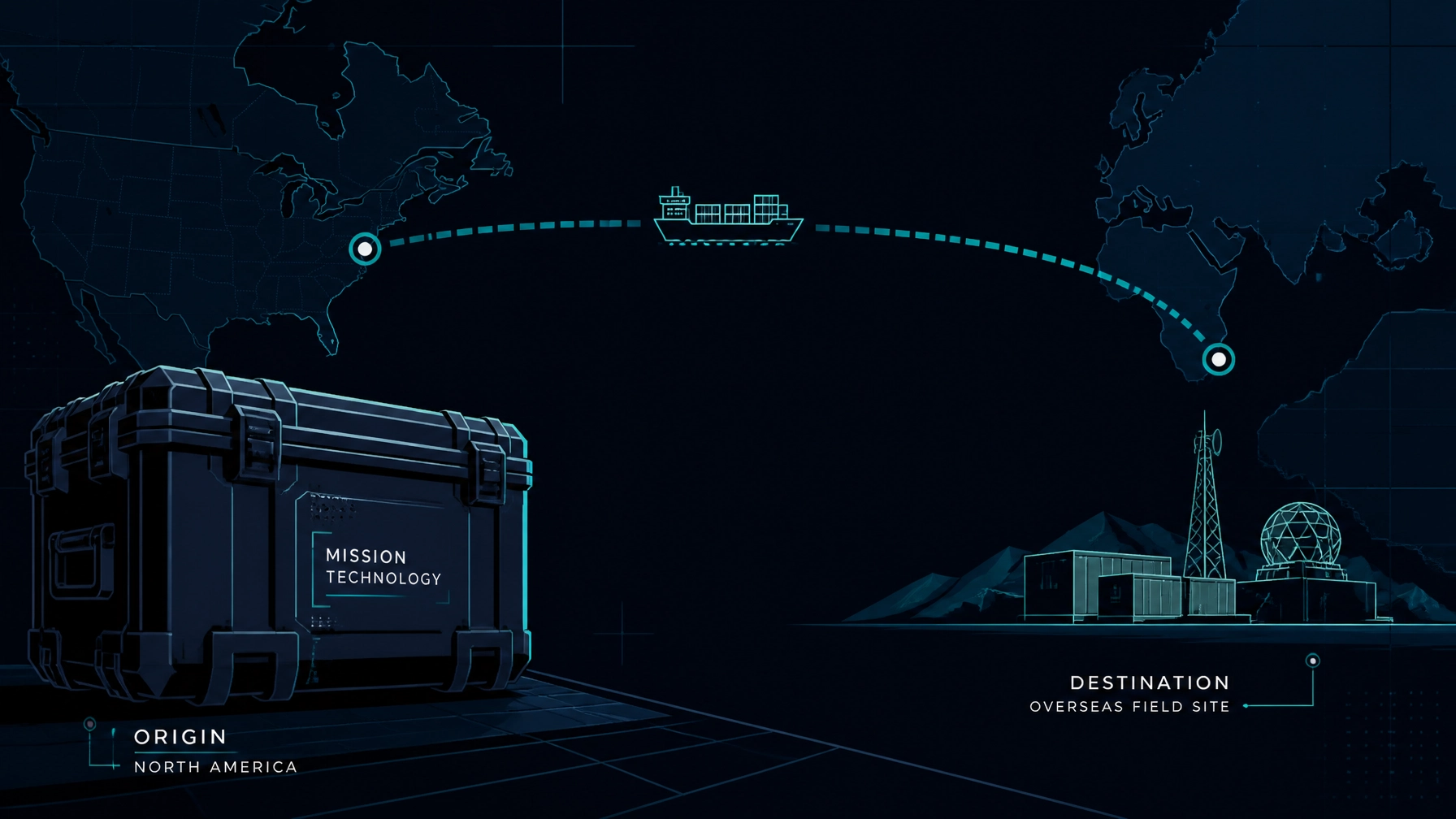
  • Moving Mission Technology Overseas: A Business Development Guide to Export, Customs, and Delivery Risk

    Moving Mission Technology Overseas: A Business Development Guide to Export, Customs, and Delivery Risk

    In military campaigns, infrastructure and supply lines often determine success before the first operation begins. The same principle applies to modern international technology deployments. Communications equipment, network infrastructure, cybersecurity tools, software, technical data, and field services must move through a controlled chain of decisions before they can support a mission.

    A shipment may be technically ready and still fail to move because the item is misclassified, a party is not properly screened, a customs document is incomplete, a carrier lacks required information, or a design change was made after the original authorization review.

    The correct objective is not simply to ship equipment overseas. The objective is to connect the item, the parties, the destination, the authorization, the carrier, and the delivery record into one accountable process.

    This article provides general business-development and execution guidance for companies moving mission technology internationally. It is not legal advice, an export-control determination, or an authorization to export, reexport, transfer, or provide technical services. Requirements vary by item, destination, end user, transaction structure, contract, and applicable law. Qualified export counsel and compliance professionals should review each transaction.

    International mission technology risk map showing item, parties, destination, authorization, carrier, and records

    Begin with an item-and-party map

    The first step is to define exactly what is moving and who is involved.

    A description such as “communications equipment” may be inadequate for export, customs, or contract review. The project team should develop an item register that identifies, as applicable:

    • Hardware, components, tools, batteries, and replacement parts.
    • Software, firmware, encryption functionality, and technical data.
    • Manufacturer, model, serial number, and country of origin.
    • Intended function and operational environment.
    • Whether the item is sold, leased, loaned, repaired, returned, or temporarily exported.
    • Whether technical assistance or installation support will be provided overseas.
    • The final destination and any transit locations.

    The party map should identify the seller, exporter, purchaser, consignee, end user, freight forwarder, customs broker, financial institution, local partner, installation team, and any other intermediary.

    This mapping exercise creates the foundation for every later decision. It also prevents a common failure: treating the direct customer as the only relevant party in the transaction.

    Screen parties, destinations, and payment paths

    OFAC sanctions controls may apply because of a destination, a listed party, ownership interests, a financial institution, a carrier, a vessel, or the nature of the transaction. Screening should therefore extend beyond the manufacturer and direct buyer.

    A practical review may include:

    • Customer and consignee screening.
    • Beneficial ownership review where appropriate.
    • Local suppliers and agents.
    • Freight forwarders and customs brokers.
    • Payment intermediaries and banks.
    • Transit countries and routing points.
    • End-use and end-user information.
    • Requests for unusual routing, substitutions, or unexplained intermediaries.

    A screening result should be documented, dated, attributable, and connected to the transaction file. Potential matches and other red flags should be escalated rather than resolved informally by sales or logistics personnel.

    The team should also establish a stop-and-escalate process. Field personnel and shipping staff must know who can pause a movement when the destination, party, item, route, or intended use changes.

    The OFAC Framework for Compliance Commitments identifies management commitment, risk assessment, internal controls, testing and auditing, and training as important elements of a sanctions compliance program.

    Determine export-control and customs classification

    Export classification and customs classification are related, but they are not the same determination.

    Depending on the facts, a company may need to evaluate whether an item is subject to the International Traffic in Arms Regulations, the Export Administration Regulations, OFAC sanctions, or other U.S. and foreign requirements. An ITAR review may involve a defense article, technical data, or defense service. An EAR review may require an Export Control Classification Number and analysis of licensing requirements.

    Customs classification requires separate analysis, including the applicable Harmonized System or tariff classification, valuation, country of origin, and admissibility rules.

    The project team should maintain written support for:

    1. The technical description of the item.
    2. The relevant USML category or ECCN, where applicable.
    3. The customs and tariff classification.
    4. The reasoning behind the classification.
    5. Any license, exemption, exception, or other authorization considered.
    6. Conditions attached to the authorization.
    7. The person or qualified professional responsible for the determination.

    A temporary export is not automatically exempt from authorization requirements. Likewise, government involvement does not automatically create permission to export controlled technology. The actual item, parties, destination, purpose, and transaction structure must be reviewed.

    The ITAR regulatory text and applicable DFARS export-controlled items clause should be reviewed with qualified counsel or an export-compliance professional.

    Build a complete customs and shipping document package

    International delivery depends on consistency. The commercial invoice, packing list, export filing, transport document, license references, and physical contents should tell the same story.

    Depending on the transaction, the document package may include:

    • Commercial or pro forma invoice.
    • Packing list with weights, quantities, and package numbers.
    • Air waybill, bill of lading, or other transport document.
    • Export license or authorization evidence.
    • AES filing information and Internal Transaction Number, when required.
    • Country-of-origin information.
    • Import permits or local customs documentation.
    • Certificates of conformity or product certifications.
    • Insurance and Incoterms information.
    • Contact information for the shipper, consignee, broker, and carrier.

    Descriptions should be specific enough to support classification and clearance without unnecessarily disclosing sensitive operational information. Values should be accurate. Temporary movements, repair returns, samples, and government-furnished equipment may require special treatment and should not be described as ordinary commercial sales.

    For U.S. exports, Electronic Export Information may be required through the Automated Export System. The exporter or authorized filing agent should confirm whether filing is required, submit the information within the applicable timeframe, and provide the carrier with the ITN or correct exemption citation.

    The Trade.gov AES guidance and U.S. Customs and Border Protection importer guidance provide useful starting points.

    Five-stage workflow for mapping, screening, classifying, documenting, and delivering mission technology

    Coordinate the carrier, broker, and importer of record

    A capable carrier does not replace an organized exporter. A customs broker does not replace accurate technical information. Each partner needs a defined role.

    Before tendering the shipment, confirm:

    • Who is the exporter of record.
    • Who is the importer of record.
    • Who prepares and submits export filings.
    • Who provides the commercial invoice and packing list.
    • Who communicates license conditions to the carrier.
    • Who manages customs questions.
    • Who pays duties, taxes, storage, and demurrage.
    • Which Incoterms apply.
    • Which party owns delivery confirmation.
    • Who can approve a routing change or shipment hold.

    Carrier instructions should reflect the approved transaction. A freight forwarder should not be substituted for the actual final consignee. A change in route, consignee, carrier, or destination should trigger a documented review before movement continues.

    The Trade.gov Incoterms guidance can help teams understand the allocation of transportation, insurance, delivery, and customs responsibilities. Contract-specific terms still control.

    Use change control before the equipment moves

    Mission technology changes frequently. A firmware update, replacement component, encryption feature, revised bill of materials, new local partner, or alternative shipping route may affect classification, authorization, customs treatment, security, or delivery timing.

    A controlled change process should require the project team to reassess:

    • Hardware and software configuration.
    • Technical data and support services.
    • USML, ECCN, and customs classifications.
    • End user, end use, and destination.
    • License or exemption conditions.
    • Carrier, route, and transit points.
    • Personnel who will access the equipment or data.
    • Contract and customer requirements.

    No shipment should be treated as approved merely because an earlier version of the equipment was reviewed. The approved configuration and physical shipment must match.

    Retain records that explain the decision

    A complete record should allow an independent reviewer to understand what moved, why it moved, who approved it, and how the delivery was completed.

    Maintain, as applicable:

    • Item and configuration records.
    • Classification analysis.
    • Screening results.
    • Licenses, exemptions, and approvals.
    • Commercial invoices and packing lists.
    • AES filings and ITNs.
    • Carrier and broker correspondence.
    • Route and delivery details.
    • Change-control records.
    • Installation or acceptance documentation.
    • Final delivery confirmation.

    Records should be stored in a controlled, retrievable system. Sensitive information should be handled through approved channels. Do not place classified information, Controlled Unclassified Information, export-controlled technical data, passwords, or credentials in public forms or ordinary email.

    Assign partner roles before the proposal or purchase order

    Export and delivery risk is easier to manage when responsibilities are assigned before the project begins.

    Compliance and legal professionals review sanctions, export-control, customs, and contract requirements.

    Engineering and technical teams provide accurate item descriptions, bills of material, software versions, performance details, and change notices.

    Supply-chain and logistics teams coordinate carriers, forwarders, brokers, packaging, routing, filing deadlines, and delivery records.

    Prime contractors and program managers define the statement of work, allocate responsibilities, manage customer communication, and control changes.

    Local partners and field-support providers support site access, installation, staging, technical assistance, and sustainment within their authorized scope.

    JPI Worldwide can serve as a technical infrastructure, logistics, integration, and field-support resource for communications, networks, cybersecurity tools, technical staffing, deployment, and sustainment. Its role should be defined by the applicable contract and work scope. JPI Worldwide does not replace qualified export counsel, customs professionals, or the responsible compliance function.

    The Infinity Group helps clients connect strategy, execution, funding, partners, and growth planning around complex opportunities. Through our government consulting, technical operations, business growth, and strategic partner functions, we help organizations move from an initial capability to a structured, credible pursuit and delivery plan.

    A business-development view of international delivery

    International technology movement should be addressed during opportunity development, not after the contract is signed.

    Your proposal, pricing model, schedule, staffing plan, and risk register should account for:

    • Classification and professional review.
    • Export filings and authorization timelines.
    • Customs brokerage and import requirements.
    • Packaging, insurance, and carrier constraints.
    • Local installation and support.
    • Spare parts and replacement cycles.
    • Configuration control.
    • Documentation and records.
    • Funding requirements and working capital.
    • Partner responsibilities and escalation paths.

    A company that can demonstrate this discipline is easier for a prime contractor, government customer, investor, or strategic partner to evaluate. It shows that the business understands the difference between selling equipment and delivering an operational capability.

    The Infinity Group is a Business Development Architect. We can help you assess the opportunity, develop the partner structure, plan the execution path, identify funding needs, and organize the growth strategy from beginning to end. We do not issue export authorizations or provide legal advice. We help bring the right strategy, resources, and qualified professionals together.

    Conclusion

    Moving mission technology overseas requires more than a shipping label and a freight account. It requires disciplined coordination among technical teams, compliance professionals, logistics providers, carriers, customs brokers, prime contractors, field personnel, and customers.

    Map the item. Screen the parties. Classify the technology. Confirm authorization. Prepare consistent documents. Coordinate the carrier. Control changes. Preserve the record.

    That is how delivery risk becomes a managed business process.

    To discuss a technology deployment, government-facing growth strategy, partner structure, funding requirement, or international execution plan, contact The Infinity Group at connect@infinity-us.com or visit our contact page.

    This article is general information only. It is not legal advice and does not authorize any export, import, reexport, retransfer, or technical service. Consult qualified export counsel, customs professionals, and compliance advisors before proceeding.

    Comments and replies are disabled.

    Sources and further reading

    Official The Infinity Group corporate logo with navy-and-gold monogram and tagline

  • Prime-Ready by Design: How Specialized Subcontractors Win Trust in Government Markets

    Prime-Ready by Design: How Specialized Subcontractors Win Trust in Government Markets

    From military campaigns to complex industrial programs, success has never depended on capability alone. Commanders require dependable units, clear logistics, accurate reporting, and early warning when conditions change. Prime contractors operate by the same discipline.

    A specialized subcontractor may possess excellent technical expertise and still lose an opportunity because its pricing is unclear, its records are incomplete, its staffing plan is uncertain, or its approach creates unnecessary management work.

    Prime-ready companies do more than perform a technical task. They make performance easier to manage, document, price, and defend.

    That is the standard small and mid-sized companies must meet when entering government markets.

    At The Infinity Group, we help companies build the business-development strategy, government-contracting readiness, capital plan, and partner ecosystem required to move from commercial capability to credible government-market participation. We support your needs from A to Z: positioning, capture, teaming, pricing preparation, compliance coordination, financing strategy, and execution planning.

    Technical Capability Is the Beginning: not the Complete Case

    Companies need a clear technical niche. We help you define and present it.

    A prime contractor is not searching for a company that claims to do everything. The prime is looking for a partner that can perform a defined work package with the right expertise, personnel, equipment, experience, and controls.

    Your niche may involve:

    • Network installation and infrastructure;
    • Communications equipment integration;
    • Cybersecurity implementation support;
    • Specialized engineering;
    • Technical staffing;
    • Logistics and deployment;
    • Equipment staging;
    • Testing and commissioning;
    • Maintenance and sustainment; or
    • Systems integration.

    Your capability statement, website, proposal materials, and partner discussions should communicate the same focused position. The message must explain what you do, where you fit, what evidence supports your capability, and how your work reduces risk for the prime.

    A technical niche becomes commercially valuable when it is supported by disciplined operations.

    Prime-Readiness Is a Business System

    The Federal Acquisition Regulation’s Part 44 framework reflects the importance of subcontractor responsibility, technical capability, financial capacity, pricing, and contract compliance. The precise requirements depend on the prime contract, subcontract, contract type, dollar value, applicable clauses, and nature of the work.

    The practical lesson is direct: your company must be prepared to demonstrate that it can perform and support its performance with reliable business records.

    Prime-ready subcontractor framework showing technical niche, accounting, pricing, flow-downs, cybersecurity, records, and risk escalation

    1. Establish Accounting Controls

    Primes need to understand what work was performed, for which contract or task, during which period, and at what cost.

    Your accounting environment should support:

    • Accurate labor and timekeeping records;
    • Separation of direct and indirect costs;
    • Contract or project-level cost visibility;
    • Proper treatment of materials and travel;
    • Approval of purchases and invoices;
    • Reconciliation between invoices and the general ledger;
    • Documentation for subcontractor and supplier costs; and
    • Retention of records required by the subcontract.

    Under FAR 31.201-2, costs must satisfy requirements concerning reasonableness, allocability, applicable accounting standards, contract terms, and limitations. FAR 31.201-6 addresses expressly unallowable costs and directly associated costs.

    This article is not accounting advice. Your accounting professionals should review your systems and classifications. The business-development point is clear: a prime should not have to reconstruct your invoice or guess how your costs were developed.

    2. Prepare Defensible Pricing Support

    A total price without support creates delay and uncertainty.

    Under FAR 15.404-3, prime contractors and higher-tier subcontractors may need to conduct appropriate cost or price analysis of proposed subcontract prices. As a result, a prime may request:

    • Labor categories;
    • Proposed labor rates;
    • Estimated hours;
    • Material and equipment costs;
    • Travel and other direct costs;
    • Indirect rates and allocation bases;
    • Basis-of-estimate documentation;
    • Historical or market pricing;
    • Assumptions and exclusions; and
    • Schedule or site-access dependencies.

    A specialized subcontractor does not need to provide unsupported precision. It does need to explain the basis of its proposal.

    If your labor estimate depends on equipment availability, security access, site conditions, customer-furnished property, or a specific mobilization schedule, identify that dependency. Clear assumptions help the prime evaluate risk and incorporate your work into its own proposal.

    Auditable cost and pricing flow showing labor, materials, indirect costs, assumptions, records, and invoice review

    3. Review Flow-Down Requirements Carefully

    Government requirements do not automatically apply to every subcontractor in the same way. Flow-downs must be reviewed against the actual contract and subcontract.

    Potential areas include:

    • Technical and quality requirements;
    • Labor and safety provisions;
    • Domestic sourcing;
    • Supply-chain restrictions;
    • Records and audit access;
    • Cybersecurity and information handling;
    • Subcontracting limitations;
    • Pricing and cost-data requirements; and
    • Records-retention obligations.

    FAR 52.244-6 addresses subcontracts for commercial products and commercial services and identifies certain clauses that may be required in commercial subcontracts. FAR 52.204-21 establishes basic safeguarding requirements for covered contractor information systems handling Federal Contract Information when the clause applies.

    Do not assume that every clause applies merely because it appears somewhere in the prime contract. Do not assume that a requirement is irrelevant because you are not contracting directly with the government.

    The correct process is controlled review: identify the clause, determine whether it applies to your work, assign responsibility, document the decision, and preserve the supporting records. Legal or contracting professionals should review questions that require interpretation.

    4. Treat Cybersecurity as an Execution Requirement

    Cybersecurity is not limited to an information-technology department. It affects how your company receives specifications, communicates with the prime, stores documents, manages users, shares files, and protects contract information.

    Before performance begins, identify:

    • What information you will receive;
    • Whether it is Federal Contract Information, Controlled Unclassified Information, or another category;
    • Which systems will store, process, or transmit it;
    • Which employees and vendors require access;
    • How information will be transferred; and
    • What controls and flow-downs are included in the subcontract.

    The Infinity Group’s CMMC and CUI guidance explains why scope, data mapping, and contract clarity matter. Your cybersecurity provider and qualified counsel should address specific compliance obligations.

    A prime-ready company does not simply say, “We take security seriously.” It can explain its handling process, access controls, escalation procedure, and evidence-management approach.

    Records Build Confidence

    A prime contractor needs records that are complete, timely, organized, and retrievable.

    Records may include:

    • Timekeeping;
    • Purchase orders;
    • Invoices and receipts;
    • Labor qualifications;
    • Training documentation;
    • Inspection and acceptance records;
    • Subcontractor information;
    • Schedule updates;
    • Change requests;
    • Security records;
    • Cost estimates; and
    • Communications concerning risks or decisions.

    Under FAR 52.215-2, where applicable, the term “records” can include books, documents, accounting procedures and practices, computer data, and other supporting information.

    Good records do not exist only for an audit. They help management know whether the work is on schedule, whether costs are controlled, whether staffing is sufficient, and whether a deliverable is ready for acceptance.

    Low-Friction Execution Is a Competitive Advantage

    Low friction does not mean that problems never occur. It means problems are identified early, described accurately, and managed with a practical path forward.

    A low-friction subcontractor:

    • Responds within agreed timeframes;
    • Provides complete proposal and invoice packages;
    • Uses the required labor categories and billing structure;
    • Maintains current points of contact;
    • Reports staffing and schedule risks promptly;
    • Protects contract information;
    • Documents technical completion;
    • Controls lower-tier suppliers;
    • Separates facts from assumptions; and
    • Escalates issues before they affect delivery.

    Low-friction execution illustration showing early risk escalation, staffing, secure data, schedule, and completed deliverables moving to a prime contractor

    A prime would rather receive an early warning about a manageable staffing issue than discover the problem after a milestone is missed. Communication is part of performance.

    Prime-Readiness Also Requires Capital

    Companies need adequate working capital to perform government work. We help connect the operational plan to the capital plan.

    Before accepting a subcontract, evaluate:

    • Payroll during mobilization;
    • Recruiting and onboarding;
    • Equipment and materials;
    • Insurance and bonding;
    • Travel and deployment;
    • Cybersecurity investments;
    • Vendor payment timing;
    • Invoice approval cycles;
    • Delayed receivables; and
    • Contingency reserves.

    A contract can generate revenue and still create financial pressure if the company cannot fund the period between performance and payment.

    The Infinity Group connects government-contracting strategy with capital readiness and business development. We help leadership teams understand what must be financed, what must be documented, and what the company can responsibly undertake.

    Building the Right Partner Ecosystem

    A company does not need to perform every function internally. It does need to know which capabilities must be internal, which may be supported by partners, and how those relationships will be managed.

    JPI Worldwide may be considered as a technical and field-support partner or resource where a requirement involves communications infrastructure, technical staffing, network support, cybersecurity implementation, logistics, deployment coordination, or related systems work. Any engagement would depend on the specific scope, contract terms, schedule, qualifications, and compliance requirements. No performance result or contract award is guaranteed.

    You can read the original JPI Worldwide perspective, “What Primes Really Expect From a Subcontractor: Compliance, Accounting, and Friction,” for additional context.

    The Infinity Group’s role is broader. We are Business Development Architects. We organize the strategy, identify the requirements, coordinate the right resources, evaluate capital needs, and help you prepare for disciplined execution.

    Become the Company a Prime Wants to Call Again

    Prime-readiness is not a certification or a slogan. It is a pattern of behavior:

    • Clear technical positioning;
    • Accurate accounting;
    • Supportable pricing;
    • Controlled flow-down review;
    • Practical cybersecurity;
    • Organized records;
    • Early risk escalation;
    • Reliable staffing; and
    • Low-friction execution.

    If you are preparing for a subcontract, reviewing a teaming opportunity, or positioning your company for future federal growth, contact The Infinity Group at connect@infinity-us.com. We will review your objectives, identify readiness priorities, discuss partner and capital requirements, and establish practical next steps.

    This article is provided for informational purposes only. It is not legal, accounting, cybersecurity, audit, or contracting advice. Requirements vary by contract, agency, clause, contract type, and performance scope. Obtain qualified professional guidance for contract-specific decisions.

    PRIME-READY BY DESIGN.

    CAPABILITY. CONTROL. EXECUTION.

    Comments and replies are disabled.

    Sources and Further Reading

    Official full horizontal Infinity Group corporate logo with the tagline Strategies + Execution = Funding and Growth

  • OCONUS Readiness: Building the Business Infrastructure Behind Overseas Mission Support

    OCONUS Readiness: Building the Business Infrastructure Behind Overseas Mission Support

    Throughout history, successful missions have depended on more than objectives. They have depended on planning, supply lines, communications, disciplined personnel, and the ability to sustain operations after the first deployment. Overseas business and government support follows the same rule.

    A company may have a strong product, capable technical staff, or an attractive government-facing service. That is not enough. To perform effectively outside the continental United States, the company must build the business infrastructure behind the mission.

    This is the difference between being interested in OCONUS work and being ready to support OCONUS work.

    For planning purposes, CONUS refers to operations within the continental United States. OCONUS refers to performance outside that domestic operating environment. OCONUS work may involve different transportation requirements, regulatory considerations, communications limitations, staffing models, partner relationships, documentation, and sustainment responsibilities.

    At The Infinity Group, we approach this challenge as Business Development Architects. We connect strategy, execution, capital planning, government contracting, and strategic partnerships so that your capability can move from concept to dependable performance.

    Six-part OCONUS readiness framework showing mission requirements, deployment planning, communications, logistics, staffing, and sustainment

    Readiness Begins With the Mission Requirement

    A successful overseas support effort starts with a clear definition of the mission.

    Companies need to identify the customer, the operating environment, the desired outcome, the performance period, the users, the equipment, the communications requirements, the support boundaries, and the expected reporting structure. We help organize those needs into a practical operating concept.

    The first questions should include:

    • What capability must be delivered?
    • Who will use it?
    • What must be available on day one?
    • What can be delivered in phases?
    • Which resources are customer-provided?
    • Which responsibilities remain with the contractor?
    • What technical, financial, staffing, and schedule assumptions affect performance?
    • What information must be controlled through approved channels?

    The answers shape the technical solution, the staffing model, the logistics plan, the pricing structure, the partner strategy, and the capital required to execute.

    A vague requirement creates downstream friction. A defined requirement creates a roadmap.

    Deployment Planning Is a Business Function

    Deployment planning is not merely a travel exercise. It is a business function connecting personnel, equipment, documents, transportation, funding, communications, security procedures, and customer coordination.

    A deployment plan should address:

    1. Personnel readiness: roles, qualifications, rotations, training, travel documents, and points of contact.
    2. Equipment readiness: bill of materials, staging, configuration, inspection, spares, packaging, and replacement planning.
    3. Movement planning: shipping routes, receiving procedures, customs coordination, delivery schedules, and local support.
    4. Communications: primary and alternate connectivity, support escalation, user access, and outage procedures.
    5. Financial readiness: mobilization costs, working capital, insurance considerations, subcontractor payments, and contingency reserves.
    6. Documentation: statements of work, acceptance criteria, inventory records, test results, incident procedures, and sustainment records.

    This is where many otherwise capable companies encounter difficulty. They can perform the technical work, but they have not planned for the cost and coordination required to deliver it overseas.

    We help companies build a plan that is operationally realistic and financially supportable.

    Communications Must Be Designed for the Environment

    Communications infrastructure is the connective tissue of an overseas mission. It may include wired networks, wireless systems, broadband, satellite connectivity, radio systems, remote access, cloud services, or a combination of approved technologies.

    The correct solution depends on the mission and location. No single platform is automatically appropriate for every environment.

    A practical communications plan should consider:

    • Bandwidth and latency;
    • Redundancy and failover;
    • Power and environmental conditions;
    • Equipment maintenance;
    • User authentication and access control;
    • Cybersecurity responsibilities;
    • Remote technical support;
    • Configuration management;
    • Local infrastructure limitations; and
    • Training and operational handoff.

    Connectivity alone is not readiness. A system must be configured, tested, documented, secured, supported, and maintainable.

    The JPI Worldwide Insights article on civilian contractors in Latin America provides useful context on how communications, technology, logistics, staffing, and sustainment combine to support overseas government missions.

    Logistics Determines Whether Capability Arrives on Time

    Equipment that cannot reach the customer is not an operational capability.

    OCONUS logistics may involve procurement, inventory control, packaging, shipping, customs documentation, freight coordination, local delivery, staging, installation, replacement parts, and return movement. Each step should have an owner.

    Companies should also evaluate whether their proposed movement involves export controls, sanctions screening, host-country requirements, or contract-specific documentation. General assumptions are not enough. The item, destination, end user, route, transaction, and applicable authorization should be reviewed through the responsible compliance and legal channels.

    JPI Worldwide’s related material on OFAC, ITAR, and customs considerations illustrates why technical deployment and movement compliance must be planned together.

    The Infinity Group does not replace qualified legal, export-control, insurance, or customs professionals. We do help identify where those functions belong in the overall business plan, budget, schedule, and partner structure.

    Resilient overseas mission-support architecture linking strategy, communications, logistics, technical teams, documentation, and partner coordination

    Technical Staffing Must Match the Operating Model

    Overseas work requires more than finding technically qualified personnel. It requires matching people to the environment, schedule, support model, and responsibility structure.

    Your staffing plan may require:

    • Network and communications technicians;
    • Systems engineers;
    • Cybersecurity personnel;
    • Field service specialists;
    • Logistics coordinators;
    • Project and program managers;
    • Trainers and documentation specialists;
    • Local coordination resources;
    • Help desk or remote support personnel; and
    • Replacement or surge personnel.

    Staffing must also account for rotations, travel time, rest periods, knowledge transfer, backup coverage, and the possibility that a person may become unavailable. A plan that depends on one individual is not a sustainment plan.

    JPI Worldwide is a relevant resource and potential strategic partner for companies and prime contractors seeking communications, network infrastructure, cybersecurity, technical staffing, logistics, field deployment, and sustainment capabilities. Its material should be reviewed directly to confirm current capabilities, availability, and scope.

    See JPI’s material on what primes expect from subcontractors and technical infrastructure in OCONUS environments.

    Documentation and Sustainment Protect the Investment

    A mission is not complete when the equipment is installed or the first invoice is submitted.

    The customer, prime contractor, and support team need records that show what was delivered, how it was tested, who accepted it, what remains open, and how the capability will be maintained.

    A useful documentation package may include:

    • Approved requirements;
    • Equipment and asset inventories;
    • Configuration baselines;
    • Test and acceptance records;
    • Training records;
    • Maintenance schedules;
    • Spare-parts plans;
    • Contact and escalation procedures;
    • Change-control records;
    • Incident and corrective-action records;
    • Invoices and supporting cost documentation; and
    • Closeout and handoff materials.

    Documentation also supports business development. A company that can demonstrate disciplined performance is better positioned for follow-on work, prime-contractor relationships, investment discussions, and expansion into additional markets.

    Sustainment should be priced and planned from the beginning. It may require recurring technical labor, replacement equipment, software or service renewals, transportation, local coordination, cybersecurity reviews, and periodic training.

    Deployment is an event. Sustainment is the business model.

    OCONUS readiness cycle showing assess, stage, deploy, operate, document, sustain, and improve

    Partner Coordination Creates the Full Capability

    Most companies cannot provide every required function alone. That is not a weakness. It is the reason strategic partnerships matter.

    A strong partner structure may include:

    • A prime contractor;
    • Technical and engineering specialists;
    • Logistics providers;
    • Local commercial resources;
    • Security and compliance professionals;
    • Insurance advisors;
    • Financial partners;
    • Training organizations; and
    • Government-facing business development support.

    The key is to define responsibilities before performance begins. Partners should understand who owns customer communication, pricing, staffing, equipment, documentation, risk escalation, and sustainment.

    The Infinity Group helps build that structure. We identify capability gaps, evaluate strategic partners, shape subcontracting approaches, organize capital needs, strengthen proposal positioning, and connect execution requirements to broader business development goals.

    Our services support federal agency consulting, Congressional consultation, business-to-government guidance, contract proposal strategy, startup funding development, and strategic execution. Our industry experience spans public-sector, government-facing, startup, technology, investment, and specialized commercial environments.

    How The Infinity Group Supports OCONUS Readiness

    OCONUS readiness requires a complete business architecture:

    requirement → strategy → partners → capital → deployment → performance → sustainment.

    We can help you:

    • Define and clarify the mission requirement;
    • Assess CONUS and OCONUS execution differences;
    • Build a deployment and sustainment roadmap;
    • Identify technical, logistics, staffing, and documentation needs;
    • Develop a realistic capital and working-capital plan;
    • Prepare for prime-contractor discussions;
    • Strengthen proposal and subcontract positioning;
    • Identify qualified resources and strategic partners;
    • Coordinate government-facing communications; and
    • Move the organization from planning into disciplined execution.

    We will not represent that a company has a contract, clearance, authorization, or capability that it does not possess. We will not substitute general business consulting for legal, insurance, export-control, security, or contracting advice. We will help place the right professional functions into the right part of the plan.

    Build the Infrastructure Before the Opportunity Arrives

    Overseas mission support is won before deployment. It is won through preparation, credible partners, documented processes, adequate capital, disciplined staffing, and clear responsibility.

    If your company is pursuing government or commercial work outside the United States, The Infinity Group can help you assess the opportunity and build the infrastructure behind it.

    Contact us at connect@infinity-us.com or through our contact page to discuss your mission, timeline, partners, capital needs, and next steps.

    This article is provided for general informational purposes. It does not provide legal advice, export-control advice, insurance advice, security authorization, or contract-specific guidance. Do not send classified information, Controlled Unclassified Information, export-controlled technical data, credentials, or other sensitive information through ordinary email or public contact forms.

    Partner Reading and Sources

    Comments and replies: Disabled

    The Infinity Group official corporate logo with the tagline Strategies + Execution = Funding and Growth

  • When Growth Requires a Partner: Evaluating Joint Ventures, M&A, and Strategic Alliances

    When Growth Requires a Partner: Evaluating Joint Ventures, M&A, and Strategic Alliances

    Throughout history, successful leaders have understood that objectives are achieved through planning, disciplined execution, and the right alliances. Businesses operate by the same rule. Growth is not always a matter of working harder with the resources already on hand. At a certain point, your company may require new capabilities, new customers, new capital, new intellectual property, or access to a market that cannot be reached efficiently alone.

    That is when growth requires a partner.

    The correct path may be organic expansion, licensing, a strategic alliance, a joint venture, an acquisition, or a merger. Each structure creates a different balance of speed, control, capital, risk, governance, and integration. The decision should be made deliberately: not because another company appears attractive, or because a transaction is receiving attention in the market.

    At The Infinity Group, we are Business Development Architects. We support strategy, execution, funding, partnerships, M&A, and growth from A to Z. We help you determine which structure fulfills your strategic needs and how to proceed at reasonable costs, with the proper preparation and professional support.

    Start With the Strategic Need

    Companies need to identify the actual objective before selecting a transaction structure. We have found that most partnership and M&A decisions begin with one or more of six needs:

    • Entering a new market or geography
    • Reaching new customers or distribution channels
    • Obtaining technology, intellectual property, talent, or operational capabilities
    • Sharing capital requirements and execution risk
    • Increasing production, capacity, or market share
    • Moving faster than an internal build-out would permit

    A technology company may need enterprise distribution. A healthcare company may need regulatory expertise and clinical access. A manufacturer may need production capacity or a supply-chain partner. A government-adjacent business may need a capable teammate with agency relationships, contract vehicles, security controls, or past performance.

    An entertainment or media company may need financing, content rights, distribution, licensing relationships, or access to a larger audience. A real estate business may need capital, local operating knowledge, or a development partner.

    The answer is not automatically an acquisition. The answer is the structure that provides the required capability while preserving an appropriate level of control and flexibility.

    Six Paths to Growth

    Six geometric pathways representing organic growth, licensing, alliances, joint ventures, acquisitions, and mergers

    1. Organic Growth

    Organic growth is appropriate when your company already has the core capabilities, customer relationships, management capacity, and capital required to expand.

    You retain maximum control. You also retain the full burden of investment, hiring, execution, compliance, and operating risk. Organic growth can be the right choice for expanding an existing product line, opening nearby territories, increasing sales coverage, or improving internal processes.

    It is less attractive when the market is moving quickly, the required expertise is unavailable, or your company would spend years reproducing capabilities another organization already possesses.

    2. Licensing

    Licensing can provide access to intellectual property, technology, brands, content, patents, software, or other protected assets without requiring an acquisition.

    This structure is often capital-efficient. It may be useful for technology companies commercializing a specialized platform, manufacturers adopting proprietary processes, or entertainment companies extending content into new formats and territories.

    Licensing requires careful attention to exclusivity, geography, term, performance obligations, quality control, royalties, sublicensing, data rights, indemnification, and termination. You may gain access without gaining ownership. That distinction matters.

    3. Strategic Alliances

    A strategic alliance is a flexible relationship in which two or more organizations cooperate without necessarily creating a new company or transferring ownership.

    Alliances can support co-development, joint marketing, distribution, referral activity, procurement, research, technology integration, or government-contracting pursuits. They are useful when you need access and speed more than full control.

    The principal advantage is optionality. You can test commercial fit, customer response, operational compatibility, and governance before committing to a deeper transaction. The principal risk is that the relationship may lack sufficient authority, accountability, or economic alignment.

    A strong alliance therefore requires more than a memorandum and a handshake. It requires defined objectives, responsibilities, milestones, decision rights, information-sharing rules, performance measures, and a plan for resolving disputes.

    4. Joint Ventures

    A joint venture creates a formal business arrangement for a defined commercial purpose. The parties may contribute capital, intellectual property, personnel, facilities, customers, contracts, or specialized expertise.

    Joint ventures are effective when the opportunity requires meaningful cooperation but neither party needs to own the other. They are common in infrastructure, real estate, manufacturing, international expansion, energy, healthcare, media production, and government-adjacent work.

    The critical issue is governance. The agreement must address ownership, board composition, reserved matters, funding obligations, budgets, hiring, intellectual property, compliance, deadlock procedures, distributions, and exit rights. A joint venture with unclear authority can become an expensive dispute disguised as a growth strategy.

    5. Acquisitions

    An acquisition provides greater control over the target’s people, assets, technology, contracts, operations, and customer relationships.

    It may be the right choice when the target is central to your long-term strategy, when competitors may acquire the asset, or when the value depends on integrating the business into your platform. It may also provide a faster route to talent, capacity, market share, or geographic reach.

    Acquisitions require substantial capital and disciplined due diligence. The purchase price is only one part of the cost. You must account for transaction expenses, retention packages, systems integration, compliance remediation, facility changes, customer transition, cultural alignment, and management time.

    6. Mergers

    A merger combines organizations into a new or consolidated operating structure. It may create scale, remove duplication, broaden capabilities, or establish a stronger market position.

    A merger is not simply a larger acquisition. It requires senior-level alignment regarding leadership, ownership, culture, valuation, authority, brand, systems, employees, customers, and the future operating model. The parties must decide what the combined company will become: not merely how the transaction will close.

    A Practical Decision Framework

    Strategic decision panel balancing speed, control, flexibility, capital, governance, and compliance

    We recommend evaluating every potential growth partner through the following questions:

    What is the strategic fit?
    Does the opportunity advance your stated objectives, or is it merely interesting? Does the partner strengthen your position in technology, healthcare, manufacturing, government, real estate, entertainment, media, or another target sector?

    What capability are you obtaining?
    Identify the specific asset: customers, contracts, intellectual property, facilities, talent, licenses, distribution, capital, production, or regulatory knowledge. If the capability cannot be clearly identified, the transaction is not ready.

    How much control do you require?
    Organic growth and acquisitions provide the greatest control. Alliances and licensing provide less. Joint ventures sit between the two and require formal shared governance.

    What capital is required?
    Calculate more than the initial contribution or purchase price. Include working capital, integration expenses, earn-outs, technology migration, legal and accounting costs, compliance investments, and the resources required from your management team.

    How quickly must the opportunity move?
    Licensing and strategic alliances can move quickly when the parties are prepared. Joint ventures require more structure. Acquisitions and mergers generally require the most extensive diligence, negotiation, approvals, and integration planning.

    What is the compliance profile?
    Review data protection, cybersecurity, export controls, employment obligations, healthcare requirements, intellectual property ownership, government-contracting rules, securities concerns, antitrust issues, environmental obligations, and sector-specific licensing.

    This is especially important for government-adjacent companies. A partner’s past performance, representations, security practices, ownership structure, and compliance history may affect your eligibility and reputation. The same principle applies in healthcare, financial services, media rights, and any industry where customers, regulators, or public agencies demand documented controls.

    What 2026 Startup M&A Reporting Shows

    Current startup M&A reporting provides useful context, but it should not be treated as a universal prescription.

    Crunchbase News reports that more than 500 seed- or venture-backed private companies had been acquired by other private, venture-backed companies during the year covered by its report, with at least 440 funded startups sold in the first half. Crunchbase also identifies active acquirers in artificial intelligence, fintech, cybersecurity, legal technology, and biotechnology.

    The report qualifies its figures: deal counts may change as smaller transactions are added to the dataset weeks or months after closing. It also describes a market in which well-funded companies use acquisitions to obtain technology, experienced teams, and go-to-market capability faster than they could build those resources internally.

    The lesson extends beyond startups. Buyers are acquiring when control and speed justify the cost. Companies are using alliances and joint ventures when uncertainty, valuation, regulation, or integration risk make a full transaction premature. Many organizations are sequencing the decision: begin with a commercial relationship, validate the opportunity, then consider an equity investment, joint venture, acquisition, or merger.

    That sequence can preserve flexibility while producing useful evidence.

    Due Diligence Must Match the Strategy

    Geometric bridge connecting two corporate structures with checkpoints for due diligence and integration

    Due diligence should be designed around the transaction: not limited to financial statements.

    Review:

    • Ownership, capitalization, debt, liens, and contingent liabilities
    • Customer concentration, contracts, renewals, and pipeline quality
    • Intellectual property registration, chain of title, licenses, and restrictions
    • Cybersecurity, privacy, data use, and technology architecture
    • Regulatory history, investigations, permits, and compliance controls
    • Key employees, compensation, retention risk, and culture
    • Suppliers, facilities, insurance, litigation, and operational dependencies
    • Government contracts, certifications, security obligations, and past performance
    • Brand reputation, content rights, talent agreements, and distribution arrangements

    Then build the integration plan before signing. Determine which systems will be combined, which employees must be retained, how customers will be communicated with, who will make decisions, and what the first 30, 60, and 90 days will accomplish.

    For alliances and joint ventures, the equivalent is an operating plan. Define how the parties will share information, sell, deliver, fund, measure, and correct performance.

    Valuation, Governance, and the Exit Plan

    A transaction can have strategic value and still be priced incorrectly. Valuation should reflect financial performance, defensible assets, customer quality, growth requirements, market conditions, liabilities, and the cost of achieving expected synergies. Strategic enthusiasm is not a valuation method.

    Governance must be equally clear. Who controls budgets? Who approves new markets? Who owns improvements to jointly developed intellectual property? What happens when the parties disagree? What events trigger a buyout, sale, unwind, or renegotiation?

    Every structure needs an exit or contingency plan. Address failed milestones, funding shortfalls, regulatory changes, partner misconduct, loss of key personnel, customer withdrawal, deadlock, insolvency, and changes in market conditions. The objective is not to anticipate every event. The objective is to prevent one unexpected event from controlling the entire outcome.

    Growth From A to Z

    Companies need strategy before structure. They need execution after signing. They need funding, partner identification, market intelligence, due diligence, negotiation support, governance planning, compliance review, integration management, and performance measurement.

    We have that expertise.

    The Infinity Group supports companies and equity investors across industries and stages. We can help you evaluate organic growth, licensing, strategic alliances, joint ventures, acquisitions, and mergers; identify qualified partners; prepare an investment case; develop a capital strategy; coordinate stakeholders; and move from beginning to end with a disciplined plan.

    Would a reasonable investment in the right partner create access to customers, capabilities, contracts, capital, or markets worth substantially more than the initial commitment? That is the question your leadership team should answer with facts, not assumptions.

    Contact us at connect@infinity-us.com to discuss your growth objectives, potential partners, transaction options, fees, and next steps.

    THE RIGHT STRATEGY.
    THE RIGHT PARTNER.
    THE RIGHT EXECUTION.

    Strategies + Execution = Funding and Growth.

    Sources

    This article is for general business-information purposes only. It does not constitute legal, tax, accounting, investment, or regulatory advice. Transaction parties should obtain advice from qualified professionals before entering into any agreement.

    The Infinity Group official corporate logo with the tagline “Strategies + Execution = Funding and Growth”

    Publication settings: Comments disabled. Replies disabled.

  • Strategic Capital for Mid-Sized Businesses: Equity, Debt, Partnerships, and Government Resources

    Strategic Capital for Mid-Sized Businesses: Equity, Debt, Partnerships, and Government Resources

    In military strategy, commanders do not deploy every resource at once. They match personnel, equipment, timing, and supply lines to the objective. Mid-sized businesses require the same discipline when planning growth.

    Capital is not simply money added to a bank account. It is a strategic resource that must match your milestones, cash flow, repayment capacity, ownership objectives, risk tolerance, and execution plan. The right capital can help you expand capacity, enter a new market, pursue an acquisition, fulfill a major customer order, or compete for government business. The wrong capital can restrict operations, create unnecessary dilution, or place repayment pressure on a company before the underlying growth is ready.

    The Infinity Group helps businesses evaluate these decisions from A to Z. We are Business Development Architects supporting business plans, investor readiness, capital-source identification, Federal and State opportunities, partnerships, and strategic execution.

    The Current Market Rewards Specificity: Not Noise

    The August 2026 Crunchbase roundup of large announced U.S. funding rounds illustrates both the scale of available capital and the importance of perspective. The roundup included Castelion’s $800 million equity financing alongside $250 million in debt, Etched’s $700 million round, Higgsfield’s $400 million financing, Groq’s $350 million raise, Muon Space’s $250 million round, and other substantial transactions.

    These announcements show that investors continue to fund defense, advanced manufacturing, infrastructure, satellites, mobility, healthcare, and technology. They also show how capital can be layered: Castelion’s financing included both equity and debt rather than relying on a single source.

    However, large announced deals are not representative of all companies. They are selected examples from the upper end of the market. Your business should not use a $250 million or $800 million transaction as a direct valuation, funding, or growth benchmark. The useful lesson is structural: investors and lenders are matching capital to market opportunity, operating capability, strategic importance, and credible execution.

    Your capital strategy must be built around your company: not around the largest headline.

    Read the August 2026 Crunchbase funding roundup.

    1. Equity Investment and Venture Capital

    Equity investment provides capital in exchange for ownership. It does not require scheduled principal repayment, which can preserve cash for hiring, product development, sales, facilities, acquisitions, and market expansion.

    Equity may be appropriate when:

    • Your growth plan is larger than your current debt capacity;
    • Cash flow is still developing or highly variable;
    • The business requires substantial investment before revenue increases;
    • An investor can contribute customers, relationships, expertise, or follow-on capital;
    • You are pursuing a major market opportunity with a credible path to scale.

    Venture capital is a specialized form of equity. It is generally most appropriate for businesses capable of rapid, large-scale growth in a market that can support venture returns. A stable services company, regional manufacturer, or mature distribution business may need growth equity or private equity rather than traditional venture capital.

    The tradeoff is dilution. You are exchanging a portion of future ownership and control for capital and, ideally, strategic value. Terms matter as much as valuation. Governance rights, preferred shares, liquidation preferences, information rights, protective provisions, and future financing rights should be reviewed as part of the complete transaction.

    We help companies prepare business plans, investor presentations, financial narratives, use-of-funds schedules, and milestone plans that allow potential investors to evaluate the opportunity with greater clarity.

    Strategic capital stack showing customer revenue, debt, structured financing, equity, and government resources

    2. Debt and Repayment Capacity

    Debt allows a business to raise capital without giving up ownership. The obligation is repayment, with interest, under agreed terms.

    Debt is commonly used for:

    • Working capital;
    • Equipment and facilities;
    • Inventory;
    • Expansion;
    • Acquisitions;
    • Refinancing;
    • Purchase-order or contract fulfillment.

    Traditional bank loans, asset-based lending, private credit, senior secured loans, and unitranche facilities can all serve mid-sized companies. SBA-backed financing may also provide useful options for eligible businesses. The SBA identifies 7(a) loans as its primary long-term financing program, while 504 loans provide long-term, fixed-rate financing for qualifying growth and fixed-asset needs.

    Debt should be matched to predictable cash flow. A company with recurring revenue, reliable margins, quality receivables, and appropriate collateral may support more leverage than a company dependent on a few uncertain contracts.

    Before borrowing, management should calculate:

    • Monthly debt service;
    • Minimum cash reserves;
    • Existing obligations;
    • Customer concentration;
    • Best-case, expected, and downside revenue;
    • Working-capital requirements;
    • Covenant and collateral implications;
    • The effect of delayed customer payments.

    A loan can support growth. It cannot correct an unclear business model, weak collections, or an underdeveloped sales pipeline.

    3. Revenue-Based Financing and Customer-Funded Growth

    Revenue-based financing provides capital in exchange for a percentage of future revenue until an agreed repayment amount is reached. It generally does not require traditional equity dilution, and payments may rise or fall with revenue.

    This structure can be useful for companies with:

    • Recurring or highly visible revenue;
    • Strong gross margins;
    • A demonstrated customer base;
    • A clear use for near-term growth capital;
    • Limited interest in selling ownership.

    The cost and repayment mechanics must be reviewed carefully. A percentage of revenue can reduce cash available for operations during a growth period. The company should compare the effective cost with alternatives, including a bank facility, strategic investment, or customer-funded expansion.

    Customer-funded growth is another important source of capital. It may include deposits, prepaid contracts, milestone billing, annual commitments, purchase orders, licensing advances, subscriptions, or shared development arrangements. These structures can reduce the amount of outside capital required.

    Companies need to ask customers for more than a purchase. They can structure commercial relationships that support production, staffing, implementation, and delivery: while ensuring the contract terms, service obligations, refunds, and working-capital requirements are fully understood.

    4. Strategic Investors and Partnerships

    A strategic investor may provide capital while also creating access to customers, distribution, manufacturing, technology, supply chains, talent, or government markets.

    The right strategic partner can help you:

    • Enter a new geography;
    • Expand distribution;
    • Meet a major customer requirement;
    • Strengthen production capacity;
    • Add technical or operational capability;
    • Pursue a Federal or State opportunity;
    • Support an acquisition or joint venture;
    • Improve credibility with other capital sources.

    Partnerships can also be structured without an immediate equity investment. Joint ventures, licensing arrangements, contract manufacturing, teaming agreements, channel partnerships, co-development agreements, and supplier financing may all support growth.

    The key is alignment. A strategic partner should have a defined role, measurable responsibilities, appropriate access to information, and a shared understanding of commercial objectives. A partnership based only on introductions is not a growth strategy. It must connect relationships to capability and execution.

    Network diagram connecting a mid-sized business with investors, lenders, customers, Federal and State agencies, and operating partners

    5. Government Resources and Government Contracts

    Government resources should be evaluated as part of a broader capital plan: not treated as guaranteed funding.

    The SBA states that more than 300 Small Business Investment Companies, or SBICs, are licensed to invest in small businesses through debt, equity, or a combination of both. SBICs may be relevant for mature, profitable companies that meet applicable size, ownership, industry, and U.S. operating requirements.

    Government-backed lending, SBIC investment, export assistance, research programs, State economic-development programs, and targeted grants may provide additional support. Eligibility varies substantially. The SBA also makes clear that it does not generally provide grants for starting or expanding an ordinary small business. Certain programs support scientific research, exporting, manufacturing assistance, and community organizations.

    Government contracts are not capital in themselves, but they can strengthen a company’s revenue base and support future financing when the business is positioned to perform. Contract pursuits require capability alignment, registration, compliance, pricing discipline, working capital, proposal preparation, and delivery capacity.

    The Infinity Group brings more than three decades of experience involving Federal agencies, Congressional stakeholders, government procurement, program development, and commercial organizations pursuing government-facing growth. Through our government expertise, we help clients evaluate agencies, requirements, stakeholders, competitive conditions, teaming options, and practical paths to market.

    We also support business growth strategy and consulting engagements that connect capital planning with market development.

    6. Match Capital to the Milestone

    Capital should arrive because the business is ready for a defined next step.

    Business growth roadmap matching capital sources to milestones such as cash-flow stability, capacity expansion, major customers, contracts, and acquisitions

    A practical framework looks like this:

    Business milestone Potential capital sources
    Stabilize operations and working capital Bank debt, SBA-backed loan, customer deposits
    Add equipment or facilities 504 financing, equipment debt, asset-based lending
    Fulfill a large order Purchase-order financing, receivables financing, customer-funded growth
    Expand sales and capacity Growth equity, strategic investor, revenue-based financing
    Pursue a government contract Working-capital facility, teaming partner, contract financing
    Complete an acquisition Senior debt, private credit, mezzanine capital, equity
    Enter a new market Strategic partnership, joint venture, growth equity, State resources

    This framework is not a substitute for diligence. It is a starting point for disciplined analysis.

    You should also determine how much capital is required, when it is required, what result it must produce, and what happens if the milestone is delayed. Funding too early can create unnecessary dilution or repayment costs. Funding too late can cause missed contracts, strained vendors, delayed hiring, and lost market position.

    Build the Capital Plan Before You Need the Capital

    Mid-sized companies need more than a list of lenders and investors. They need a capital plan connected to business development, financial performance, customers, contracts, partnerships, and execution.

    We can support your business plan, investor readiness, capital-source identification, debt and equity analysis, government opportunity development, Federal and State research, strategic partnerships, and long-term growth planning. We will help organize the work from beginning to end, at reasonable costs and with clear next steps.

    There are no guarantees of funding, return on investment, contract awards, or business outcomes. The objective is stronger preparation, better positioning, and a more informed capital decision.

    Is the cost of a disciplined capital strategy reasonable when it can help you preserve ownership, protect cash flow, reach better capital sources, and pursue substantially larger commercial opportunities?

    The answer depends on the quality of the plan and the execution that follows.

    Contact The Infinity Group or email connect@infinity-us.com to discuss your capital requirements, growth objectives, government opportunities, or strategic partnership plans.

    CAPITAL WITH A PLAN.

    STRATEGY WITH EXECUTION.

    BUSINESS DEVELOPMENT ARCHITECTS : FROM A TO Z.

    Sources

    Official full horizontal Infinity Group corporate logo with the tagline “Strategies + Execution = Funding and Growth”


  • From Mission Requirement to Field Sustainment: Building an OCONUS Government Contracting Strategy

    From Mission Requirement to Field Sustainment: Building an OCONUS Government Contracting Strategy

    Figure 1. OCONUS execution is an integrated operating system: not a shipment, a résumé, or a capability statement.

    Throughout military history, successful campaigns have depended on more than the objective itself. Commanders required a plan, reliable supply lines, disciplined personnel, communications, and the ability to sustain operations after the initial movement. OCONUS government contracting follows the same rule.

    A company may have an excellent product, experienced engineers, or a strong capability statement. That is not enough. Overseas government work requires a complete strategy that connects mission requirements to design, compliance, capital, deployment, performance, sustainment, and closeout.

    At The Infinity Group, we approach this work as Business Development Architects. Strategy + execution = funding and growth. We help companies, prime contractors, and subcontractors position for government opportunities, develop partners, prepare for capture and proposals, plan capital, and support execution from beginning to end.

    Start With the Mission Requirement

    The first question is not, “What do we sell?” The first question is, “What must the customer accomplish, where, and under what operating conditions?”

    An OCONUS requirement may involve communications, logistics, construction, medical support, cybersecurity, aircraft or vehicle maintenance, training, infrastructure, technical integration, or long-term base operations. Each mission creates different demands for:

    • Location and theater conditions;
    • Host-nation law and Status of Forces Agreement considerations;
    • Security, medical, transportation, and life-support assumptions;
    • Data, equipment, and technical-support requirements;
    • Workforce rotation and availability;
    • Delivery timelines and operational dependencies;
    • Sustainment, replacement, and closeout responsibilities.

    The requirement must be translated into a solution architecture. That architecture should define the work breakdown structure, performance measures, acceptance criteria, staffing model, logistics chain, reporting process, and cost drivers.

    This is where many companies lose ground. They offer equipment when the customer needs availability. They offer labor when the customer needs an integrated service. They describe features when the government is evaluating mission outcomes.

    Architect the Full Lifecycle

    An OCONUS strategy should be built as a lifecycle, not as a sequence of last-minute actions.

    Wide navy-and-gold infographic showing eight connected stages: requirement definition, solution design, compliance planning, logistics, deployment, installation, sustainment, and closeout

    Figure 2. The eight-stage OCONUS contracting lifecycle should be designed before proposal submission.

    1. Requirement Definition

    Identify the agency, contracting activity, end user, theater, operating environment, incumbent structure, and likely acquisition path. Study sources-sought notices, forecasts, prior awards, contract vehicles, task orders, and partner capabilities.

    2. Solution Design

    Develop the technical and operational approach. Define what will be delivered, how it will be installed, how it will be accepted, and how it will remain available under field conditions.

    3. Compliance Planning

    Build a compliance matrix that maps each contract clause and regulatory obligation to an accountable person, internal process, training requirement, and evidence file.

    For designated operational areas or certain diplomatic and consular missions, FAR 25.3 and FAR 52.225-19 may apply to contractor personnel operating outside the United States. These provisions can affect conduct, incident reporting, government support, security coordination, and other personnel responsibilities. The contract must be reviewed carefully; assumptions should not be carried forward from a CONUS engagement.

    4. Logistics

    Plan procurement, packaging, freight, customs documentation, import requirements, warehousing, spares, local delivery, and reverse logistics. A shipment that cannot clear customs is not a logistics success. A replacement part that arrives after the operational window is not a sustainment plan.

    5. Deployment

    Create a mobilization schedule covering travel, visas, site access, training, medical readiness, equipment movement, communications, local coordination, and contingency actions.

    6. Installation and Integration

    Installation is more than putting equipment in place. It includes configuration control, testing, documentation, user training, acceptance, cybersecurity hardening, and transition to operations.

    7. Sustainment

    Define preventive maintenance, help desk support, repair cycles, spares, technical refresh, reporting, workforce rotations, and performance management. The government customer is buying dependable mission support: not merely initial delivery.

    8. Closeout

    Closeout should address property, data, records, export-controlled material, equipment return, final reporting, personnel redeployment, lessons learned, subcontractor reconciliation, and continuing warranty or support obligations.

    Treat Compliance as an Operating Function

    OCONUS work brings multiple compliance systems together. They cannot be delegated to a final-page checklist.

    Insurance and DBA. FAR Subpart 28.3 addresses insurance requirements, including workers’ compensation obligations and the treatment of insurance for contracts performed outside the United States. Depending on the contract, employee status, location, and applicable law, Defense Base Act coverage may be required. DBA costs, claims processes, reporting responsibilities, and coverage limits must be evaluated and priced before proposal submission. A qualified insurance and legal professional should confirm the requirement.

    OFAC and sanctions. The Office of Foreign Assets Control administers sanctions programs that may affect countries, entities, individuals, banks, carriers, suppliers, and local partners. Screening should be built into partner selection, payment, procurement, shipping, and subcontract administration. A local intermediary is not automatically acceptable simply because the company has used it before.

    ITAR and export controls. Equipment, software, technical data, and defense services may be subject to ITAR, the Export Administration Regulations, or other controls. The company must identify the jurisdiction and classification of each item, determine whether authorization is required, and account for reexports, retransfers, temporary imports, and access by foreign persons. The DDTC Public Portal provides official information regarding ITAR registration, licensing, and defense trade compliance.

    Customs and import requirements. U.S. Customs and Border Protection emphasizes shared responsibility between government and the importing/exporting community. Documentation, classification, valuation, country of origin, broker coordination, and host-nation rules should be addressed before movement. Review the CBP Basic Importing and Exporting guidance and theater-specific requirements.

    Cybersecurity and CUI. OCONUS operations may involve Controlled Unclassified Information, operational data, remote administration, connected equipment, and distributed users. Contract requirements may include DFARS clauses such as DFARS 252.204-7012, along with other cybersecurity and incident-reporting obligations. NIST SP 800-171 provides a recognized framework for protecting CUI in nonfederal systems. CISA cyber threat and response resources provide additional guidance for vulnerability management, incident response, and resilience.

    Build the Partner and Capital Strategy Early

    A prime contractor needs dependable subcontractors. A subcontractor needs a credible route to the prime. Both need a plan for working capital, insurance, payroll, inventory, mobilization, licensing, and delayed payment cycles.

    Partners should be evaluated for more than technical skill. Review:

    • Theater experience and local operating knowledge;
    • Compliance systems and past performance;
    • Workforce depth and replacement capacity;
    • Accounting, timekeeping, and reporting maturity;
    • Logistics and customs relationships;
    • Cybersecurity readiness;
    • Financial capacity;
    • Ability to accept flowdowns and audit requirements.

    JPI Worldwide and its publicly available Insights materials and additional resource pages are useful examples of the broader OCONUS themes companies must consider, including deployed personnel, pricing, export and customs exposure, DBA, data governance, and execution risk. The current JPI Insights page also demonstrates the value of maintaining a consistent public knowledge platform. Any specific teaming or resource relationship must be separately validated for scope, capability, compliance, and contractual fit.

    The Infinity Group supports this broader architecture through government-market positioning, consulting and proposal strategy, technical operations, partner development, capital planning, and execution support. We help clients determine what must be funded before award, what evidence must be developed before proposal submission, and which partners can close the gaps.

    A Practical OCONUS Readiness Framework

    Use the following framework before committing proposal resources:

    Strategic diagram showing four interconnected OCONUS contracting pillars: mission and theater, people and partners, compliance and risk, and logistics and sustainment

    Figure 3. A complete strategy connects the mission, people, compliance environment, and sustainment system.

    1. Mission: Is the requirement, customer outcome, theater, and operating environment clearly defined?
    2. Solution: Are design, installation, integration, acceptance, and performance measures documented?
    3. People: Are staffing, rotations, training, visas, medical readiness, and replacement capacity planned?
    4. Partners: Are prime, subcontractor, local, logistics, insurance, legal, and technical roles established?
    5. Compliance: Are FAR, DFARS, FAR 52.225-19, DBA, OFAC, ITAR/EAR, customs, host-nation, and cyber requirements mapped?
    6. Capital: Can the company fund mobilization, inventory, payroll, insurance, licensing, and early operating costs?
    7. Sustainment: Are spares, maintenance, reporting, help desk, technical refresh, and contingency plans funded?
    8. Evidence: Can the company prove readiness through policies, past performance, training records, systems, pricing support, and partner documentation?

    Navy-and-gold readiness scorecard illustration showing six readiness pillars: capture and partners, pricing and capital, personnel and insurance, export and customs, cybersecurity and data, and field sustainment

    Figure 4. Proposal readiness depends on evidence across every operating pillar.

    If the answer is “not yet,” the next step is not to make a larger promise. The next step is to close the readiness gap.

    Strategy + Execution = Funding and Growth

    OCONUS government contracting rewards disciplined preparation. The return is not created by the capability statement alone. It is created when requirement definition, market positioning, partner development, proposal readiness, capital planning, compliance, deployment, and sustainment operate as one system.

    What is the value of investing in readiness before the solicitation: or the next task order: arrives? What is the cost of discovering after award that insurance, export approval, staffing, customs, or cash flow was never properly planned?

    The Infinity Group can help you review the opportunity, structure the strategy, identify partners, prepare the pursuit, develop the capital plan, and support execution from A to Z. Contact us at connect@infinity-us.com to discuss your OCONUS contracting requirements, readiness priorities, fees, and next steps.

    BUILD THE STRATEGY.
    EXECUTE THE MISSION.
    FUNDING AND GROWTH FOLLOW DISCIPLINE.

    General information only. This article is not legal, export-control, insurance, cybersecurity, accounting, or contracting advice. Requirements vary by contract, agency, location, personnel status, and operating environment. Obtain advice from qualified professionals before acting.

    Editorial status: Draft for review. Comments and replies are disabled.

    Sources and Further Reading

    Official full horizontal corporate Infinity Group logo with gold IG monogram and tagline on a navy background